
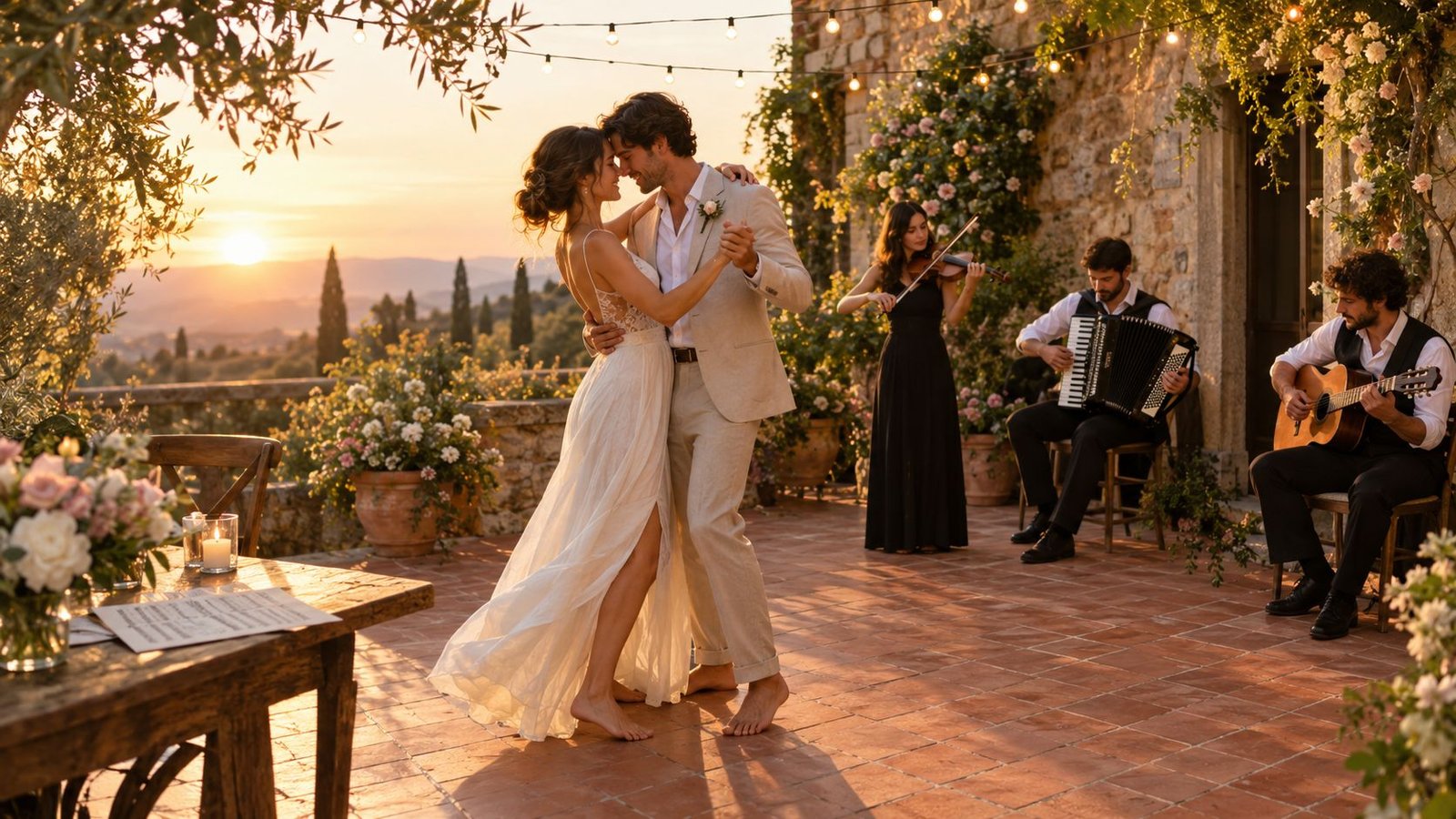
At a masseria in Puglia, couples can spend hours refining flowers, menus and seating plans, then realise that music is what gives the celebration its atmosphere. It welcomes guests, shapes the ceremony, supports conversation during the aperitivo and often determines whether the evening closes softly or ends with a full dance floor.
That is why choosing Italian wedding musicians should not begin with a shortlist of bands. It should begin with the structure of the wedding itself. The right format depends on the venue, the mood of each part of the day, the regional identity the couple wants to express, the mix of international and Italian guests, and the practical limits of access, acoustics, power, licensing and curfews.
For couples planning a destination wedding in Italy, one of the most common mistakes is expecting a single act to perform every role. In practice, the most elegant weddings usually assign the right musicians to the right moment, then coordinate the artistic and logistical details with the venue and planner before anything is confirmed.
The Couple Planning a Wedding in Italy
Most couples begin with a broad idea, live music for the wedding. Very quickly, that becomes a series of separate decisions. What should accompany the ceremony? Should the welcome dinner feel local and regional, or more international? Does the aperitivo need discreet background music or a more animated roaming performance? Should the reception continue with a live band, a DJ, or a combination of both?
These questions matter because a wedding in Italy rarely behaves like a single evening event. There may be a welcome dinner, ceremony, aperitivo, seated meal, cake cutting, first dance and after-party, each with a different atmosphere and a different practical setting. A group that sounds beautiful in a quiet courtyard may be completely wrong for a larger dance floor later in the night.
The most useful starting point is a music map. Before discussing names, couples and planners should list each event, where it takes place, how guests are expected to move through it, what level of energy is appropriate and what restrictions the venue may impose. That usually makes it much easier to understand whether the wedding needs one adaptable ensemble or several specialists.
Practical principle: Choose music by moment, not by label. “Italian band” is too broad to guide a refined decision.
Budget should also be considered across the whole celebration, not only for the reception. A smaller acoustic act at the welcome dinner, classical musicians for the ceremony and a DJ-led party can feel more coherent than asking one larger band to cover everything. On the other hand, couples who want a strong sense of place may choose to give a regional ensemble a central role, particularly in Puglia, and let contemporary entertainment take over later.
Licensing should be part of the conversation from the beginning. In Italy, music licensing for private events is commonly handled through SIAE, but the exact category, fee and procedure can depend on the format of the event and the type of music being used. Couples should confirm the current position directly with SIAE or through their planner rather than assuming that the musicians’ quote includes it.
What Italian Wedding Music Is
Italian wedding music is not one single national style. It is shaped by regional traditions, local instruments and the way different communities celebrate. For wedding planning purposes, that distinction matters. The music chosen for a celebration in Puglia should not feel interchangeable with what might suit a villa on Lake Como or a gathering in the hills near Naples.
Southern Italy is often where international couples first encounter the most recognisable regional formats. In Puglia, that usually means pizzica and related folk traditions. Around Naples, couples may come across tammurriata and Neapolitan musical culture. Other parts of Italy have their own forms, songs and ceremonial customs.
The important point is not to use these references as decorative shorthand for “Italian atmosphere”. They are most effective when they belong naturally to the setting, the family story or the emotional tone of the wedding. For couples marrying in Puglia, the Pizzica and Tarantata guide offers helpful cultural context and explains why regional music can feel so powerful when it is used with intention.
The repertoire is layered
Regional folk music is only one part of the picture. Depending on the celebration, couples may also consider classical repertoire for religious or symbolic ceremonies, acoustic Italian songs for the aperitivo, jazz or piano for dinner, and a more international set for dancing later in the evening. Traditional songs and recognisable Italian melodies can be very effective when they are placed carefully, especially if the guest list includes many people visiting Italy for the first time.
The key is balance. A wedding does not need to become a lesson in music history, but it should sound connected to Italy, to the venue and to the people in the room. Couples who want to communicate more easily with local musicians may also find this practical guide on how to conjugate suonare useful when discussing whether an artist can suonare a particular song or perform during a specific moment.
Musician Formats and Where Each One Works
No musical format suits every part of an Italian wedding. A string ensemble can give a ceremony elegance and focus, but it will not necessarily carry a late-night party. A DJ can respond quickly to guest preferences, but may not provide the live atmosphere a couple wants during the aperitivo.
| Format | Best for | Typical repertoire | Energy level | Budget position |
|---|---|---|---|---|
| Classical string quartet or soloists | Religious, civil or symbolic ceremonies | Classical, sacred and processional works | Low and focused | Modest to premium |
| Acoustic duo or trio | Aperitivo, welcome dinner and intimate terraces | Jazz, Italian standards, acoustic pop, Neapolitan songs | Low to moderate | Modest to mid-range |
| Regional folk ensemble | Cultural moments and participatory dancing | Pizzica, taranta and local traditions | Moderate to high | Mid-range |
| Cover or pop-rock band | Dinner transitions, first dance and reception dancing | Italian and international pop, rock, soul, funk | High | Mid-range to premium |
| DJ-led setup | Late reception and after-party | Recorded Italian and international music | Flexible and high | Mid-range to premium |
| Full showband or orchestra | Larger celebrations with a more theatrical brief | Broad live repertoire and dance classics | Very high | Premium to luxury |
The purpose of this comparison is not to suggest a fixed pricing structure, because quotes vary widely according to lineup, travel, production, performance length and date. It is more helpful as a planning tool, especially for couples trying to decide how to distribute music across several events.
Match format to the room
Venue acoustics matter as much as musical style. Stone courtyards, vaulted dining rooms, terraces facing neighbouring properties and historic interiors all shape the way sound behaves. A lineup that feels perfect on paper may be too strong for an intimate villa, while a very light acoustic act may disappear in a larger outdoor setting.
For that reason, Princess Apulia usually advises couples to match the format not only to the mood of the moment, but also to the physical reality of the venue. In Puglia especially, where many celebrations move between ceremony space, courtyard, garden and dance area, the transitions between those spaces need to be considered early.
For many destination weddings, a mixed approach works best. Strings or soloists may suit the ceremony, an acoustic act can support conversation during the aperitivo, a regional group can create a memorable Puglian moment, and a band or DJ can then lead the reception.
How Pricing Really Works Behind the Quote
Music quotes can look similar at first glance, but they often cover very different things. The final figure usually depends on the number of performers, how many moments of the wedding are included, whether the musicians remain on site between sets, the level of technical production required, and how complex the venue access and schedule may be.
Coverage matters as much as lineup. A short ceremony performance is a very different commitment from providing music through the ceremony, aperitivo, dinner and dancing. Repertoire requests can also affect the quote, especially when a couple wants custom arrangements or material that sits outside the artist’s usual set.
| Cost driver | Why it matters | What to confirm |
|---|---|---|
| Lineup size | More performers usually mean more coordination, travel and production | Exact number of musicians and instruments |
| Event coverage | Different parts of the day require different attendance times and setups | Arrival time, sets, breaks and finish time |
| Repertoire preparation | Special requests may need rehearsal or arranging | Included requests and any extra preparation |
| Audio and lighting | Some acts include production, others rely on separate rental | PA, microphones, monitors, lighting and operator |
| Travel and accommodation | Location affects logistics, especially for remote venues or multi-day events | Transfers, rooms, meals and VAT |
| Event transitions | Moving between spaces can require extra time and crew | Relocation plan, access and reset time |
| Tax treatment | Quotes are not always presented in the same way | Whether the quote is gross or net |
When comparing proposals, couples should make sure the scope is genuinely comparable. It is sensible to ask whether sound equipment is included, how many live sets are planned, whether the lineup changes during the event, and what happens if timings extend. The contract should also make clear whether travel, accommodation and VAT are included. Before paying a deposit, this guide to preventing wedding planning scams is a useful additional reference.
Read the range carefully
There is no single market rate for Italian wedding musicians. Pricing depends on season, location, day of the week, artist profile, production expectations and how many moments of the wedding are being covered. Couples should be cautious with simplified averages unless they can see exactly what is included.
In practical planning terms, venue conditions often influence cost more than couples expect. A historic property with limited access, separate performance areas or tighter sound restrictions may require a more carefully built setup than a modern venue with straightforward logistics. In Puglia, where many properties combine beautiful architecture with operational constraints, this conversation is especially important.
For multi-day weddings, the most efficient approach is often to reserve the most specialised format for the moment that truly needs it, rather than paying one larger act to cover every event regardless of suitability.
Mapping Musicians to Your Wedding Day
A well-planned wedding day has its own musical rhythm. The ceremony usually asks for clarity and restraint. The aperitivo should encourage movement and conversation. Dinner benefits from warmth without forcing guests to compete with the performers. Later, the music can become more energetic and participatory.
Assign the right sound to each moment
For a civil or symbolic ceremony, a string duo, solo violinist, harpist or classical guitarist can provide atmosphere without overwhelming the vows. A Catholic ceremony requires a different level of coordination, because the church and celebrant may have their own expectations about repertoire, placement and when music can be performed.
During the aperitivo, couples often want music that feels welcoming and atmospheric, but still leaves room for conversation. In Puglia, this is one of the most effective moments to introduce regional character, whether through an acoustic Italian act, a discreet jazz group or a carefully timed folk intervention. Dinner usually benefits from a softer musical texture, while the cake cutting and first dance often mark the transition into a more energetic reception.
Silence also has a role. Speeches, vows, readings and certain emotional pauses should not be treated as spaces that always need to be filled. Experienced musicians understand that elegance sometimes depends on knowing when not to play.
The best wedding sound plan includes quiet as deliberately as music.
Extend the thinking across the weekend
Destination weddings in Italy often unfold over several events. The welcome dinner may suit a regional acoustic group or a relaxed singer-guitarist. A poolside lunch might need little more than light background music. A boat party introduces very different practical considerations from a masseria courtyard, and a farewell brunch is usually better with a gentle atmosphere than a performance-heavy brief.
For that reason, the music plan should sit inside the wider run-of-show for the entire weekend. Couples benefit when the planner coordinates musician arrival, setup timing, transitions, speeches, catering flow and final music cues as part of one document, rather than treating entertainment as an isolated booking.
Logistics: What Venues and Planners Control
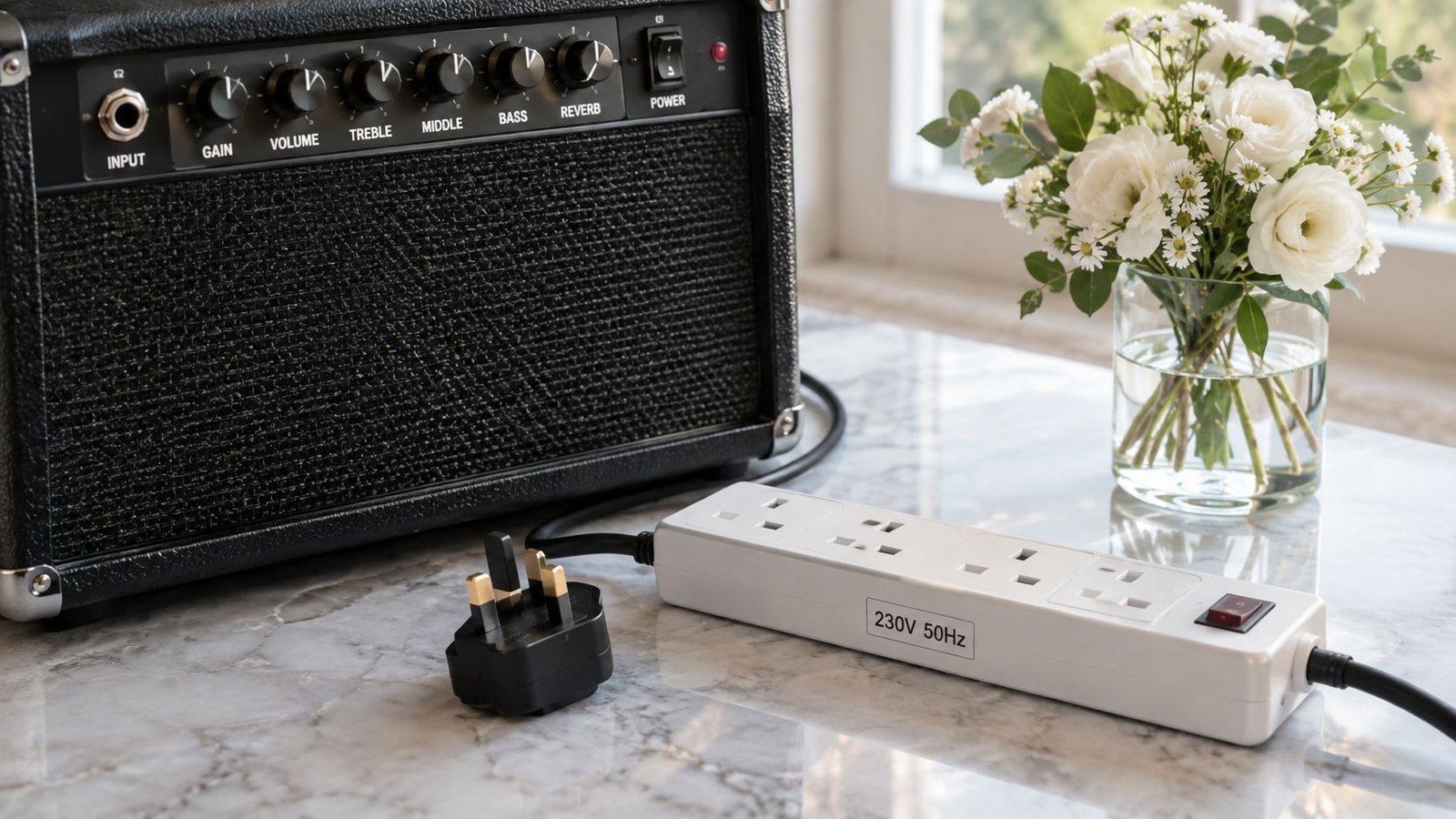
The music plan should be tested against the venue before musicians are confirmed. Access, setup position, available power, shelter, loading routes and neighbouring properties can all influence what is realistic. This is especially true in historic venues and countryside properties, where the most beautiful spaces are not always the simplest to operate.
The planner should gather a written technical brief from the musicians and share it with the venue. That brief does not need to be overcomplicated, but it should clarify what the act needs in terms of space, amplification, positioning and practical support. Couples can also ask suppliers directly about their technical requirements for Italian wedding musicians so there are no assumptions later.
A site visit or detailed venue review is often what prevents unnecessary cost and stress. In Puglia, it is common for performance areas, dinner tables and dancing spaces to sit in different parts of the property, so the movement of equipment and the timing of changeovers need to be understood in advance.
Sound behaves differently in Italian venues
Sound always behaves differently depending on the property. Trulli, masserie, terraces, courtyards and gardens each create their own acoustic conditions. Venues should therefore be asked about any sound limitations, directional restrictions for speakers, proximity to guest rooms and what happens if weather forces a change of plan.
Rather than relying on generic assumptions, couples should ask the venue and musicians how soundcheck, setup timing and any technical coordination will be handled for that specific property. Practical venue notes such as these are consistent with broader Italian wedding soundcheck and venue guidance, but the final plan should always be tailored to the actual location.
If the celebration may need to move from outdoors to indoors later in the evening, the handover should be agreed in advance. The key is not a universal rule, but clarity between planner, venue and musicians.

Treat SIAE as a planning item, not an afterthought
SIAE should be discussed early, but carefully. Rules, categories and fees can change, and the applicable licence may depend on whether the event includes live music, recorded music or a combination of both. Couples should therefore refer to current SIAE wedding licence guidance or ask their planner to verify the correct procedure for the specific event.
It is also sensible to clarify in advance who will handle any required documentation connected with the musicians, DJ, venue and organiser. Practical explanations of how this is commonly approached can be found in resources such as this overview of SIAE wedding paperwork guidance, but couples should still treat the official SIAE position as the reference point.
When researching venues, couples may also find Princess Apulia’s guide to wedding venues in Puglia helpful, particularly when comparing properties with different music restrictions, curfews, access conditions and indoor fallback options.
Advice for International Couples
International couples should look beyond polished promotional footage. A beautiful showreel can be useful, but it does not always reveal how musicians sound during a ceremony, how they manage volume during an aperitivo or how they build energy naturally over the course of a reception.
The better conversation is usually a practical one. Ask how the act approaches mixed-nationality guest lists, whether it is comfortable with key songs in more than one language, how it reads a formal dinner versus a party moment, and whether the proposed lineup genuinely suits the venue.
A clear bilingual contract is also valuable. It should identify the agreed lineup, timings, substitutions, cancellation terms, technical inclusions and payment structure in a way that all parties can understand.
Build communication into the booking
Remote planning works best when communication is structured and concise. Rather than endless fragmented messages, couples should aim for a few well-prepared conversations that cover repertoire, guest profile, venue conditions and the final running order.
It is also worth identifying one wedding-day contact for the musicians, whether that is the planner, venue coordinator or bandleader. Clear responsibility reduces confusion, especially when timings move or weather affects the original plan.
Programming should reflect the room. International weddings rarely need separate performances for each nationality, but they do benefit from thoughtful balance. Italian relatives, British or American friends and guests from elsewhere should all recognise that the music has been chosen with the whole celebration in mind.
For practical wedding-weekend communication, some couples also find this guide to the top eSIM for Italy travel useful when coordinating calls, transport and venue access while moving between regions.
Princess Apulia® supports destination weddings in Puglia by coordinating music choices within the wider event design, so entertainment, venue logistics, guest flow and timing work together rather than being managed separately.
A Final Checklist Before You Book
Music decisions should be confirmed in writing, with the couple, planner, venue and musicians all working from the same understanding.
Contract: Confirm the exact lineup, instruments, performance hours, breaks, overtime terms and substitution policy.
Repertoire: Approve ceremony pieces, regional selections, first-dance requests, songs to avoid and language preferences.
Technical plan: Record the venue’s setup conditions, the required sound equipment, microphone needs, shelter and cable access.
SIAE: Confirm which licence, if any, applies to the event and who is responsible for arranging it.
Curfew and fallback: Put finish times, location changes and weather contingencies in writing.
Invoice: Request a VAT receipt or fattura and check whether the quoted figure is gross or net.
Contingencies: Clarify what happens in case of rain, heat, transport delays, power issues or musician illness.
Contacts: Keep a clear contact list covering the couple, planner, venue, bandleader and any technical supplier.
Final documents: Store the signed contract, running order, technical notes, licence confirmation and payment record together.
For weddings in Puglia, Princess Apulia® can help turn these points into a venue-specific music plan, matching ceremony musicians, aperitivo formats and reception entertainment to the property’s atmosphere, logistics and regional character.