
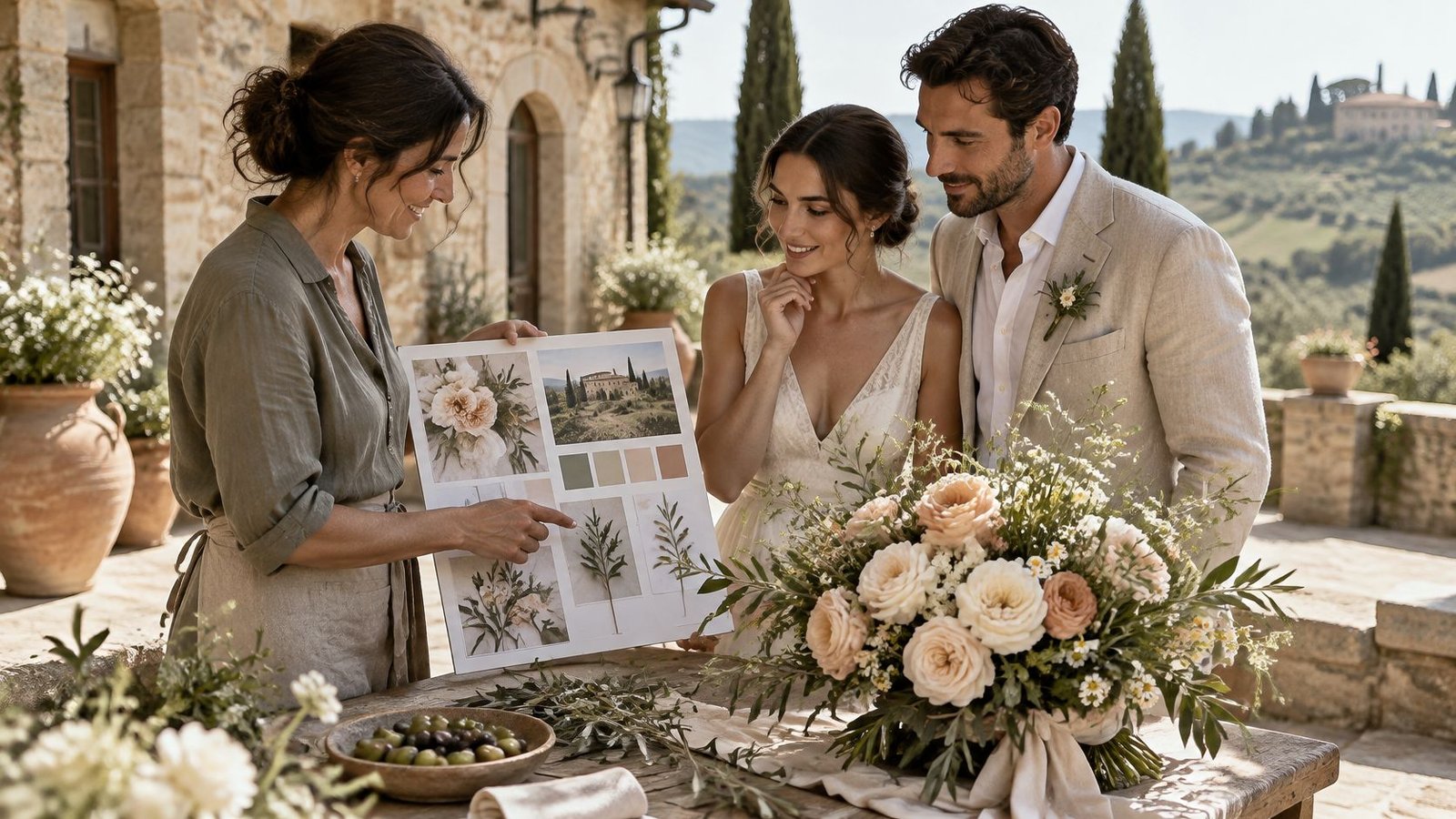
The advice that travels fastest for wedding flowers Italy is to fall in love with the blooms first and find a florist who can match the photographs. That order is the one most likely to unravel. A peony arch that looks effortless in May can become a costly import in September, and a hanging installation that looks right on a screen may not be allowed on the stone it is meant to decorate.
Treat the floral brief as a logistics document before it becomes a design. Date, venue rules, heat, transport and budget decide which flowers are realistic. The palette comes after those answers, not before them.
Inspiration still belongs in the process. It should arrive as a short list of colours, shapes and moments, not as a fixed species list. A florist in Puglia or elsewhere in Italy can price and deliver that kind of brief. A mood board with no constraints cannot.
Why Italy Changes the Way You Brief a Florist
Say a couple in London has locked a September Saturday at a masseria near Ostuni. They send three photographs of blush garden roses and a tall ceremony arch. The florist replies with a sourcing note they did not expect. Some stems will travel, the arch needs written permission, and the welcome dinner the night before needs its own delivery. None of that appears on a mood board.
Italy hosted approximately 15,100 foreign weddings in 2024, according to the Florence-based Centro Studi Turistici, as reported by The Bangladesh Monitor. For a destination couple, the florist works across distance, season and a supplier network the couple cannot inspect in person. Princess Apulia®, based in Manfredonia, plans Puglia weddings for international couples, and most of those couples live outside Italy, so venue research and supplier comparisons are managed remotely. The brief has to travel as clearly as the couple does.
What actually sets the limits
Three forces shape every floral plan in Italy, and they sit upstream of taste.
Regional production decides what is grown nearby and what a wholesaler must bring in. Date and season decide harvest windows and how hard afternoon heat will hit an outdoor reception. Venue rules and logistics decide where a structure may stand, when a van may arrive, and whether cold storage exists at all.
Choosing flowers from inspiration photographs before those three are confirmed is the mistake that forces later substitutions, surprise transport charges, or a design the building will not allow. The useful order runs the other way: lock the decisions, set a budget band, match the palette to seasonal supply, plan freshness, get venue permissions in writing, decide which Italian customs to keep, and only then approve a design. What follows is that sequence, written as questions a florist can answer with a price and a delivery plan.
Photographs show a result. They do not show the permit, the truck, or the afternoon temperature.
How to Sequence Your Floral Decisions
A floral brief should function as a logistics document as well as a design reference. Set decisions in the order that lets the florist price the work, source the flowers and plan installation without guessing.
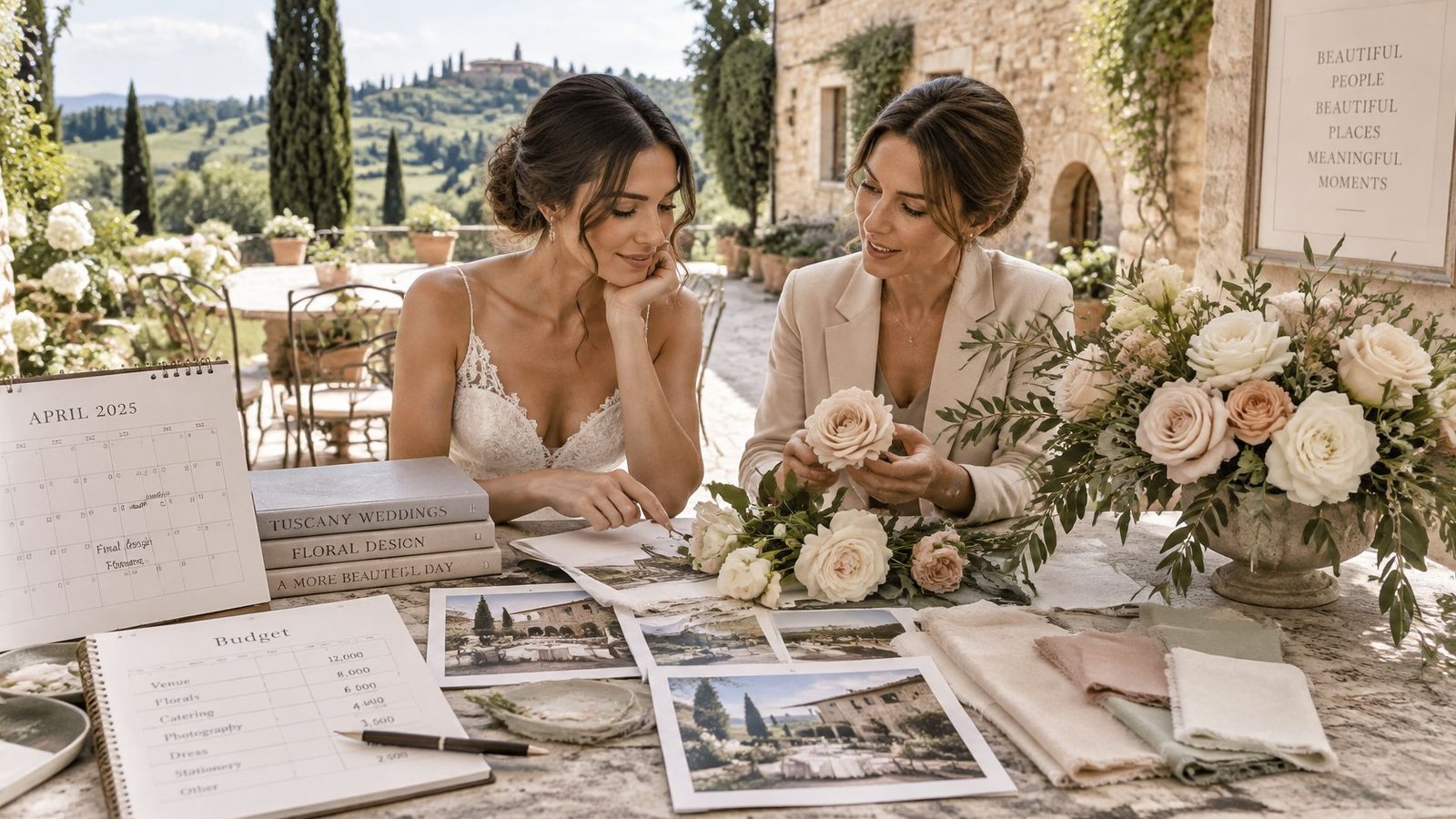
- Confirm the date and venue type. Season affects availability, while the building and grounds determine what can be installed. If the date is still flexible, keep the floral brief open to more than one palette.
- Set a budget band before naming flowers. Installation scale, structures and labour can shape the quote as much as the stems. Agree on the budget before developing a design around an arch or large arrangement.
- Read the venue's written rules for decoration, installation and access. Check whether structures and vessels are permitted, and ask about delivery and setup conditions before requesting a detailed design.
- Build a palette around season and regional supply. Use photographs to communicate colour and shape, then identify which specific stems are priorities and which can change if availability is limited.
- Ask how key flowers will be sourced. For each priority stem, request the expected source, harvest window and an approved substitute. This gives the florist a clear alternative if the preferred flower is unavailable.
- Agree on delivery, storage and installation timing. Ask where flowers will be kept and how long arrangements may stand before the event, especially for outdoor settings in warm weather.
- Keep the design reference and practical details aligned. The florist needs to price the same version the venue will approve, including the agreed flowers, structures and installation requirements.
- Assign responsibility for open questions. The couple, planner, florist and venue should know who is confirming each answer, so permissions and logistics do not fall between parties.
For couples planning from abroad, keep approved reference images in one shared location rather than scattered across message threads. A folder organised like conference photo sharing with EventUploader helps the couple and florist refer to the same current design.
Practical rule: if a decision affects sourcing, cost or installation, record the answer where the florist and planner can both find it.
What Wedding Flowers Cost in Italy and Why
There is no single national price for flowers at an Italian wedding. Princess Apulia's cost guide sets the useful ranges as bands: simple personal flowers and essential styling at €1,500–€3,000, mid-range floral design at €3,000–€7,000, a full design concept at €7,000–€15,000, and luxury installations at €15,000 or more. A quote lands inside a band because of scope and logistics, not because Italy has one going rate.
What moves a quote
The same guide names the drivers that push a figure up or down: number of tables, ceremony-scale decoration, flower choice, transportation, candles, structures and vessels. Ten guest tables with a low seasonal centrepiece sit in a different place from ten tables plus a ceremony arch, hanging work and hired frames. Out-of-season stems and a long run from the wholesaler do the same work as adding another installation. Candles and vessels look minor on a mood board and show up as line items once someone has to buy, deliver and remove them.
Read any quote against those drivers before comparing two florists. Ask, in writing, whether the figure includes transport, vessels, structures and installation labour. A lower number that excludes the arch frame and the second delivery is not the cheaper wedding. It is an unfinished one.
The planning mechanic that holds is to concentrate spend on a few areas rather than styling every surface. Ceremony installation, reception tables and personal flowers are the usual three. A staircase garland, a flower wall and matching chair details rarely earn their share of the band once those three are properly done. A wider pass over the whole weekend budget sits in the wedding budget checklist, which is the right place to see flowers beside catering, music and guest travel rather than as an isolated splurge.
List the three areas that matter most, assign each a band, and send that split with the brief. A florist can design inside a stated split. A florist cannot guess which photograph was the priority.
Which Flowers Are Realistic Here and When
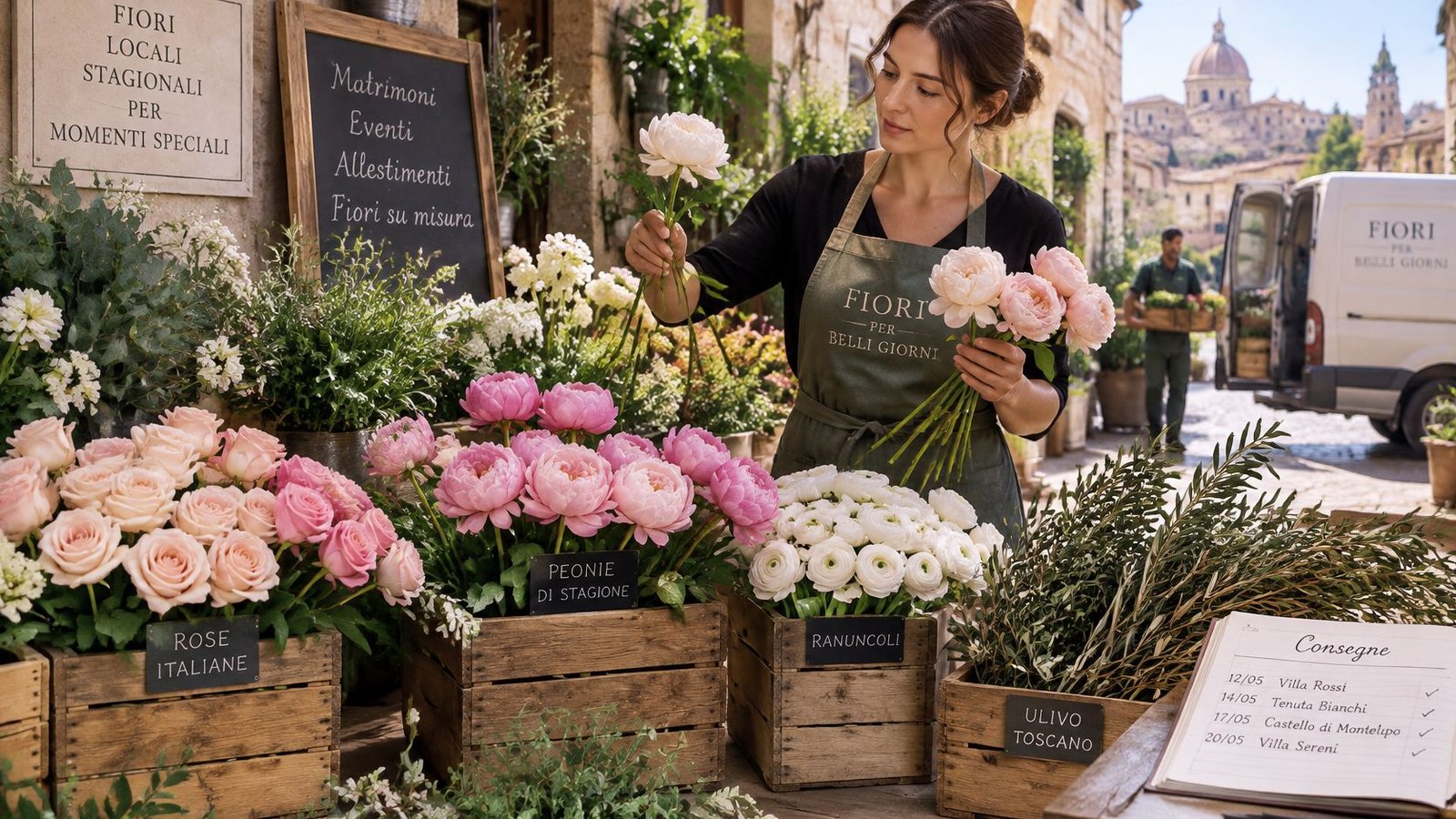
A floral brief should settle sourcing before it settles flower names. Italian florists may combine locally grown stems with imports when a variety, colour or quantity is not available nearby. Italy's cut-flower imports exceeded its exports in 2024, according to the Observatory of Economic Complexity's cut-flower trade data. Importing is standard practice when local supply runs short.
Three groups on the list
Before approving a design, ask the florist to sort each proposed stem into one of three sourcing groups:
- Italian-grown, with a reliable window: Flowers the florist expects to source from Italian growers for your wedding month. Use these to set the main colour and shape of the design.
- Likely imports: Varieties, colours or quantities that local supply may not cover. Keep the list focused, and agree on a substitute for each item before the order is placed.
- Regional foliage, subject to season: Mediterranean herbs, olive branches and similar materials can add texture, but availability depends on the date and supplier. The Italian flower names and terminology guide can help clarify names without treating a region as a fixed plant list.
Ask where key stems will come from, what happens if they are unavailable, and whether the proposed quantities suit the design. Sourcing, growing methods, transport and reuse all affect the environmental trade-offs; the labels “local” and “imported” alone do not settle them. For a large installation, also ask whether ceremony flowers can be moved to the reception and reused, rather than ordering separate arrangements for each space. Reducing the total volume can be as practical a choice as selecting a different source.
Keeping Flowers Fresh Through Heat, Transport and Multi-Day Events
Heat and handling can change how flowers look between delivery and the ceremony. A Wageningen University review identifies temperature as the most important post-harvest factor for ornamental quality. It also notes that flowers not susceptible to chilling injury are generally best stored close to 0°C. The right temperature depends on the flower, so ask the florist to confirm storage requirements for each key variety.
What to request in writing
Ask for a short cold-chain note covering the route from wholesaler to venue. It should specify:
- Delivery timing: when flowers leave cool storage and when they arrive.
- Storage: the planned temperature and where stems will be held.
- Hydration: how stems will be recut and watered on arrival.
- Sun protection: whether arrangements need shade, covers or a later installation, especially on an exposed terrace.
- Ethylene separation: how flowers will be kept away from fruit and other produce that can shorten vase life.
For delicate varieties, schedule installation as close as practical to the ceremony, particularly for an outdoor reception in warm weather. Confirm that the venue has suitable refrigerated storage. A stone room is not a substitute for a confirmed storage plan. Temperature swings, dry air and overcrowded buckets can bruise stems and speed wilting.
A welcome dinner, ceremony and reception are three separate performances, each with its own flower requirements. For arrangements that need to remain presentable across several days, agree on a separate delivery or refresh plan and name who is responsible for each one. Without a named person, care can fall between the planning team and venue staff.
Venue Rules That Shape Floral Installations
A floral design that suits a castle or masseria on paper may not fit the building's rules. Venues typically set out written limits on decoration, installation and supplier access. Confirm those conditions before the florist develops a detailed proposal.
Confirm these points before the design hardens
- Placement: where arches, hanging installations and floral structures may stand, and which floors or courtyards are off limits.
- Fixings: whether clamps or wall attachments are allowed. If they are not, the design needs to stand on its own.
- Protected surfaces: whether vessels or water may sit near stone, frescoes, timber or antique tables.
- Access windows: when suppliers can enter to set up and when installations must be removed.
Historic buildings and legally authorised ceremony locations are separate tests. The floral plan must respect the venue's permissions, while the ceremony arrangements must meet the couple's legal requirements. These vary by nationality, marital status and municipality. Princess Apulia® can guide couples through the general process of legal wedding paperwork, while the specific requirements should be confirmed for each couple.
Ask the venue to mark proposed installation points on a floor plan before the florist prepares a quote. A design based only on photographs may include features the venue does not permit.
Italian Floral Traditions and Symbolism in Your Design
A floral tradition can shape the brief without dictating every stem. One example is decorating the front grille of the newlyweds' getaway car. The Knot's guide to wedding flower customs describes the gesture as a symbol of the couple travelling forward together toward a happy marriage. It gives flowers a role in the celebration beyond the photographs.
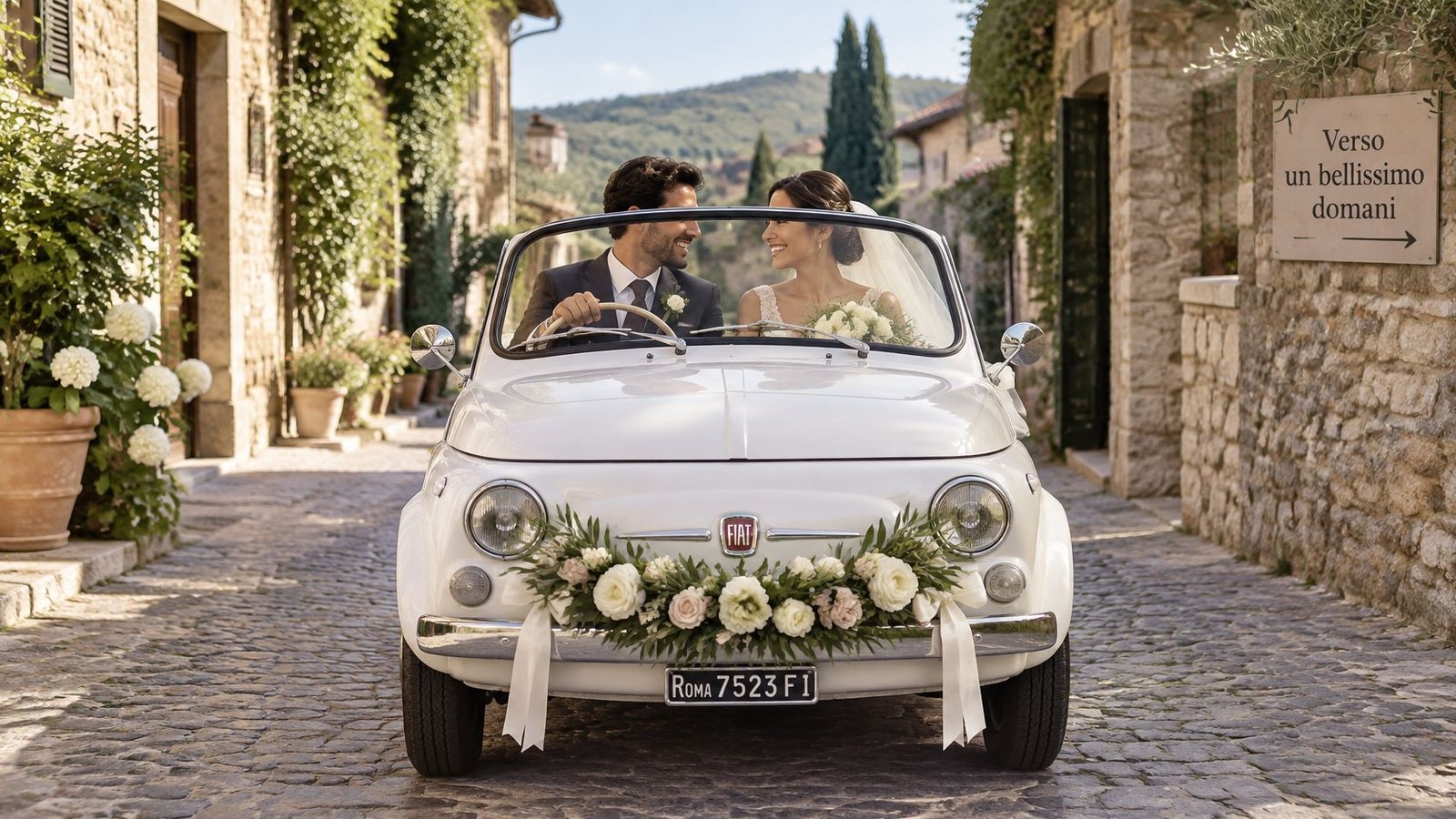
Italy has flower-growing regions across the country, including Tuscany, Liguria, Sicily, Lombardy, Lazio and Puglia. For your design, the practical question is how a chosen gesture fits the setting and the brief. A car decoration, a ceremony arrangement marking the start of the marriage, or a table detail using Mediterranean foliage can each carry meaning without requiring a fixed list of plants.
What to keep, and what to leave optional
Choose a few gestures that matter to you and give each one a clear place in the day. Regional associations are useful context, but they are not a botanical rulebook. Olive, herbs and seasonal branches can add a sense of place when they suit the design and are available.
Cultivated flowers paired with selected local foliage can feel more connected to the setting than a palette copied from another region. For a broader look at customs beyond flowers, explore this guide to Italian wedding traditions. Two or three considered gestures will usually feel more personal than trying to include every custom at once.
Confirm the Floral Brief With Your Planner
Once the choices described in the sequence section are settled, make clear who owes the next answer. The florist should return a quote and sourcing note; the venue should confirm installation permissions and access. If either response is incomplete, keep that item open before approving the design.
For couples planning from abroad, a shared checklist such as MODERN LYFE's event setup tools can help track which reply is still outstanding. Princess Apulia® recommends suppliers including florists, photographers, videographers, musicians, catering teams, hair and makeup artists, and transport providers.
Agree the final design once the florist's sourcing response and the venue's permissions are clear. Until then, the photographs are only a wish list.