
Cost of Wedding in Italy in 2026: Realistic Budget for 100 Guests
If you are planning from abroad, the first “average wedding cost” you find online is often the least useful number.
A local Italian wedding and a destination wedding for international guests are not financially the same event. This guide looks at the costs that actually shape a destination wedding in Italy: venue, catering, design, photography, planning, transport, entertainment and the decisions that can move the total very quickly.
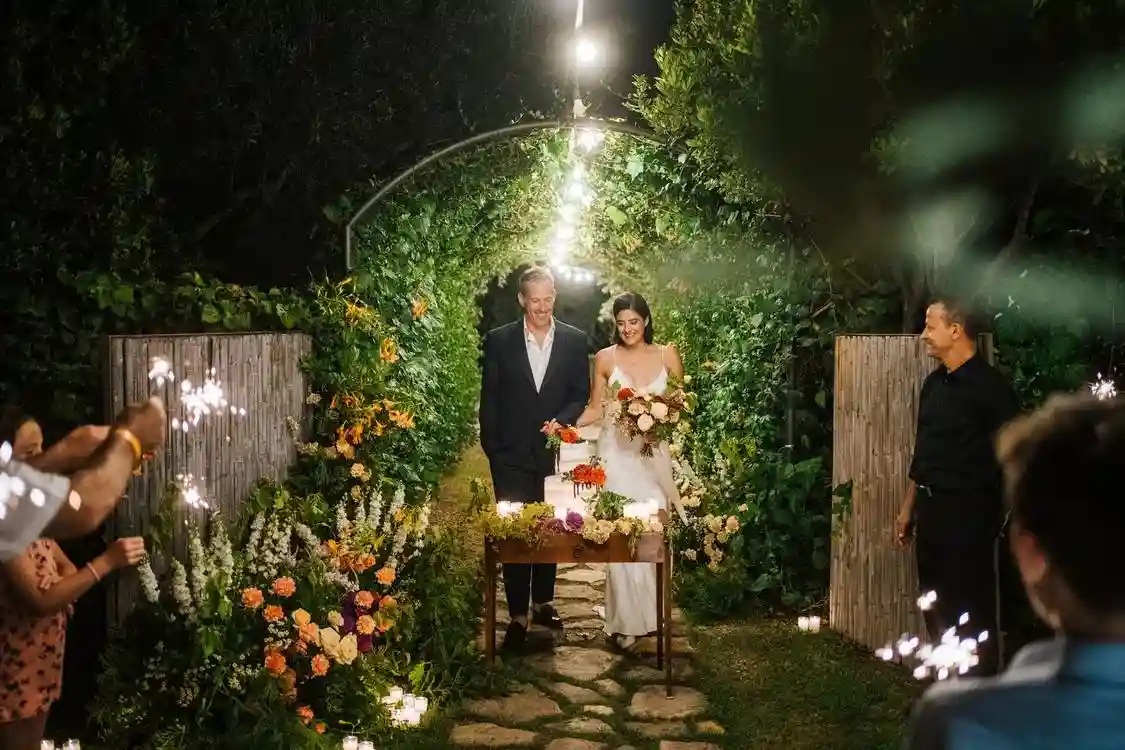
How much does a wedding in Italy cost in 2026?
For 100 guests, a useful planning range for a professionally produced destination wedding in Italy is roughly €45,000–€90,000+.
That figure normally excludes guest flights and usually excludes the accommodation each guest books for themselves. It can be lower for a deliberately simple celebration, and it can move well beyond €100,000 once you add an exclusive venue, a multi-day programme, extensive floral production, a live band or complicated logistics.
You will still find national averages online around €20,000–€30,000. They are not necessarily wrong. They simply tend to describe a different kind of wedding: local guests, one event, fewer destination logistics and often a very different supplier mix.
Elopement or very intimate wedding with professional photography, personal flowers, ceremony setup and a special meal or private experience.
A small destination wedding where quality can stay high because the guest-related costs remain controlled.
A fuller supplier team, more transport, more tables and a more substantial food-and-beverage commitment.
A realistic working range for a complete destination wedding before moving into large-scale luxury production.
These are broad planning ranges for destination weddings, not official Italian averages and not fixed supplier prices. Date, region, venue and production level can materially change them.
Average cost of a wedding in Italy for 100 guests.
A 100-person wedding is where headline averages become especially misleading. Catering scales per person, but so do tables, flowers, staff, transport, stationery and sometimes the size — and price — of the venue itself.
The table below is a planning model for a good-quality destination wedding, not a promise that every supplier in Italy will quote within these figures.
| Budget area | Working range | What changes the number |
|---|---|---|
| Venue | €5,000–€20,000+ | Region, exclusivity, accommodation, weekend buyout, what furniture and infrastructure are included. |
| Food & drinks | €15,000–€30,000+ | Aperitivo, dinner, wine, open bar, late-night food, staffing and service level. |
| Planning & coordination | €5,000–€12,000+ | Number of events, complexity, guest logistics, design scope and level of involvement. |
| Photography & film | €3,500–€9,000+ | Team size, hours, travel, second shooters and whether coverage extends across several days. |
| Flowers, rentals & design | €4,000–€15,000+ | Number of spaces, installations, lighting, furniture, structures and floral density. |
| Music & entertainment | €1,500–€10,000+ | DJ versus live band, ceremony musicians, technical production and additional acts. |
| Transport & logistics | €1,000–€4,000+ | Guest hotels, coaches, boats, late-night returns, airport transfers and remote access. |
| Beauty, stationery & extras | €2,000–€6,000+ | Trials, additional people, stationery level, welcome gifts and small production details. |
Guest accommodation, flights, honeymoon and personal wedding attire are not included in this working model.
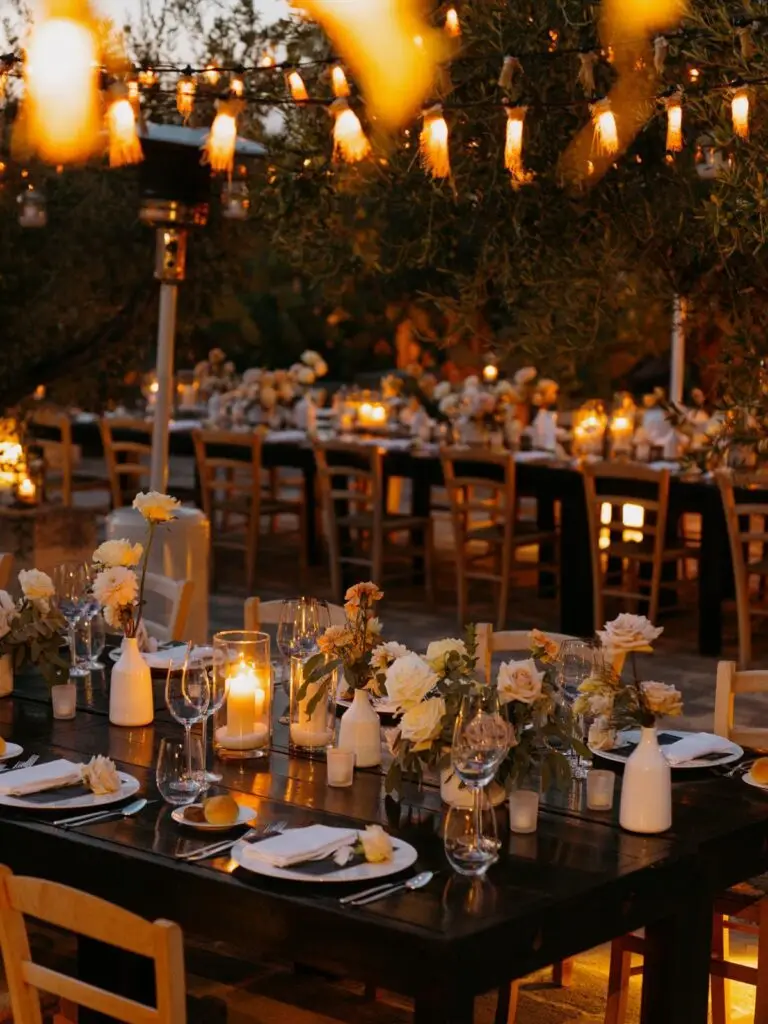
Why the same guest count can produce two completely different budgets.
The venue model
Do not compare rental fees in isolation. One venue includes tables, staff, accommodation and power. Another looks cheaper until you add generators, kitchens, furniture, transport and extra setup days.
Guest count
Every additional guest affects more than dinner. It touches bar service, tables, chairs, florals, stationery, coaches, staff and sometimes the venue category itself.
The destination
Lake Como, Tuscany, Puglia and the Amalfi Coast are not the same wedding market. Access, accommodation, supplier travel and venue demand all change from one region to another.
One day or three
A welcome dinner and farewell brunch can make the trip much more meaningful for guests. They also introduce additional venue, food, transport and entertainment costs.
Design and production
This is where budgets can expand quietly. Florals are only one part of it. Lighting, structures, staging, furniture, sound and technical production can be equally significant.
Season and date
A peak-season Saturday at a sought-after property gives you less flexibility than a weekday or shoulder-season date. Availability itself has a price.
Where the money actually goes.
Couples often focus first on venue and catering. They matter, but they are only part of the picture. A destination wedding is built from several connected categories, and the cheapest quote in one category can create extra costs somewhere else.
Venue
€4,000–€30,000+Historic villas, private estates, masserie and luxury hotels use different pricing models. Always ask what is included before comparing fees.
Catering & bar
€150–€300+ ppAperitivo, seated dinner, wine, open bar, staffing and late-night food can make this the largest variable cost on a 100-guest wedding.
Wedding planning
€5,000–€12,000+Full-service planning varies with scope. For a destination wedding, the value sits in the decisions between categories as much as in the coordination itself.
Photography & film
€3,500–€9,000+Team size, creative level, travel, hours and multi-day coverage all affect the quotation.
Flowers & styling
€3,000–€15,000+A restrained floral plan is very different from ceremony structures, ceiling installations, custom furniture and several fully designed events.
Music & production
€1,500–€10,000+Ceremony music and a DJ can stay focused. Live bands, multiple acts and full technical production can become one of the largest lines of the evening.
Transport
€1,000–€4,000+Coaches, private cars, boats and late-night returns matter much more when guests are scattered across several hotels.
Beauty
€350–€1,200+Trials, early starts, travel and services for family or the wedding party can all change the final figure.
Legal or religious ceremony
Case by caseThere is no useful single national price. Municipality fees, documents, translations, interpreters and church requirements vary by nationality and location.
Wedding costs are not the same across Italy.
These ranges describe a professionally planned wedding for roughly 80–100 guests. They are there to show the difference in cost pressure between destinations, not to replace a real venue or supplier quotation.
Puglia
€35k–€70k+Masserie and private estates can give couples strong value, particularly when several events can happen on one property and logistics remain relatively simple.
Tuscany
€40k–€80k+The spread is wide: countryside estates and internationally recognised luxury hotels can sit in completely different budget categories.
Lake Como
€70k–€150k+Premium villas, boats, waterfront access, accommodation and technical restrictions can push the total well above the national picture.
Amalfi Coast
€50k–€100k+Limited access, road logistics, supplier transport and high venue demand all influence the final budget.
Sicily
€35k–€70k+Sicily offers a broad mix of estates, seaside settings and historic properties, with logistics depending heavily on where guests are based.
Multi-day buyouts, guest accommodation and very high-end production can move any of these ranges substantially higher.

Hidden wedding costs in Italy.
VAT and service
Do not assume every first quotation is all-inclusive. Confirm whether VAT, service charges and staffing are already included.
Supplier travel
Remote venues can introduce mileage, accommodation or extra travel days for photographers, bands, beauty teams and production crews.
Rain-plan production
A backup space can be included, while the furniture, flooring, tenting or technical work needed to make it usable may not be.
Overtime
Venues, photographers, transport providers and entertainment teams often price additional hours separately.
Power, delivery and setup
Historic or remote properties sometimes need generators, longer installation windows or difficult deliveries. They are not glamorous costs, but they are real ones.
How to reduce the budget without making the wedding feel cheaper.
Reduce the guest count before reducing quality
Fewer guests create savings across catering, rentals, transport, flowers and staffing at the same time.
Choose one strong setting
Moving 100 people between multiple venues can add cost without necessarily improving the experience.
Design the spaces people actually use
Concentrated flowers and lighting usually feel more intentional than spreading the same budget thinly across every corner.
Consider weekday or shoulder season
Flexibility can improve availability and sometimes reduce pressure from peak-season pricing.
Compare total venue cost
An apparently cheaper venue can become expensive once rentals, transport, catering restrictions and technical production are added.
Why Puglia can make a wedding budget work harder.
Puglia is not a “cheap alternative” to the rest of Italy. That is not how we see it. Its advantage is that the right property can give you more of the experience in one place.
A masseria or private estate may allow the ceremony, dinner, party and sometimes accommodation to sit within the same setting. That can simplify transport and production, while keeping food, hospitality and the landscape at the centre of the wedding.
There are also extremely high-end properties and suppliers in Puglia, so the region can absorb a substantial luxury budget just as easily as a controlled one. The difference is that couples often have more freedom to decide where they want that investment to be visible.
If you are comparing locations, start with our Italy Wedding Venues guide. If Puglia is already the preferred destination, explore our Wedding Venues in Puglia. For full planning support, see Luxury Wedding Planning in Italy.
The best budget is not the lowest number you can force the wedding into. It is the number that lets you make the important decisions without spending money on things you never cared about in the first place.
Questions couples ask about wedding costs in Italy.
How much does a wedding in Italy cost for 100 guests?
For a professionally planned destination wedding, a useful working range is around €45,000–€90,000+. Premium venues, multi-day events and extensive production can take the total above €100,000.
Can you have a wedding in Italy for €20,000?
Yes, but the format has to match the budget. A smaller guest list, carefully chosen venue, simpler design and fewer events make €20,000 far more realistic than trying to reproduce a 100-person luxury wedding at that level.
What is usually the biggest wedding expense?
For larger weddings, venue plus food and beverage usually represent a substantial share of the budget. At highly designed weddings, production, florals and entertainment can become equally significant.
Is Puglia cheaper than Lake Como for a wedding?
Often, yes, particularly when comparing similar guest counts and production levels. Lake Como typically carries higher venue and logistical costs. The exact difference still depends on the properties and suppliers selected.
How much does a wedding planner in Italy cost?
Full-service planning commonly starts in the several-thousand-euro range and rises with complexity, guest count, number of events and design scope. Always compare the actual planning responsibility included, not only the fee.
Is a symbolic ceremony cheaper than a legal wedding in Italy?
It is usually simpler administratively. A civil or religious ceremony can involve municipality fees, documents, translations, interpreters or additional requirements depending on nationality and location.
What should we budget for unexpected wedding costs?
Keeping roughly 8–10% of the working budget uncommitted gives you useful room for overtime, logistics, production changes and decisions that appear later in the process.
Does getting married on a weekday save money in Italy?
It can. More importantly, it can improve availability at sought-after venues and with strong suppliers. The financial difference depends on the property and time of year.
Start with the budget you are comfortable living with.
Tell us your guest count, preferred destination and working range. We can help you understand what is realistic before the wrong venue starts making the decisions for you.
Share your wedding plans