
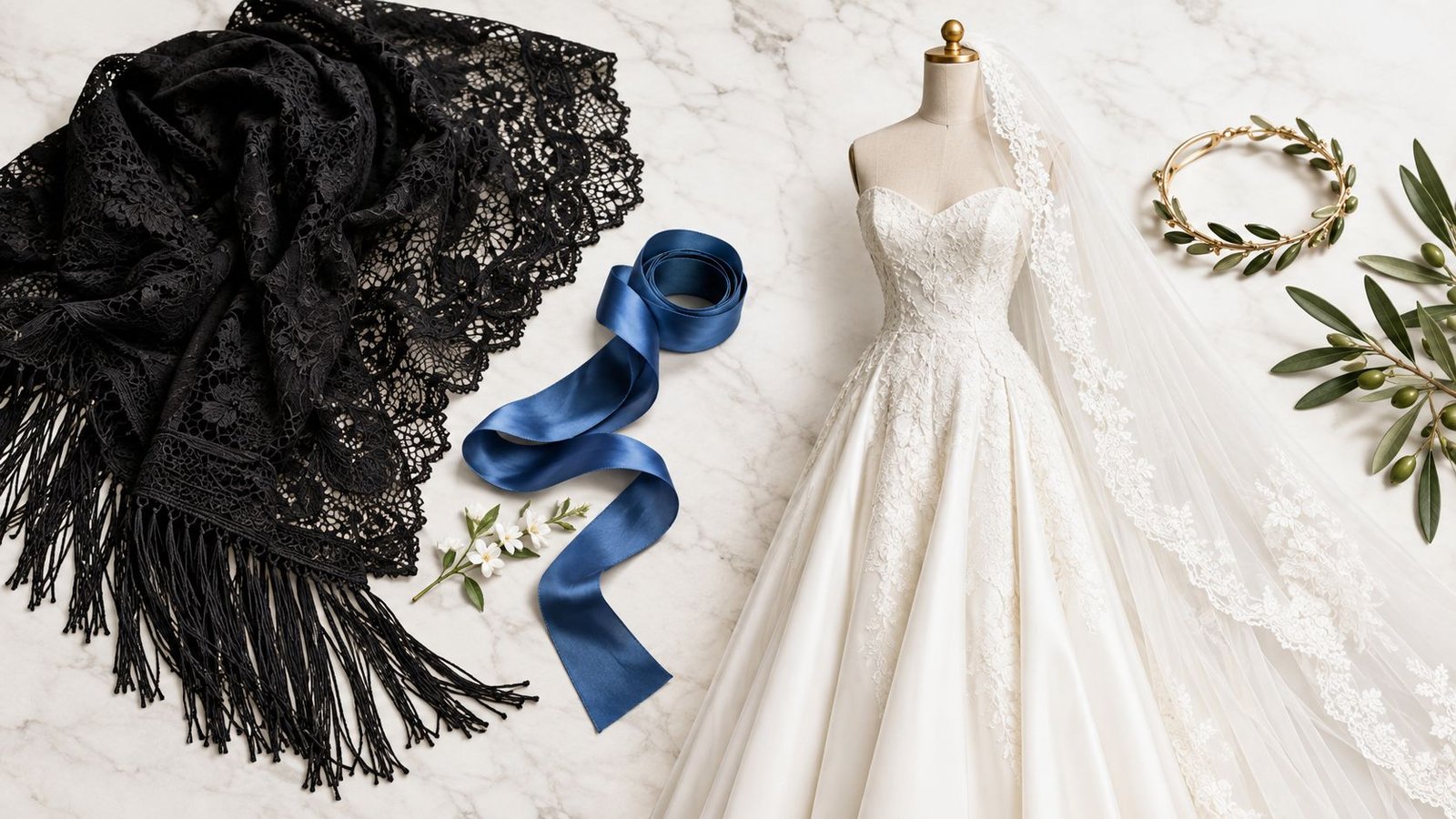
The most repeated advice about Italian bridal style is also the least accurate: Italian brides have not always worn white. The modern white gown is now closely associated with purity, innocence and formal bridal elegance, but Italian wedding dress traditions began as a regional patchwork of colors, silhouettes, accessories and customs shaped by local identity, family circumstances and religious settings.
That distinction matters for international couples. A wedding in Puglia may involve a Catholic ceremony with conservative expectations, an outdoor aperitivo in intense sunlight, an elegant dinner in a masseria and a late celebration that calls for a completely different silhouette. The most authentic wardrobe isn't necessarily the one that copies a supposed national costume. It's the one that understands where Italian tradition ends, where regional heritage begins and how contemporary bridal fashion can interpret both.
The Evolution of the Italian Bridal Gown
The white wedding dress wasn't the original Italian norm. Before white became dominant, bridal clothing in parts of Italy could reflect regional identity, family wealth and local status rather than a standardized idea of bridal purity. Historical accounts describe blue dresses in Sicily and black dresses in Tuscany, making it clear that the familiar white gown belongs to a later chapter of Italian fashion history. Italian bridal history and the rise of the white gown places this transformation within the broader European influence that followed Queen Victoria's 1840 wedding to Prince Albert.
During the 19th century, white spread across Italy and Europe as the preferred bridal color. The change gradually replaced darker and colored regional customs, shifting the gown from a visible expression of local circumstance toward a more uniform symbol of formal bridal elegance. That development didn't erase regional culture, but it did make the white gown appear older and more universal than it really is.
From local dress to shared bridal language
Earlier wedding clothing could communicate where a bride came from and what her family represented. A color, hat, veil or textile might belong to a particular community rather than to Italy as a whole. The later popularity of white created a shared visual language that could travel between regions, churches and social settings.
That history helps explain why the phrase “traditional Italian wedding dress” can be misleading. It may refer to a modern white gown, an older regional garment, a church-appropriate silhouette or a fashion interpretation inspired by Italian craftsmanship. Each description points to a different period or purpose.
Historical perspective: White is a dominant modern bridal symbol in Italy, not proof that every Italian bride in earlier generations wore white.
For destination couples, this distinction offers freedom rather than complication. A bride marrying in Puglia doesn't need to choose between a generic white gown and a literal historical costume. She can select an ivory ceremony dress with a restrained neckline, commission a lace detail influenced by southern craftsmanship or reserve a more expressive look for the reception. The wardrobe can acknowledge Italian culture without pretending that a single national tradition exists.
The broader context of Italian wedding traditions and local customs can help couples place dress choices alongside the wider ceremony and reception culture. Clothing becomes more meaningful when it responds to the setting, the ceremony type and the family's relationship with tradition, rather than serving as a decorative shorthand for “Italy.”
Regional Colors and Historical Customs
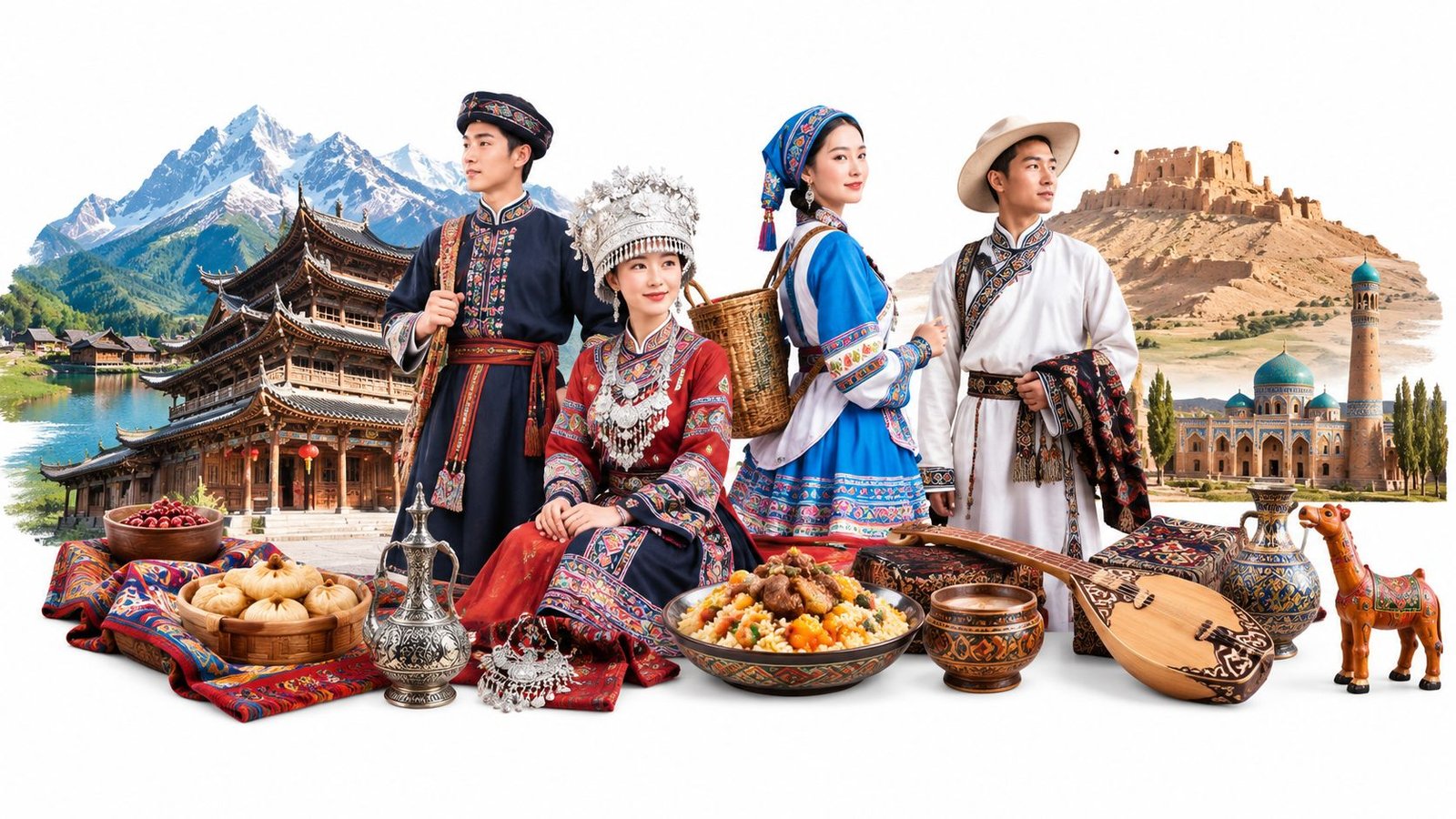
There is no single historical Italian wedding dress. Bridal clothing changed from one region to another, shaped by local textiles, social customs, religious expectations and the way each community marked a wedding. Tuscany, Venice, Sicily and Southern Italy therefore offer distinct references rather than chapters in one national dress code.
Tuscany and Venice
Historical Tuscan bridal dress directly challenges the modern assumption that an Italian bride has always worn white. In Tuscany, brides traditionally wore black dresses with white hats, a combination far removed from today's familiar bridal image. The black garment should be understood within its period and local culture, rather than interpreted through contemporary associations with mourning or eveningwear. Wedding clothing followed an older regional system of meaning, one that did not share all of the symbolism attached to bridal fashion today.
Venetian custom offers a different lesson. Older Venetian tradition is described as including two dresses, one for the ceremony and a more elaborate garment for the first dance. This arrangement gives historical context to a question that remains practical for destination couples: can one outfit suit a ceremony, dinner and a long evening of celebration?
The Venetian example makes a second look feel less like a modern departure from tradition. A reception change can continue the older idea that separate moments call for different levels of formality, comfort and movement. For a bride, the change may be as subtle as replacing a structured ceremony skirt with a lighter silhouette.
Sicily, Puglia and the South
Sicilian bridal history includes blue, while other older Italian customs used green. These colors show that bridal symbolism was not always organized around white, purity or innocence. They also show why a detail from one region should not be presented as a rule for the whole country.
In Southern Italy, the veil could carry particular symbolic weight, and older traditions included rules concerning garment length. In Puglia and neighboring southern regions, the memory of formal church dress still informs contemporary styling. Historical folklore, however, is a reference point, not a compulsory prescription for every modern ceremony.
| Historical reference | What it demonstrates |
|---|---|
| Black dress and white hat in Tuscany | Regional customs could differ sharply from the modern white-gown standard |
| Two Venetian dresses | Ceremony and celebration could call for separate looks |
| Blue in Sicily and green in earlier periods | Bridal color has never been uniform across Italian history |
| Southern veil and garment conventions | Accessories and proportions could carry local symbolic meaning |
A couple marrying in Puglia can acknowledge this layered history through proportion, textile and styling rather than costume. An ivory gown with a considered structure, a carefully placed veil or a lighter reception look can reference Italian bridal culture while respecting the region, ceremony and period that inspired it.
The Symbolism of Veils and Accessories
A veil can be a finishing detail, a church-appropriate layer or the strongest historical reference in the bridal wardrobe. Older southern Italian traditions attached symbolic meaning to veil design and even to specific length rules, although those conventions shouldn't be presented as a single standard followed across Italy today.
For a contemporary bride, the veil often works on several levels at once. It can soften a structured gown, cover the shoulders during a religious ceremony, create movement in photographs or introduce drama without changing the dress itself. A shorter veil may suit a civil ceremony or reception entrance, while a longer style can provide the formality expected in a church setting, subject to the venue's guidance.
Folklore, luck and personal meaning
Accessories often preserve fragments of wedding folklore after their original rules have loosened. The bridal garter, for example, has a documented association with luck reaching back to the 14th century. That history gives the accessory cultural weight, but modern couples can decide whether the garter remains visible, private, symbolic or absent.
The familiar idea of including “something blue” can also be approached with care. Rather than presenting it as a universal Italian requirement, a bride can use blue as a discreet personal accent in a ribbon, embroidery detail, jewelry element or shoe. Such a choice respects the appeal of bridal folklore without claiming that every Italian region has always interpreted it in the same way.
A useful accessory plan separates symbolism from obligation:
- Veil: Selected for ceremony formality, shoulder coverage, movement and proportion.
- Garter: Kept as a private reference to older luck folklore if it feels appropriate.
- Blue detail: Used as a personal accent, not treated as a national dress rule.
- Lace or embroidery: Chosen for texture and connection to Italian artisanal design, without copying a regional costume.
Accessories should also respond to the practical conditions of a destination wedding. A bride moving from a church to an outdoor aperitivo may need a veil that can be secured discreetly, while a spring celebration may call for an elegant layer that works with the gown rather than competing with it. Guidance on spring wedding ethical fashion tips can help inform decisions about cover-ups and considered materials.
Floral accessories require the same restraint. A flower crown can suit a countryside setting, but its scale and materials should support the dress, venue and ceremony rather than turning heritage into a theme. Ideas for choosing a flower crown for a farm wedding are most useful when applied selectively, especially for an outdoor celebration that already has a strong setting.
Navigating Church Etiquette and Modesty Rules
Catholic church ceremonies require the clearest distinction between fashion preference and venue etiquette. A contemporary gown may be entirely appropriate for a civil or symbolic ceremony but need adjustment before entering a church. In Italy, a church wedding generally calls for covered shoulders, a not-too-low neckline and a hemline not above the knee, according to guidance on Italian wedding traditions and ceremony attire. Italian church wedding dress etiquette should be confirmed with the specific church because local expectations can vary.
These standards aren't designed to suppress bridal style. They establish a respectful visual language for a sacred setting, particularly in historic churches and more conservative areas of Southern Italy and Puglia. A bride can still wear a sculpted waist, dramatic train or couture construction, provided the parts of the gown visible during the ceremony meet the setting's expectations.
A practical wardrobe check
The most reliable approach begins before the final fitting. Couples should ask the priest, celebrant or local planner what the church expects, then build the ceremony look around that information rather than relying on a general online rule.
- Shoulders: Plan for coverage through the gown, a bolero, a fitted jacket, a shawl or another refined layer.
- Neckline: Choose a restrained cut for the ceremony, with a removable overlay if a more open reception look is important.
- Hemline: Ensure the ceremony outfit remains formally appropriate, especially if the gown includes a shorter second component.
- Transparency: Review lace, mesh and cut-outs in natural light and inside the actual type of setting.
- Accessories: Confirm that the veil, headpiece and jewelry complement the solemnity of the church rather than reading as purely theatrical.
A layer should look intentional, not improvised. A beautifully cut cover-up in silk, lace or another compatible textile can become part of the design and later be removed for dinner. A general church wardrobe guide for women can provide additional context for selecting polished coverage without sacrificing individuality.
Civil and symbolic ceremonies
Civil and symbolic ceremonies usually allow greater freedom in neckline, sleeve, hemline and silhouette, although the venue may still impose practical or aesthetic expectations. A town hall, garden, beach or historic courtyard each creates a different relationship between clothing and architecture.
For a civil ceremony in a warm outdoor setting, a bride might choose a lighter construction and let the accessories carry the ceremonial effect. For a symbolic ceremony at a coastal venue, a more fluid dress may suit the movement of the setting. The key is not to label one look “Italian” and another “modern.” It's to match the wardrobe to the ceremony's legal or religious character, the location and the couple's own level of formality.
Modern Destination Weddings and Second Looks
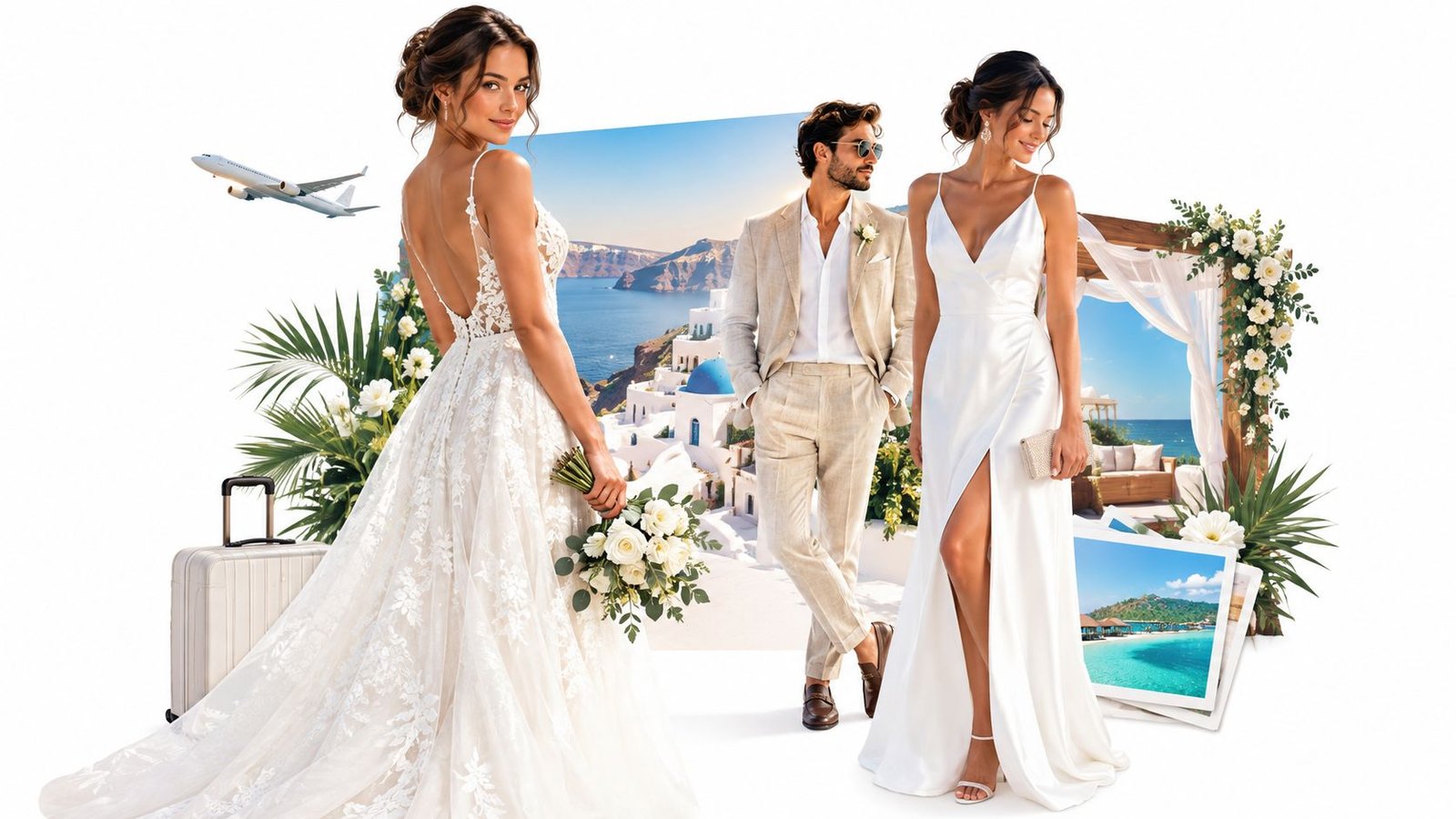
The modern Italian destination wardrobe is increasingly better understood as a system of outfits rather than one dress worn unchanged from arrival to final dance. That approach has historical precedent in the Venetian custom of two dresses, while contemporary bridal fashion brings new volume, structure and couture detail to the idea of changing for the celebration.
Recent 2026 bridal coverage highlights oversized bows, sculpted waists, basque waistlines, dramatic veils and structured gowns, alongside second looks for the party. Destination bridal trends for 2026 present these details as part of a fashion-led movement toward personalized elegance. The useful point for couples isn't to reproduce every trend. It's to identify which details support the setting and which will become visual noise.
One celebration, several sartorial moments
A Puglian wedding weekend can move through distinct atmospheres. The ceremony may require covered shoulders and a more restrained neckline. The aperitivo may call for freedom of movement. Dinner may favor a dramatic train or architectural silhouette, while the after-party benefits from a shorter, lighter or more fluid look.
That progression doesn't diminish the meaning of the main gown. It protects it by giving each stage a clear purpose.
- Ceremony look: Formal, respectful and compatible with church or civil-venue expectations.
- Aperitivo layer: Lighter and easier to move in, with a jacket, cape or removable overskirt where useful.
- Reception look: Designed for dinner, photographs and the architecture of the venue.
- Party look: Expressive and comfortable enough for dancing, without sacrificing polish.
The best second look usually shares a visual thread with the first. That thread might be a fabric, a bow, a basque waist, a lace motif or a carefully repeated ivory tone. The result feels edited rather than like two unrelated dresses.
Fashion must answer the destination
Historic venues introduce stairs, uneven floors, narrow passages and changing indoor and outdoor conditions. A dramatic veil can be extraordinary in a church aisle but cumbersome at a crowded dinner. A rigid skirt may photograph beautifully and still require a practical plan for movement.
For a beach celebration, the wardrobe must respond to wind, sand and the visual openness of the coast. Advice on planning a beach wedding in Puglia can help couples assess the relationship between dress construction, location and guest experience.
Princess Apulia® can be considered alongside a local bridal atelier, stylist or planner when a couple needs to coordinate ceremony etiquette, venue transitions and multiple looks. The relevant service is wardrobe planning that reflects the actual wedding structure, not a generic insistence on a single style.
Incorporating Heritage into Your Wedding Wardrobe
Italian heritage is best incorporated through craft, proportion and intention, not through a collection of decorative references. International couples don't need to assemble every recognizable symbol of Italy. A considered detail can carry more meaning than a wardrobe built from clichés.
Lace offers one possible point of connection. It can appear as a sleeve, veil edge, inset, glove or detachable panel, allowing a bride to reference Italian textile traditions without copying a historical garment. Tailoring provides another route. A sharply cut dinner jacket, a sculpted waist or a precisely constructed overskirt can express the Italian preference for line and finish while remaining entirely contemporary.
A heritage-led design approach
The strongest choices begin with the destination and ceremony rather than with a list of symbols.
Start with the region. Puglia and Southern Italy have their own cultural character, but no single garment represents every town, family or generation. A local lace detail, an artisan-made headpiece or a fabric selected with regional climate in mind can acknowledge place without pretending to recreate a complete traditional ensemble.
Then define the ceremony. A Catholic ceremony may require a covered-shoulder solution and a restrained neckline, while a civil or symbolic ceremony can support a more fashion-forward silhouette. The ceremony look should be designed first, with later changes planned as part of the same visual story.
Finally, assign meaning selectively. A veil may carry the strongest symbolic role. A garter may remain a private nod to historical luck folklore. A blue accent may be chosen for personal reasons. Each detail works better when it has a clear purpose.
Craftsmanship without costume
Italian bridal design is often associated with careful construction, refined finishing and the dialogue between fabric and silhouette. International couples can honor that spirit by commissioning made-to-measure adjustments, choosing a veil with a hand-finished edge or working with an artisan on a discreet accessory. The goal isn't to claim that a particular detail is required in Puglia. The goal is to value the making of the garment as much as its appearance.
A reception dress change can provide a particularly elegant connection between history and modernity. The Venetian tradition of two dresses offers a documented regional precedent, but contemporary couples can interpret the idea through a detachable train, a shorter party dress, a fitted suit or a separate look for dinner. The choice should reflect the actual rhythm of the celebration.
A useful test: If a detail would still feel beautiful without the word “Italian” attached to it, it probably belongs in the wardrobe.
For international guests, the same principle applies to dress etiquette. Formality should be visible, but regional customs shouldn't be invented or imposed. A polished dress, considered tailoring and appropriate coverage will usually communicate respect more effectively than an inaccurate attempt at traditional costume.
Italian wedding dress traditions are therefore less a fixed checklist than a design vocabulary. White can be modern rather than ancient. Black can carry historical significance without being a current bridal rule. A veil can be symbolic and practical. A second look can honor both Venetian history and contemporary destination fashion. For a Puglian wedding, the most convincing wardrobe brings these ideas together with restraint, craftsmanship and a clear understanding of the ceremony.
Couples planning a wedding in Puglia or elsewhere in Italy can begin by defining the ceremony type, venue character, regional context and number of wedding-day looks before choosing a gown. Princess Apulia can help coordinate those decisions within a broader destination wedding plan, connecting wardrobe choices with local etiquette, venue transitions and the overall guest experience.