
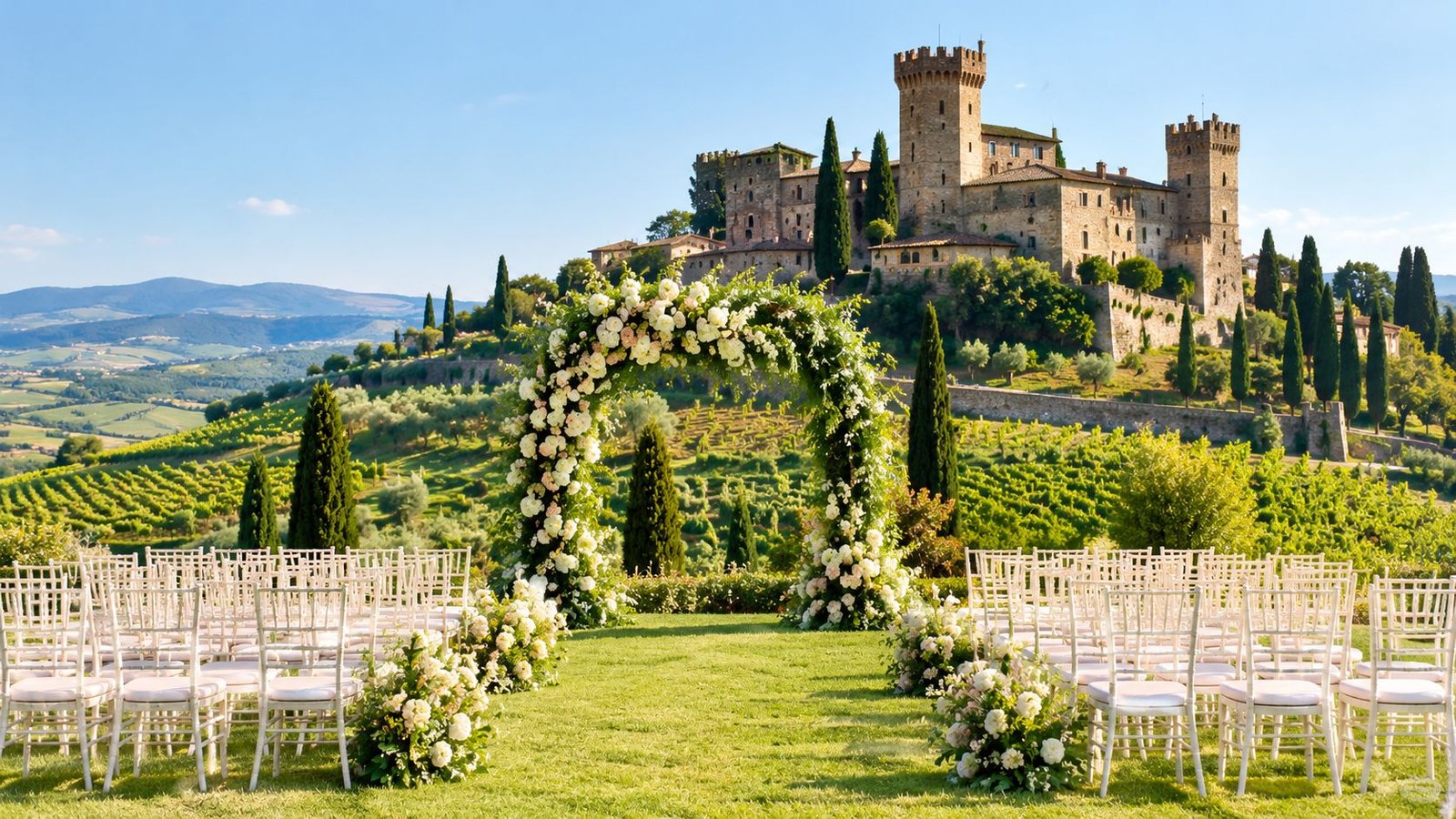
A castle wedding in Italy can feel connected to its region, but architecture alone rarely determines whether a venue will work. For couples comparing a wine estate in Tuscany with a lakeside fortress or a royal residence in Piedmont, the more useful questions start with the guest journey: how people will arrive, where they'll stay, how they'll move between spaces, and what happens if weather, access or heritage rules limit the original plan.
The eight venues below offer distinct ways to experience Italy, from vineyards near Florence and Siena to the hills of Friuli and the shores of Lake Bracciano. Each should be considered as a destination-wedding decision, not a photogenic backdrop. A wedding weekend also needs a clear rhythm, shaped by the property's setting, local hospitality and the practical needs of the guests. Couples planning a more contained celebration can also explore this intimate destination wedding planning guide.
1. Castello di Brolio in Gaiole in Chianti, Tuscany
Castello di Brolio sits on a ridge above the vineyards of Chianti Classico, between Florence and Siena. It's the ancestral seat of the Ricasoli family, whose long association with the estate continues through its wine production. That continuity makes the property feel less like a monument set aside for ceremonies and more like a working agricultural estate with a historic residence, gardens and an active relationship with the surrounding countryside.
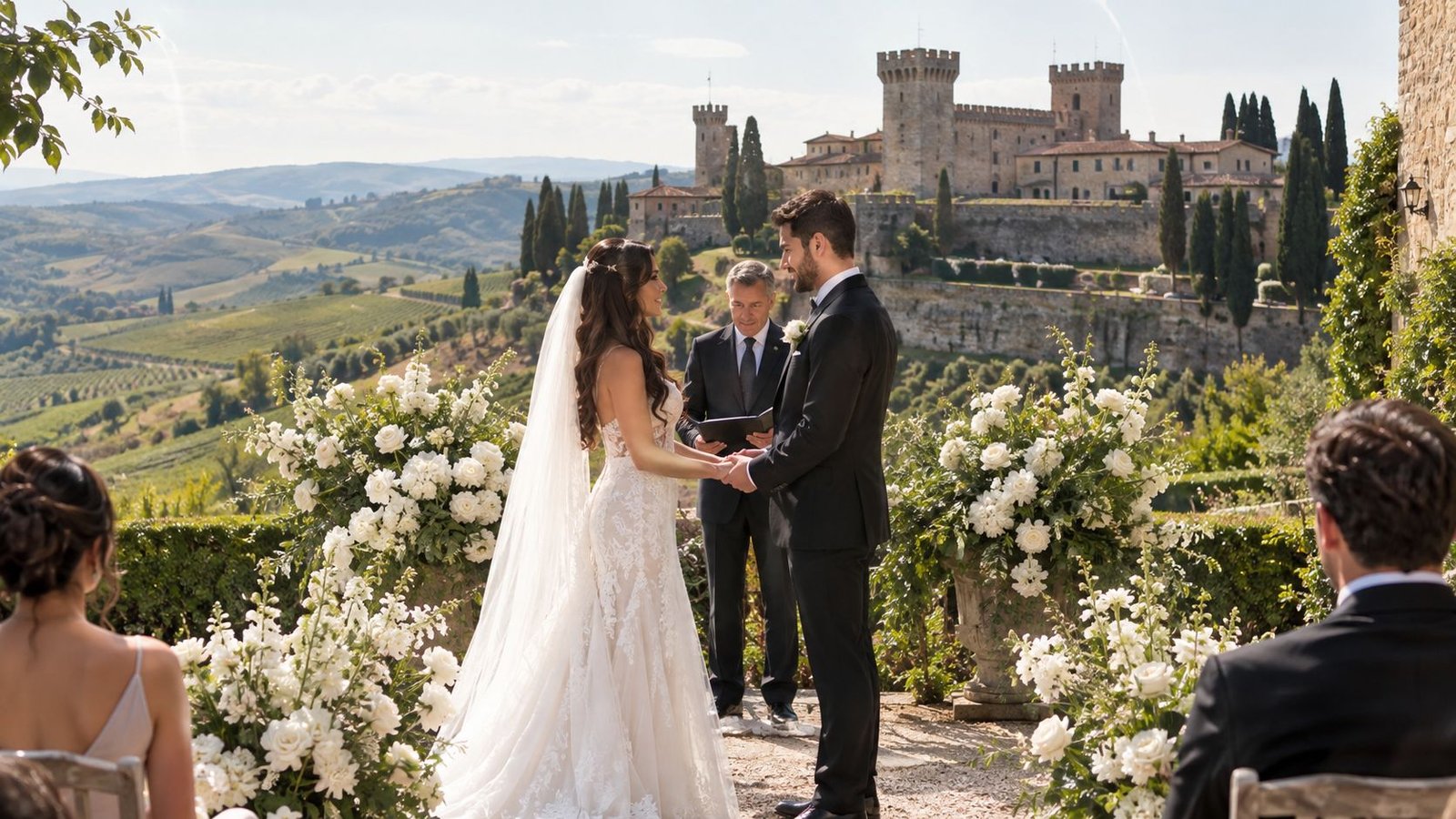
For a wedding weekend, that wine-country identity offers a natural starting point. A tasting or wine-led welcome dinner can introduce guests to the place before the ceremony, rather than treating the castle as an isolated event space. The estate's cellar visits and tastings are also part of the wider Chianti experience, making it possible to build a regional itinerary around the celebration.
Confirm the spaces separately: Ask whether the castle, gardens and cellars are available for your date, and whether each has separate conditions or scheduling.
The rural setting brings a trade-off. Guests will need a clear transfer plan from Florence or Siena, especially if events finish after dark or span several locations on the estate. Couples should verify current event policies, guest access and supplier arrangements directly before finalising a budget or guest list. Those considering other fortified properties in the south can compare Brolio's Tuscan wine-estate character with the historic settings in this guide to Puglia castle wedding venues.
2. Castello di Vincigliata in Fiesole, Florence
Castello di Vincigliata is a neo-Gothic castle in the hills above Florence, known for its views toward the city. Its medieval appearance reflects a nineteenth-century Romantic reconstruction led by the English-born antiquarian John Temple Leader, rather than an unchanged medieval fortress. That history gives the property a character of its own: it's an architectural interpretation of Tuscan medievalism, created during a period when British and other international residents took a strong interest in the region's past.
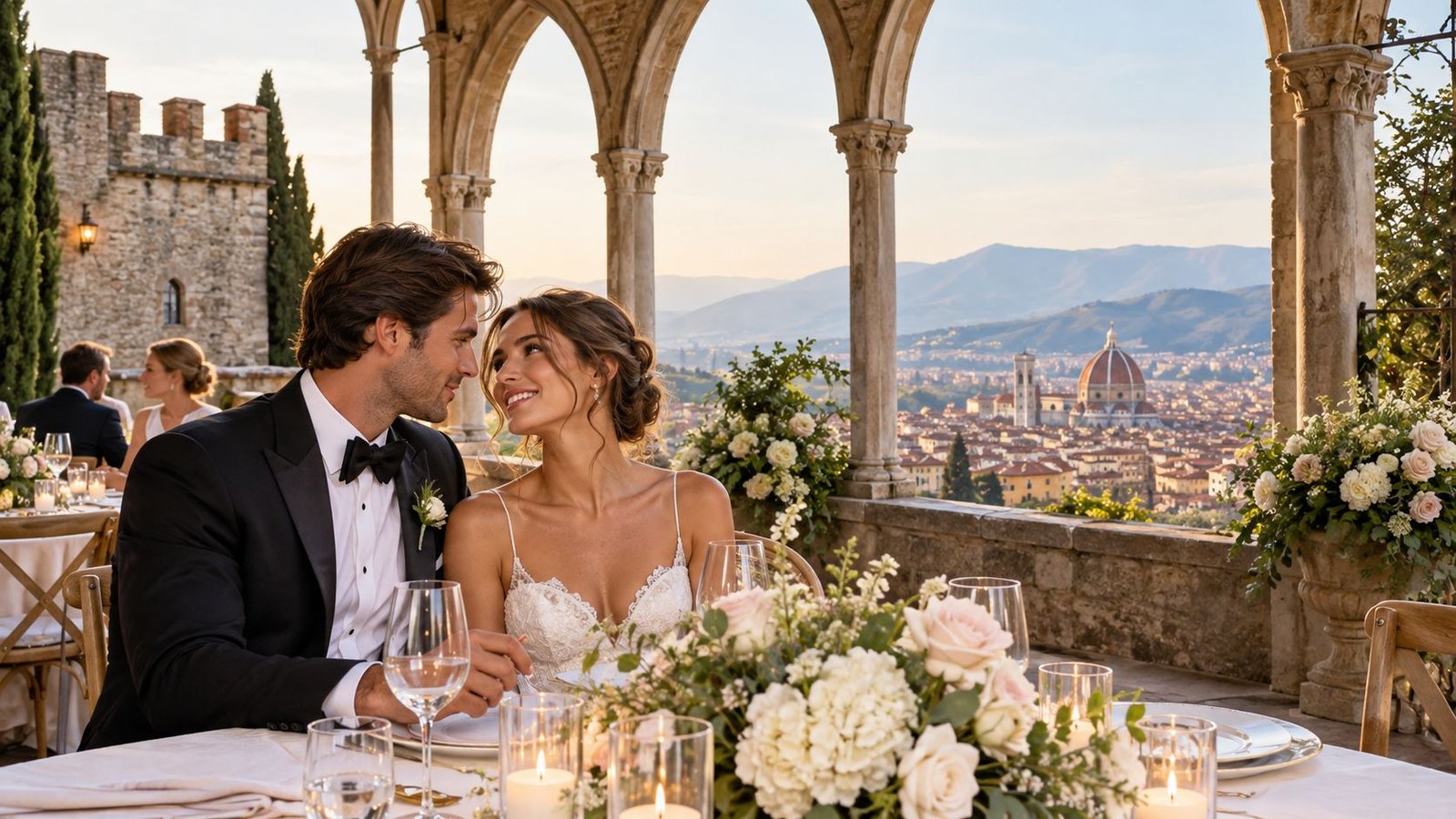
Its position makes a city-and-castle format particularly appealing. Guests can spend part of the weekend in Florence, with the castle providing a change of pace for the ceremony or reception. That combination is often more practical than asking everyone to treat a hillside venue as a self-contained destination, especially when guests have different travel schedules or want time in the city.
Match the layout to the celebration
Vincigliata shouldn't be compared with a Renaissance villa solely on the basis of its views. The scale and character of its spaces are different, so couples should request detailed layout information and, where possible, visit in person. A ceremony, dinner and dancing may call for different areas, and a layout that feels comfortable during a site visit can work differently once guest movement and service access are considered.
The hillside setting also calls for early accessibility planning. Ask about arrival routes, steps and the distance between ceremony and reception spaces, particularly if older guests or people with mobility needs will attend. Current availability and event terms should be confirmed directly with the venue before invitations or travel plans are finalised.
3. Castello di Gargonza in Monte San Savino, Arezzo, Tuscany
Rather than a single grand castle, Castello di Gargonza is a fortified medieval village in the Arezzo countryside. Its stone houses, church and restored castle structure create a compact settlement where accommodation and gathering spaces sit close together. Olive groves and wooded hills frame the village, giving it a quieter, more contained atmosphere than a property designed primarily for large receptions.
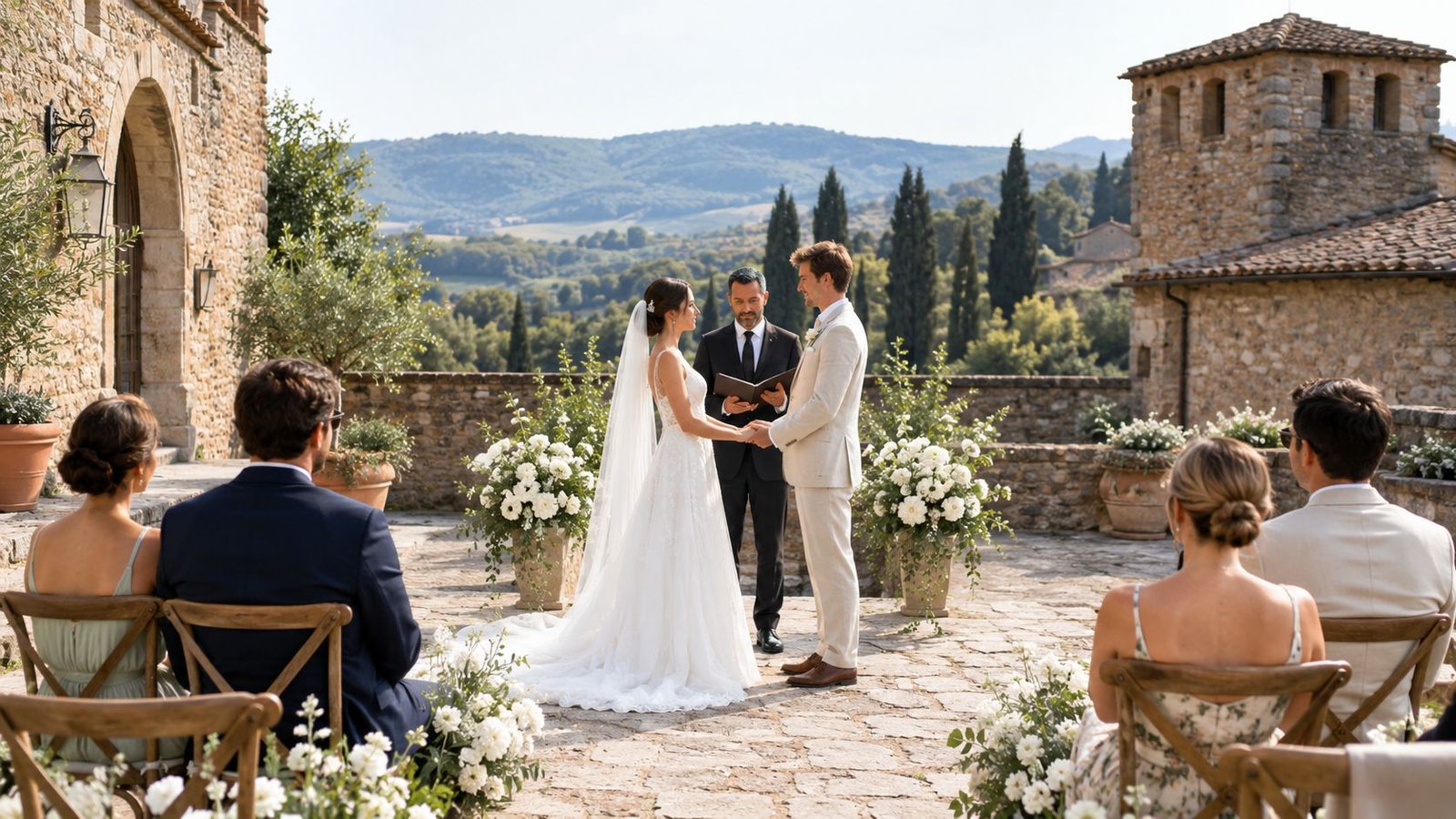
That village scale suits a multi-day celebration where guests can stay close to one another and use the same setting for several parts of the weekend. A shared dinner or aperitivo in the courtyard can make the compact footprint an advantage: guests don't need to travel between a distant hotel, a separate event space and a remote dinner location. The village setting also makes it easier to build a sense of place into the gathering without adding a complicated programme.
A compact historic village can simplify the guest experience, but only if accommodation, event spaces and exclusive-use arrangements are confirmed together.
Couples should ask whether the property can be booked exclusively for their dates and clarify how guest rooms relate to ceremony and reception spaces. The rural drive from Arezzo, Florence or the relevant airport should shape the arrival schedule, particularly if guests are travelling independently. For a broader comparison of settings and regions, the Italian wedding venues guide can help couples consider how a village property differs from a villa, masseria or city venue.
4. Castello di Spessa in Capriva del Friuli, Friuli Venezia Giulia
Castello di Spessa offers a northeastern alternative to the castle settings more commonly associated with central Italy. Set in the Collio wine district of Friuli Venezia Giulia, near the Slovenian border, it brings together a medieval-origin castle, a working vineyard estate, accommodation and wine experiences. The surrounding hills and the region's strong association with white wines give the venue a distinct food-and-wine context for a wedding weekend.
Make regional character part of the hospitality
The Collio's cultural setting has been shaped by Friulian, Venetian, Habsburg and Slovenian influences. That mix can inform the celebration in practical ways, from the wines served at a welcome event to the style of a dinner menu. Rather than borrowing a generic Italian theme, couples can let the region's own character guide the hospitality.
A tasting-led welcome event or wine-paired dinner fits naturally with the estate, but the rest of the plan still needs to account for travel. Guests may arrive via Trieste or Venice, and transfers should be planned with the distance to the property in mind. Couples should also develop an outdoor-indoor contingency for the ceremony and reception, then confirm which spaces are suitable for each part of the day. The region's weather can vary, so relying on a single outdoor setup without a workable alternative adds avoidable uncertainty.
Music and menu choices can also reflect the area's cross-border identity, provided the couple's preferences remain central. The strongest approach is thoughtful rather than performative: regional wines, local ingredients and a clear sense of hospitality can give the weekend a recognisable place without turning culture into a decorative theme.
5. Castello Odescalchi in Bracciano, Lazio
Castello Odescalchi stands beside Lake Bracciano, northwest of Rome. Built by the Orsini family in the fifteenth century and later associated with the Odescalchi family, it has the defensive presence of a substantial fortress, with towers and courtyards. The lake gives the setting a different quality from a hilltop castle, while its proximity to Rome makes it a comparatively accessible historic destination for international guests arriving through the capital.
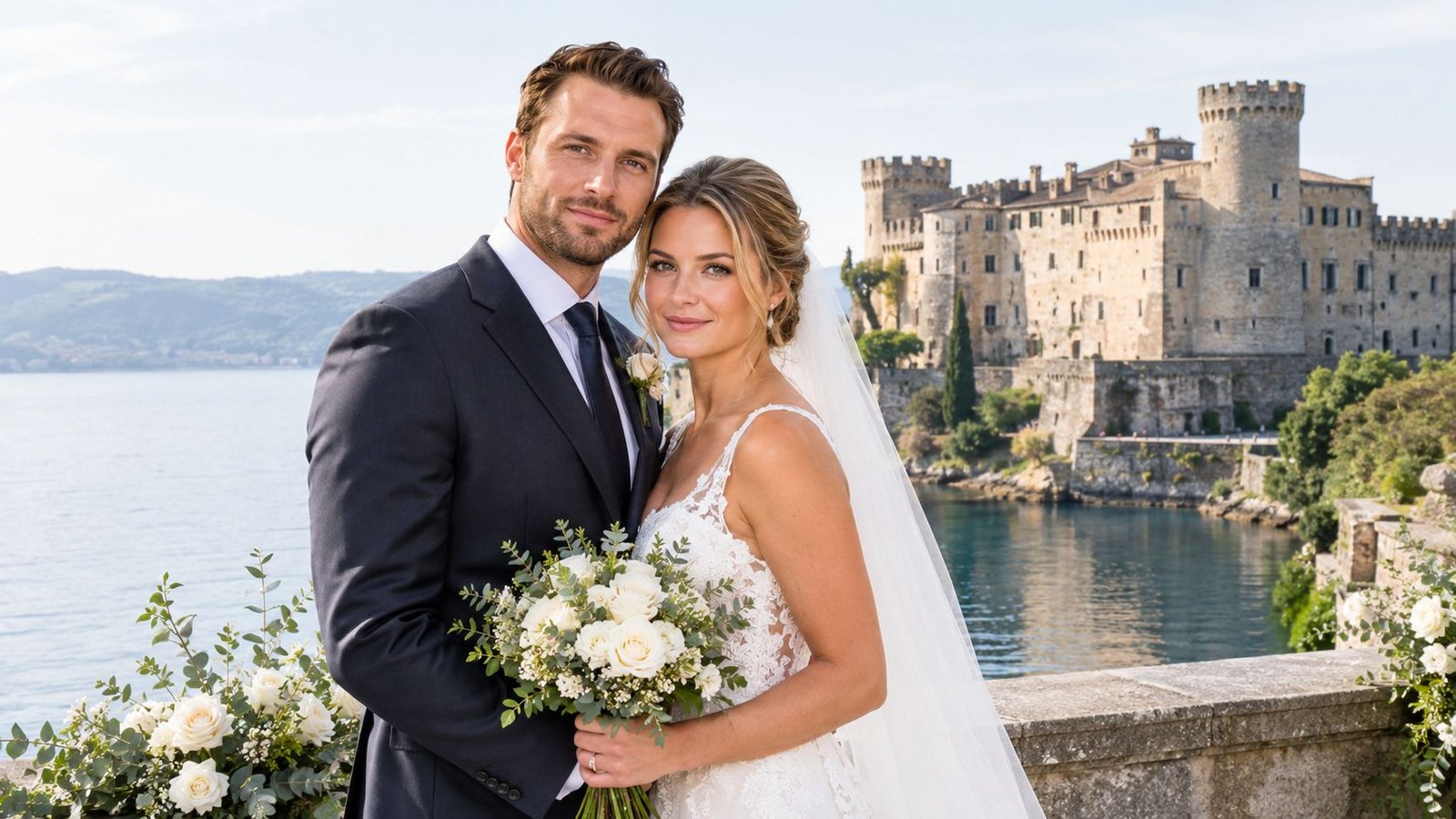
The lake can shape the rhythm of the celebration, from a waterfront welcome drink to portraits that make use of the changing light. But the guest journey deserves as much attention as the view. Rome-based arrivals and activities can make a convenient framework for the weekend, while transfers to Bracciano should be coordinated early with room for traffic delays.
Check the routes, not just the rooms: Ask how guests will move between arrival points, courtyards, terraces and reception spaces, especially if anyone has limited mobility.
The castle's heritage character may involve routes and surfaces that are harder to move through than those at a modern venue. Couples should request venue-specific details about access to ceremony and dining areas rather than assuming every space is suitable for every guest. They should also confirm which areas are available for events and how the lake-facing spaces work with the plan for the day. Couples comparing settings beyond Lazio can look at this guide to Southern Italy wedding venues, while keeping in mind that a lakeside castle near Rome serves a different travel pattern from a celebration in the south.
6. Castello Ducale di Agliè in Agliè, Piedmont
Castello Ducale di Agliè is a royal residence associated with the Savoy court, set among the Canavese hills north of Turin. Its formal interiors and historic park give it a more courtly character than a rural fortress or wine estate. The castle belongs to the Residences of the Royal House of Savoy, which were recognised by UNESCO in 1997.
That royal context can guide the tone of the event, but it shouldn't override the practical questions. Couples should confirm early which areas may be used and what conservation conditions apply to flowers, decoration and lighting. A historic interior may have limitations that aren't apparent from photographs, and the permitted setup can shape everything from the ceremony design to the choice of suppliers.
Coordinate indoor and outdoor use
The park and interiors can create contrasting settings for a ceremony, reception or guest gathering. Their availability on the same day needs to be verified, along with the time required to move between them and any restrictions affecting setup. If the celebration includes a formal ceremony and dinner, it's useful to establish a clear sequence that works within the venue's access conditions.
Agliè can also sit within a wider Turin itinerary, giving guests a city experience alongside the royal residence. Invitations, music and menus might draw lightly on Savoy history if it aligns with the couple's tastes. The venue's authority comes from its actual heritage, so the design can remain restrained rather than trying to recreate a historical scene. Couples should ask for written confirmation of access, supplier policies and conservation requirements before committing to a detailed production plan.
7. Castello di Torre Alfina in Acquapendente, Lazio
Near the Tuscan border and the Orvieto area, Castello di Torre Alfina offers a more secluded setting among woods and volcanic terrain. The restored medieval castle combines stone architecture with interiors adapted for hospitality. Its character is quieter and more intimate than that of the larger, more imposing properties in Lazio and Tuscany, which can suit couples who want the venue itself to hold the weekend together.
A stay here can be paired with visits to Orvieto or nearby Tuscan hill towns, giving travelling guests a reason to extend their visit beyond the wedding day. That regional itinerary needs to be balanced against the logistics of a rural location. Transfers from Rome, Florence or a regional airport should be arranged with the guests' arrival times in mind, rather than left to individual taxis or last-minute coordination.
The secluded setting works best when the transport plan is as considered as the ceremony design.
Couples should confirm whether the forest and gardens can be used for ceremonies or receptions, and what the indoor alternatives are if an outdoor plan changes. The scale of the interiors may suit a smaller gathering more comfortably than a large reception, so room-by-room capacity should be verified for the intended format. A ceremony space, dinner room and dancing area don't necessarily share the same practical limit. Ask the venue to explain how guests and suppliers move between those spaces, then build the event schedule around the answer.
8. Castello di Montegufoni in Montespertoli, Florence, Tuscany
Castello di Montegufoni sits in the Florentine countryside and is associated with the British Sitwell family, who owned and restored the property in the early twentieth century. The writers Osbert and Sacheverell Sitwell helped make the castle a meeting point for artists and writers of their time. Its history therefore reaches beyond the architecture, offering a connection to Anglo-Italian cultural life as well as to the surrounding wine country.
The property's place within the Frescobaldi wine estate adds a viticultural dimension that can shape a wedding weekend. A tasting or dinner focused on Tuscan produce can connect the celebration to the surrounding terrain without making every event revolve around the venue's past. Couples with a genuine interest in literary history might use the Sitwell association as a subtle theme for invitations or table details, while allowing the castle itself to remain the focus.
Check what the event actually includes
Availability may depend on whether the castle, the wider estate or particular grounds are being considered for private events. Couples should ask which spaces are available on their date, what their use includes and how guest movement will work between them. The rural setting also makes transport planning important, particularly for arrivals from Florence or the nearest town and for guests who don't have a rental car.
Montegufoni is best assessed as both a cultural setting and a practical venue. The literary associations can give the event a distinctive point of reference, but they don't replace clear answers about accommodation, event spaces and supplier access. Confirm those details directly before deciding whether the property suits the planned guest experience.
Wedding Venue Comparison: 8 Italian Castles
| Venue | Setting and Character | Planning and Resource Needs | Best-Fit Use Case | Key Advantage |
|---|---|---|---|---|
| Castello di Brolio | Medieval Chianti castle within a working wine estate | Coordinate rural guest transfers; confirm event spaces and seasonal availability | Wine-focused wedding weekend or welcome event | Authentic estate atmosphere with vineyard, food, and wine experiences |
| Castello di Vincigliata | Neo-Gothic castle on a hillside above Florence | Check space layout and accessibility; coordinate hillside transport | Distinctive castle celebration paired with a Florence itinerary | Dramatic architecture and convenient proximity to Florence |
| Castello di Gargonza | Intimate, walled medieval village in the Arezzo countryside | Plan rural transfers, accommodation, and possible exclusive use | Small, multi-day wedding with guests staying on site | Compact village layout creates a cohesive shared experience |
| Castello di Spessa | Historic castle and vineyard in the Collio wine region | Allow for longer airport transfers and prepare an indoor weather alternative | Wine-led celebration featuring Friulian food and regional wines | Distinctive northeastern Italian setting and strong wine identity |
| Castello Odescalchi | Fortified fifteenth-century castle beside Lake Bracciano | Allow for Rome-area traffic; check accessibility and event arrangements | Castle wedding with lakeside photography and Rome access | Impressive architecture, lake views, and proximity to Rome |
| Castello Ducale di Agliè | Formal Savoy royal residence with historic interiors and parkland | Confirm heritage restrictions, access, exclusivity, and event availability | Classic, formal ceremony with a Turin-area itinerary | Royal heritage and UNESCO-listed context |
| Castello di Torre Alfina | Restored medieval castle in a secluded woodland setting | Arrange advance transport; confirm capacity and permitted outdoor spaces | Intimate, private celebration near northern Lazio, Tuscany, and Umbria | Secluded atmosphere and a strong sense of privacy |
| Castello di Montegufoni | Florentine countryside castle with literary and wine-estate associations | Plan rural transfers; confirm event spaces and availability | Culturally themed celebration or wine-focused reception near Florence | Sitwell heritage combined with Tuscan wine connections |
Choosing the Right Italian Castle for Your Guest List
The most memorable castle wedding isn't necessarily the most spectacular venue. It's the property whose architecture, location and operating conditions suit the couple's guests and the way they want the weekend to unfold. A rural wine estate may provide a natural setting for tastings and shared meals, while a castle near Rome or Florence can make it easier to combine the celebration with time in a city. A small fortified village offers a different kind of togetherness from a royal residence with formal interiors.
Compare each property using the same practical questions:
- Ceremony and reception spaces: Confirm which rooms, courtyards, gardens or terraces are available, and whether each can support the planned part of the celebration.
- Capacity by setting: Ask for verified limits for the ceremony, cocktail, dinner and dancing areas separately. A venue's headline number may not describe the usable capacity of every space.
- Accommodation and transfers: Establish how many guests can stay on site, where overflow guests might sleep, and how transport will work between lodging and events.
- Season and weather alternatives: Ask what changes if an outdoor ceremony or reception can't proceed as planned, and whether indoor spaces can accommodate the intended format.
- Heritage and supplier conditions: Request written details of restrictions on decoration, installation, sound, catering access and other event arrangements.
- The wider itinerary: Consider whether the location supports welcome dinners, local food and wine experiences, town visits or a relaxed farewell meal.
The guest journey should include accessibility from the outset. Medieval stairs, uneven grounds, distant parking and separated event spaces can affect older guests, children and anyone with mobility, sensory or medical needs. Couples should request a room-by-room access map, clarify step-free routes and accessible facilities, and ask about evacuation arrangements and the support the venue can provide. A historic property's limitations don't necessarily make a celebration impossible, but they do require honest, venue-specific answers before a contract is signed.
Italian heritage also comes with a distinction between a historic property and a legally authorised ceremony location. Couples planning a civil marriage in Italy should confirm the requirements with the relevant authorities well in advance. Italy's Ministry of Justice explains that foreign nationals generally need a declaration from their country's competent authority confirming that no legal impediment exists, commonly known as a Nulla Osta. Translation, legalisation and municipality-specific procedures should also be checked for the couple's nationality and chosen Comune.
Once the essential details are confirmed, the wider destination experience can take shape around the venue rather than being added as an afterthought. Princess Apulia can help couples connect an Italian castle celebration with local hospitality, travel planning, design and the guest experience, particularly for weddings in Puglia. For couples considering a castle in another region, the same questions still apply: what the place allows, how guests will use it and whether its character fits the celebration.
Contact Princess Apulia to discuss the region, venue style and guest experience that best fit your plans, then confirm each property's current event terms directly before booking.