
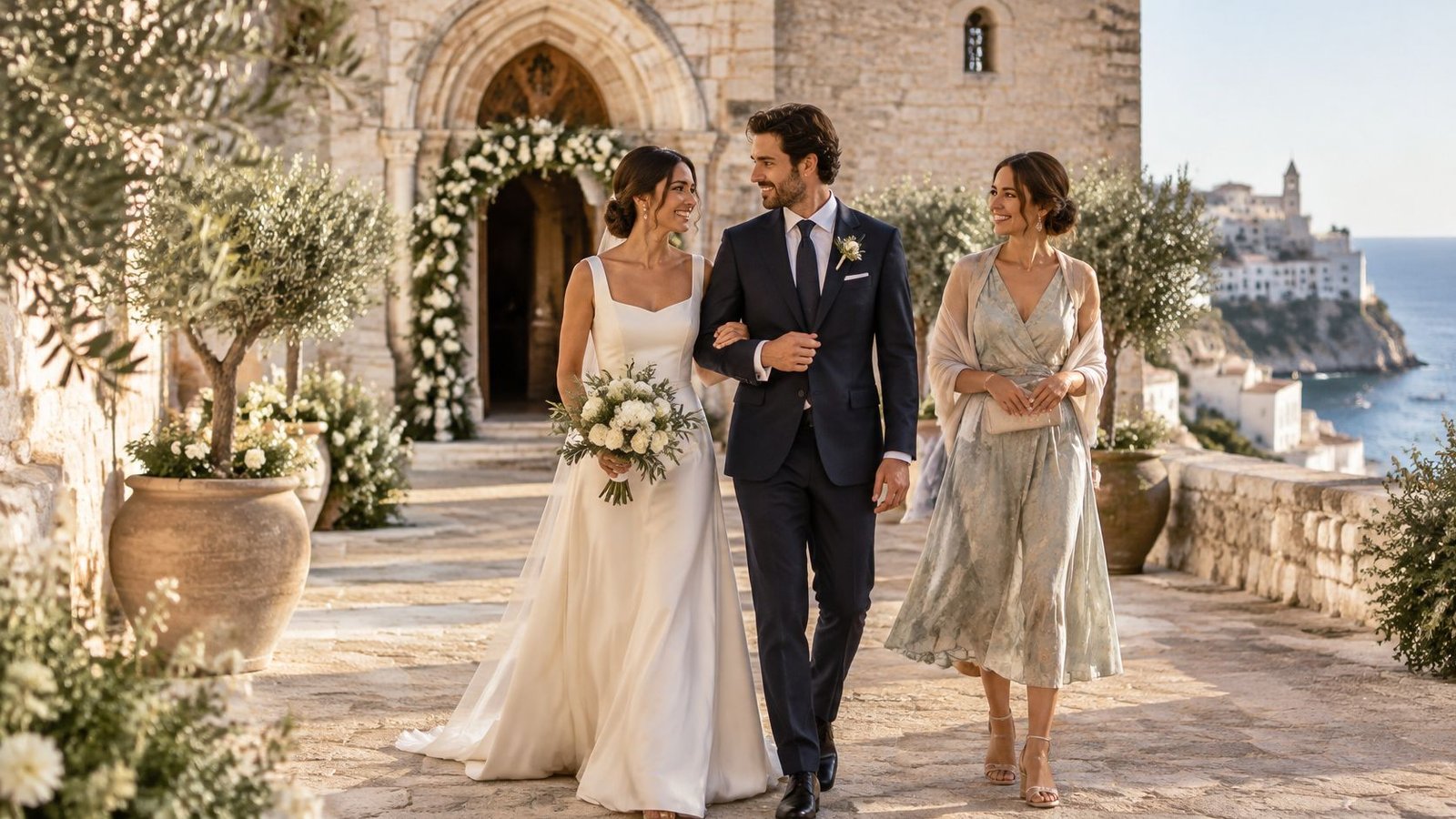
“Don't wear white” is useful wedding-guest advice, but it doesn't solve the harder questions about Italian wedding clothing. An outfit can respect that convention and still be unsuitable for a church ceremony, uncomfortable on historic paving or too informal for an evening reception.
The better starting point is the wedding's actual setting and schedule. For international couples and guests, successful dressing means balancing ceremony expectations, the invitation's formality and the practical demands of moving from town streets to dinner and dancing.
Why Italian Wedding Clothing Starts With the Setting
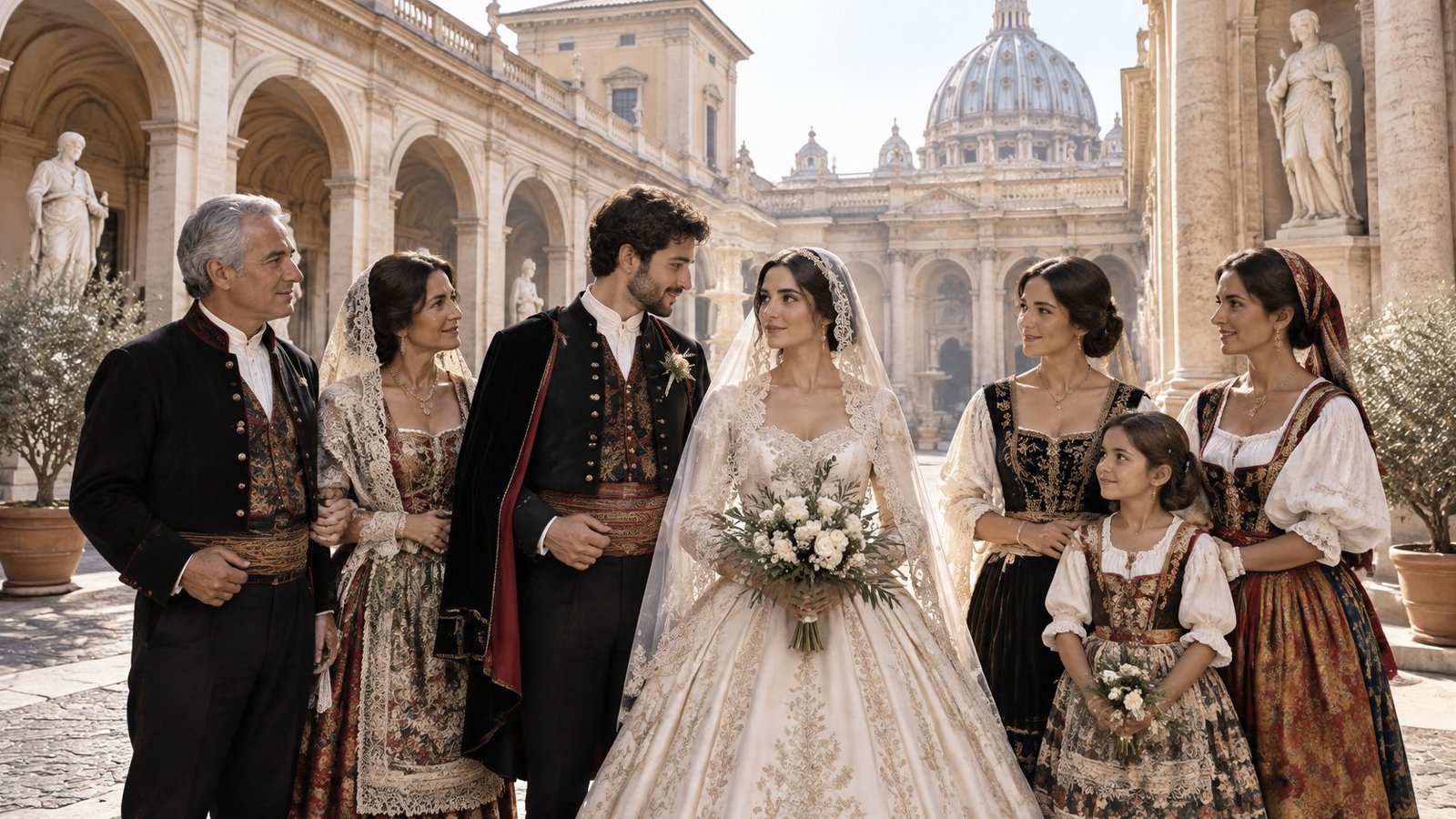
There isn't a single traditional Italian wedding costume. The regional Ciociaro ceremonial garments documented by the Vatican Museums' Museum of Civilizations demonstrate how materials, decoration and combinations of garments reflected particular places and occasions, rather than a national uniform.
That distinction matters today. A historical reference can inspire an outfit, but it shouldn't be mistaken for a dress code shared by every Italian wedding.
The location comes before the look
A church in a historic town raises different questions from a civil ceremony in an approved building. A masseria or courtyard reception introduces outdoor surfaces and changing light, while a seaside venue may involve sand, exposed terraces or wind.
Even within Puglia, the Valle d'Itria, Adriatic coast, Salento and Gargano offer different settings. The regional name alone doesn't reveal whether guests will walk through a town, cross a garden or remain inside a formal reception room.
Princess Apulia's existing guide to Italian wedding dress traditions and modern styling provides the broader regional and historical context. For clothing decisions, a practical order works better:
- Setting first: Identify the ceremony room, reception space and surfaces between them.
- Formality next: Read the invitation before choosing a garment category.
- Personal style last: Express taste within those boundaries, rather than buying an outfit and hoping it fits the occasion.
Dress Codes by Ceremony and Venue
A cathedral aisle and a gravel courtyard ask different things of the same guest. Read each setting through three lenses: the formality signal, what the venue asks the body to wear, and the surface and schedule that shape the choice.
| Setting | Formality | Coverage and footwear | Surface and schedule |
|---|---|---|---|
| Church ceremony in a historic town | Formal, with expectations set by the parish or celebrant | Shoulders and knees may need covering; a wrap or jacket helps; secure shoes for town paving | An indoor rite followed by walking on paved streets to the reception |
| Civil ceremony in an approved building | Formal municipal setting, interpreted through the invitation | Structured separates, a suit or an occasion dress; secure footwear for access and steps | A civic interior reached by entrance steps |
| Masseria or courtyard reception | Daytime or early evening formality, as specified by the couple | Uneven paving calls for stable footwear | Drinks, dinner and dancing may sit on different surfaces around one property |
| Seaside venue | Lighter fabrics; formal evening still calls for polish | Sand-friendly shoes where the route crosses the beach | Sand, open terraces and wind across a long outdoor evening |
Ceremony requirements and styling conventions deserve separate treatment. Where a parish sets coverage expectations, a sleeveless neckline, short hem or open back needs a wrap or jacket that works like a second layer for the whole rite. A wrap that slides off mid-ceremony solves nothing.
Civil ceremonies raise administrative questions for the couple while leaving clothing to the room and the invitation. The U.S. Embassy in Italy's marriage guidance states that two witnesses must attend and that an interpreter may be required when necessary, and it leaves gown colour and suit silhouette entirely to the couple. “Civil” describes the venue; the invitation still sets the standard.
The colour and garment questions guests actually ask
Black depends on the setting and the hour. A sharply cut black outfit can suit a formal municipal ceremony, while a softer palette fits a relaxed outdoor lunch. The couple's stated preferences carry more weight than a context-free prohibition found online.
A jumpsuit is judged by the same criteria as any other garment. Coverage, neckline, fit and the parish's expectations matter more than the label on the hanger, and the same reasoning applies to trousers and well-made separates.
Red and bold prints need context too. Guests should weigh whether the invitation requests a palette, whether the pattern reads as formal and whether a strong colour would clash with an explicitly coordinated wedding party. White and bridal-looking ivory stay tied to the couple's palette unless they expressly invite them.
Outdoor doesn't mean informal
A masseria can host a highly formal celebration, and a seaside address doesn't make beachwear appropriate. Princess Apulia's guide to organizing a wedding in a vineyard offers useful planning context for another outdoor setting where access, terrain and reception style deserve separate consideration.
For non-binary guests, the most useful reading of a gendered invitation is its intended level of formality. A carefully cut outfit earns its place through finish, fabric and coverage, and any expectation that stays unclear is worth raising with the couple directly.
Colour, Silhouette and Tradition
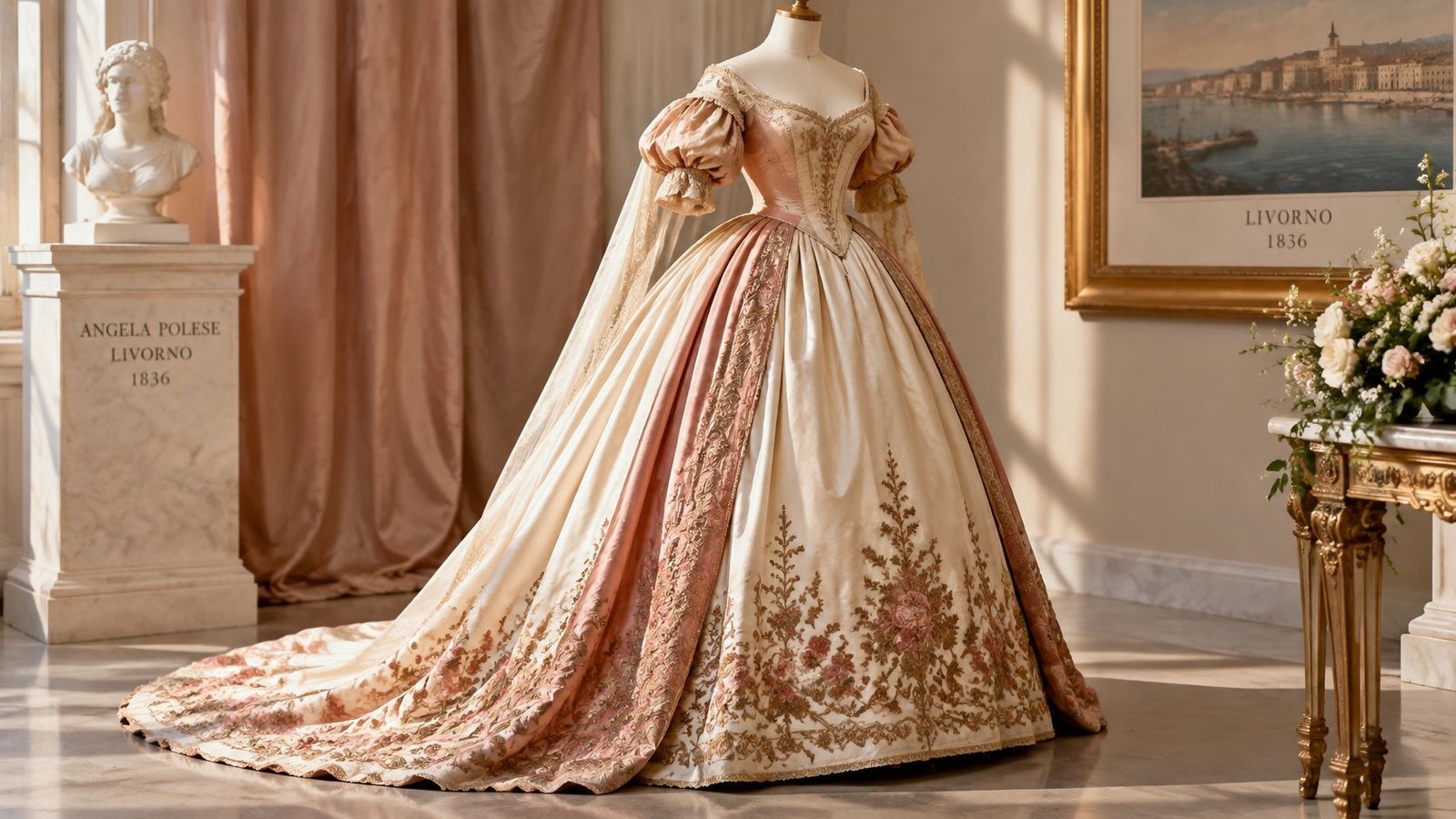
A bride doesn't have to wear white to honour Italian wedding history. An 1836 gown made in Italy for Angela Polese of Livorno, who married Giuseppe Ascione, survives in the Uffizi Galleries, whose account notes that antique gold and pale pink remained popular bridal colours at least until the mid-19th century.
White's rise was gradual, not an abrupt replacement of every earlier custom. Queen Victoria's 1840 wedding helped popularise an existing choice, according to the White House Historical Association's account of her wedding dress. The useful distinction is between a powerful fashion influence and the invention of white bridalwear.
Colour is a choice, not a historical test
Antique gold and pale pink have documented historical grounding. Ivory, champagne and other soft shades can also be considered as present-day personal choices, without claiming that every shade represents an established regional custom.
Colour should be assessed in the actual fabric. A warm lining can change how a translucent outer layer appears, while a reflective finish can make the same shade look different indoors and outside.
Practical rule: A bridal colour should be chosen because it suits the wearer and the garment, not because an assumed tradition makes it compulsory.
Match the silhouette to the route
A fitted bodice and fuller skirt can complement a church or formal civil room. A simpler line may be easier to manage at an outdoor masseria, but neither setting dictates a single shape.
Train length deserves its own decision. The aisle, entrance steps, turning space and paving should be checked before committing to fabric that must trail behind the bride. A bustle or detachable element should be tested while walking and sitting, not only while standing at a fitting.
For the groom, a well-fitted suit or more formal coat should follow the invitation and time of day. The jacket needs room for movement without pulling across the back, and trousers should remain comfortable during dinner.
Broader Italian wedding traditions can inform the celebration without controlling every wardrobe choice. Before final alterations, the couple should agree on colour, silhouette and any evening change, including where changed garments will be kept.
Fabrics and Cuts for Heat, Stone and Movement
A ceremony fabric can pass every indoor check and still be wrong for the route between church, courtyard, dinner and dancing. Ask each supplier for fibre composition, weave and fabric weight. A swatch and a sewn sample say more than a fabric name, even when the label trades on the appeal of Italian silk.
Judge cloth the way the day will use it: sun on stone, pressure from seating, friction from a bag strap, airflow during an outdoor aperitivo, then cooler air after dark. A fabric that feels calm in a fitting room may crease, glare or cling once the schedule changes.
Use a practical sequence:
- Check opacity: Hold the swatch against light, then over the intended lining or underwear.
- Check recovery: Crease and release a spare sample, observing whether the fold relaxes.
- Check seam stability: Gently pull across a sewn sample to see whether yarns separate beside the stitching.
- Check snag resistance: Lightly brush or scratch a sacrificial swatch, with the supplier's permission, and keep the finished garment out of the test.
Why silk needs closer inspection
The bridal-textile discussion published by White Stole highlights an important trade-off: silk's moisture absorbency can help it feel cooler in warm conditions, and the same quality leaves it vulnerable to water marks, perspiration staining and dye migration. Construction changes the result as much as fibre content.
Fabric Choices for Heat, Stone and Movement
| Fabric | Strength | Watch for |
|---|---|---|
| Silk | Moisture absorbency can feel cooler in warm conditions | Water marks, perspiration staining and dye migration |
| Charmeuse | Fluid, reflective surface | Snags and visible marks |
| Crepe de chine | Lightly textured surface that disguises creasing | Opacity and seam stability in the chosen weight |
| Georgette and chiffon | Light and translucent; suitable for movement and layering | Lining requirements and exposed hems |
| Taffeta | Holds shape for structured skirts and bodices | Bulk and comfort when seated |
| Linen for guests | Breathable | Readily visible wrinkles |
| Lightweight wool for guests | Useful for cooler evenings and structured outfits | Comfort during the warmest part of the event |
| Blends | Can balance drape and recovery | Fibre ratio, lining and finish |
A useful test is a charmeuse dress planned for a stone courtyard ceremony and an indoor dinner. Check the bodice over the inner lining, crush a spare edge and let it relax, pull gently at a sewn side seam, then brush a hem offcut. If a crease shadow remains, a snag trail shows, or the surface makes every mark easy to read, crepe de chine or a better-lined construction will usually serve the same silhouette with less risk.
Silk weight may be described in momme, a measure of material per area. A higher value generally means more material and can improve opacity, and it still needs to be read beside drape, lining and movement. A heavier cloth that restricts walking or sitting can be the poorer choice for the intended garment.
Assess the whole garment
For guests, linen's relaxed creasing can suit an outdoor lunch and look too undone for a sharply defined evening room. Lightweight wool can support cleaner lines as temperatures fall, while blends should be judged on measured performance: recovery, opacity, seam behaviour and comfort in heat.
When coordinating a structured jacket with a fluid dress or separates, fabric pairing advice from ClothME gives a practical way to compare texture and compatibility before committing.
The lining deserves equal attention. Ask the atelier whether it can be removed, washed or replaced, and whether stressed seams need reinforcement within the chosen design.
Guest Outfits for a Multi-Day Italian Celebration
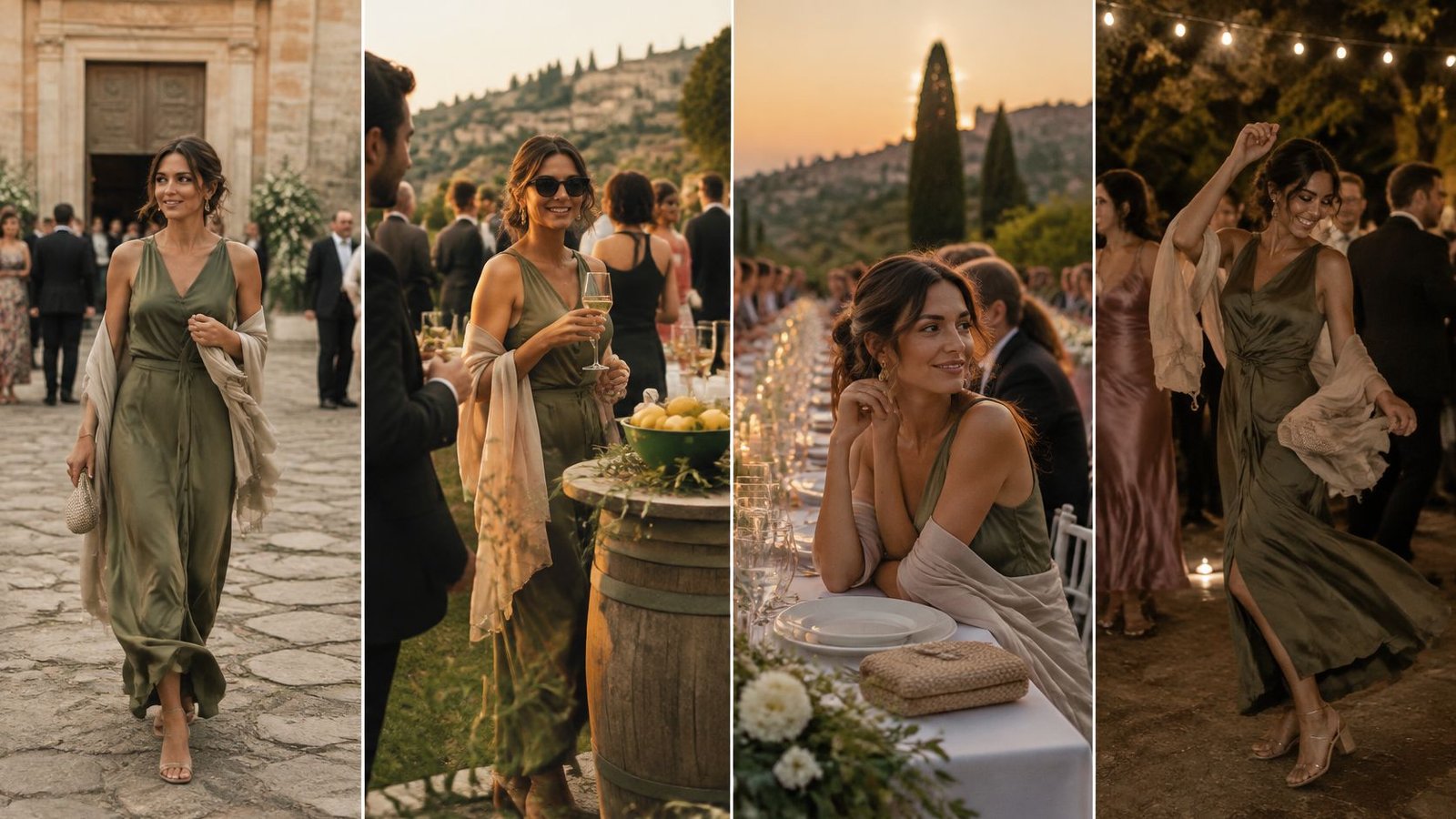
A guest may need the same outfit to work for a ceremony on historic paving, outdoor drinks, a long dinner, dancing and a cooler journey back to accommodation. Dressing only for the ceremony photograph leaves most of that day unaccounted for.
The solution is an outfit system, not necessarily a second complete outfit. Each component should solve a particular problem without making the guest carry an impractical amount.
Build from the base outfit
- A dependable base: A dress, jumpsuit, suit or coordinated separates should remain comfortable while seated and allow unrestricted walking. Underlayers should be tested for rubbing and visible edges.
- A deliberate shoe change: Stable heels or block heels can work on suitable stone; secure flats are often more manageable on gravel or grass. The replacement pair should still suit the outfit.
- A packable layer: A wrap or light jacket should fit inside the day bag or have a confirmed place on the transfer vehicle.
- Adaptable accessories: A compact bag and restrained jewellery can carry the outfit from daylight into dinner without a complete restyling.
- Protected transport: A folding or rigid garment case should keep the outfit separate from toiletries and footwear during travel.
Let the walking surface decide
Cobblestones call for balance and a secure fastening. Gravel requires a sole that doesn't become uncomfortable underfoot, while grass makes narrow heels impractical. On stone courtyards, traction matters as well as heel width; sand favours flat footwear that stays attached to the foot.
Age alone doesn't determine the right shoe. Guests with different mobility needs, body types or sensitivities should prioritise their own stability, support and freedom of movement. A polished flat is preferable to a formal shoe that makes the route unsafe.
The most convincing destination-wedding outfit is one the guest can wear comfortably for the whole occasion, not one that imitates a national fashion stereotype.
For a multi-day celebration, the welcome dinner, ceremony and farewell lunch should each have a planned look. Repeated accessories can simplify packing, but guests should confirm whether each event has a different setting or level of formality. Where the couple chooses to collect guest photos through Wedding Studio, informal images can preserve the different gatherings alongside the professional wedding coverage.
Season changes the layers rather than the underlying method. Spring and autumn call for attention to evening cooling; summer favours a lighter base with a layer available later. The event's start time and local forecast closer to departure should guide the final packing decisions.
Italian Styling Through Tailoring, Colour and Accessories
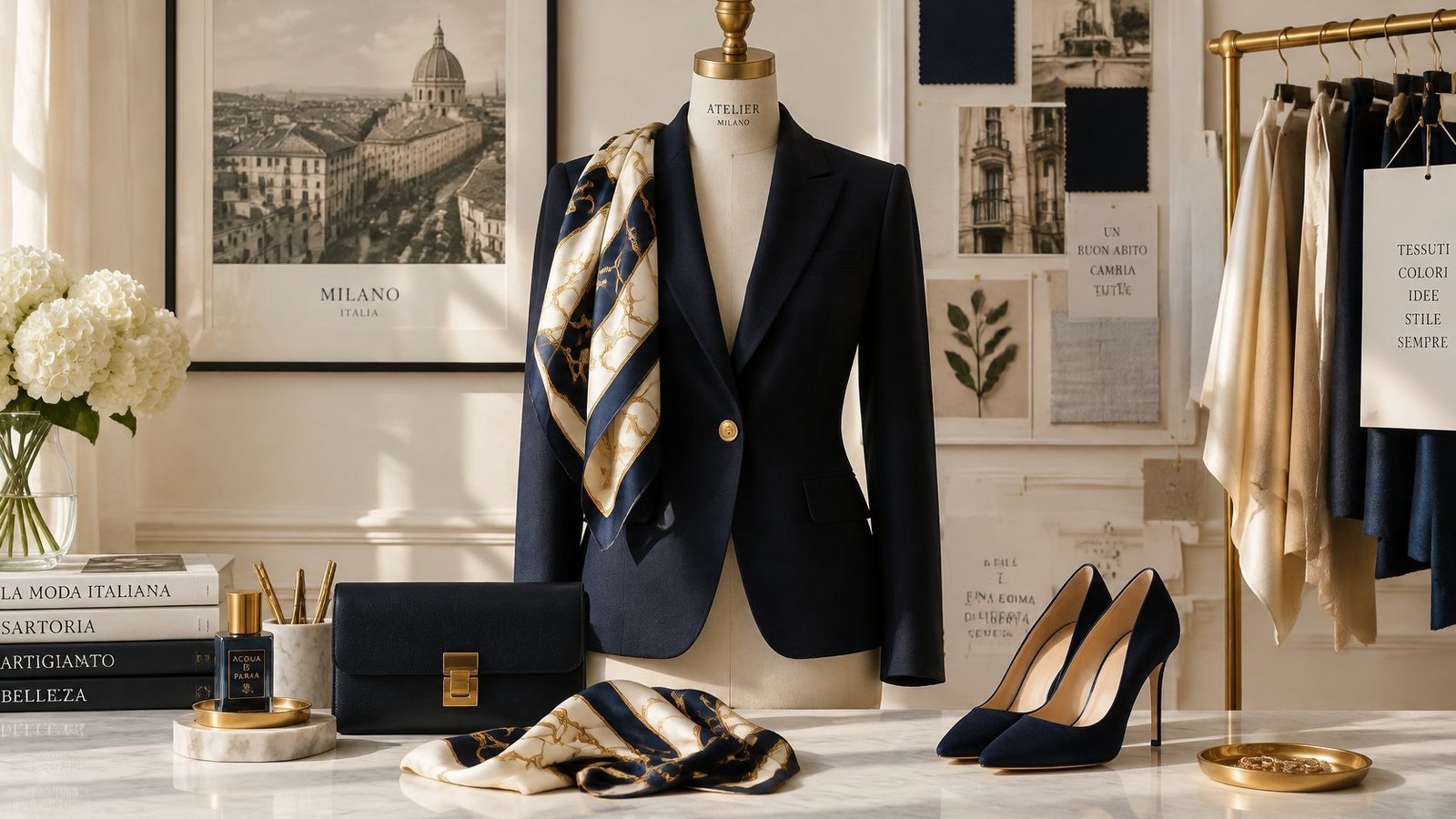
Restraint is a more useful approach to Italian-inspired styling than costume. A well-fitted outfit with deliberate accessories usually looks more considered than a collection of recognisably Italian motifs.
Tailoring comes first because poor proportions remain visible regardless of the fabric's quality. Shoulder seams should sit where the design intends, sleeves shouldn't obscure the hands, and hems should work with the shoes being worn. That last point deserves a real check: a trouser break measured against a low heel will drag if the guest switches to flats for the dancing, so fittings should happen with the shoes planned for the longest stretch of the day.
Proportion before decoration
A waist should sit at the garment's designed position rather than being forced into place with a belt. Trouser length should be checked in motion, and a jacket should close without distorting its front.
Princess Apulia's guide to men's wedding style rules provides further context for formalwear decisions. The broader principle applies across wardrobes: alterations should serve the wearer's proportions, not an imagined standard body.
Use colour and craftsmanship selectively
Puglia's pale stone, olive greens and coastal blues can suggest a palette without requiring literal matching. The practical way to use that palette is as a filter, not a formula. A muted green dress reads softly at a midday ceremony among olive trees, while deep blue suiting sits comfortably against whitewashed stone and evening sea light. Personal colouring and the invitation remain more important than coordination with the surroundings, so treat the setting as a tiebreaker between options the guest already likes.
Accessories should add texture and finish, and the best ones work across more than one event. A silk scarf adds colour at the ceremony and warmth after sunset. A structured bag carries from welcome dinner to farewell lunch, and jewellery with a crafted surface provides interest without competing for attention. Shoes still need to pass the walking test from the earlier sections: cobblestones, gravel and grass each set their own limits before style enters the discussion.
- Made-to-measure possibilities: Some Italian ateliers and leather artisans offer individual commissions; availability, fittings and lead times need direct confirmation with each maker.
- A controlled focal point: Statement earrings might be paired with distinctive shoes, or a patterned tie with a textured jacket.
- A quieter supporting role: Once those focal points are chosen, the remaining accessories should support them rather than introduce another theme.
The practical styling rule is simple: choose two statement pieces and keep the rest quiet. That leaves room for personality without making the outfit feel overdecorated.
Packing, Transport and Care for Wedding Clothing
Wedding clothing should travel in a supportive, breathable garment case and be unpacked on arrival. A rigid case can help limit compression where practical, but packing must also follow the garment maker's instructions and the carrier's baggage rules.
The risks extend beyond wrinkles. Conservation documentation from Bologna's Davia Bargellini Museum records deterioration including stains, loose stitching, missing buttons, damaged trims and embroidery, ripped linings, yellowing and permanent creasing.
Before departure
- Obtain written care instructions before buying. The instructions should cover the main fabric, lining and embellishments, not merely the fibre listed on a label.
- Confirm the cleaning method. The maker should explain whether wet-cleaning is suitable or whether specialist solvent treatment is needed.
- Agree on packing support. Heavy skirts, boning and decorated bodices may need different arrangements; the garment shouldn't hang from delicate straps unless designed to do so.
Clothing arrangements also belong within the wider travel plan. Translate AI's guide to how to prepare for international travel provides a broader preparation resource, while garment-specific instructions should remain with the luggage and be available to anyone helping unpack.
At the destination and afterwards
- Unpack promptly: The garment needs space to recover from compression, away from food, drinks and damp areas.
- Avoid airtight plastic for storage: Breathable covers reduce the risk of trapped humidity. Delicate accessories can be protected with appropriate tissue.
- Distribute weight: Suitable padded supports or forms can prevent concentrated strain at shoulders and folds.
- Separate detachable details: Veils, belts, overskirts and decorative pieces should be stored according to the maker's instructions.
Care caution: Aggressive spot-cleaning can distort dyes or weaken finishes, especially when several materials meet in the same garment.
A gown should be professionally assessed soon after the wedding, even when no obvious stain is visible. Body oils, food residues and moisture can cause damage over time; the cleaner should know about any spills and the materials involved before treatment begins.
Confirm the Dress Code With Your Venue Before You Buy
Order a gown in January for a July ceremony in Puglia, and a site confirmation in April can still upend it: the walk from the church door to the dinner tables crosses a gravel garden and two flights of worn stone steps. The dress fits perfectly, but the hem, the train and the heels were chosen for a different day. Changing them at the final fitting costs far more than asking earlier would have.
Most of these questions can be answered long before anyone boards a plane. Most Princess Apulia® couples live outside Italy, and meetings, venue research, supplier comparisons and planning are managed remotely, so clothing decisions never need to wait for an arrival visit.
The confirmation checklist
- Walk the route on paper: Ask the venue which surfaces the day crosses, from ceremony entrance to reception tables, including gravel, grass, polished stone and stairs between spaces.
- Pin down the schedule: Confirm the ceremony start, how long guests stand outdoors, and whether the celebration moves inside or onto a terrace after dark. Layering and heel choices depend on those hours.
- Resolve conflicting instructions: If the printed dress code and the ceremony's own guidance disagree, ask the couple or planner which applies rather than guessing. The stricter instruction usually governs the ceremony itself.
A planner can fold these answers into the wider schedule, so that formalwear, walking routes and guest communications remain one decision rather than three separate ones.
Before the next fitting, send the confirmed details to the tailor or boutique. Ask whether the outfit, shoes and layers still match the day as described, and let those answers shape the alterations list.