
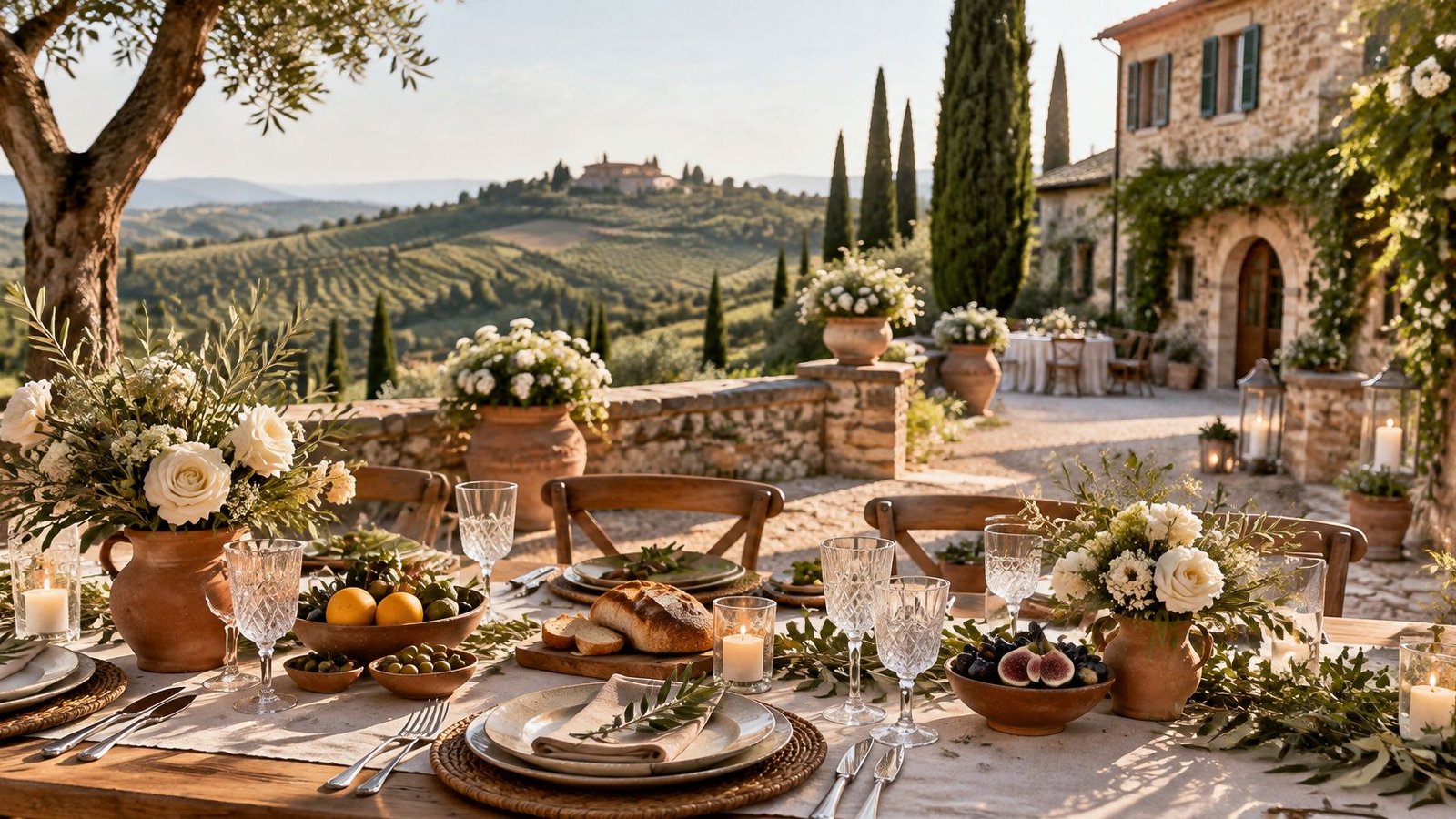
The most popular advice for Tuscan themed weddings starts in the wrong place: olive branches, terracotta napkins and long wooden tables. Tuscany is a place, not a décor scheme. The most convincing celebrations begin with an environment, an architectural setting and a clear understanding of how guests will experience both.
A pastoral farmhouse dinner needs different planning from a Florentine courtyard reception or a coastal gathering near Bolgheri. These concepts work as adaptable moodboards, not fixed packages. Couples should allocate the budget to the venue, guest journey, catering and accommodation before committing to decorative details.
Princess Apulia's existing Tuscan wedding perspective also provides context for couples comparing Tuscany with Puglia. The useful distinction isn't which region looks more Italian, but which setting supports the celebration, hospitality, and travel arrangements the couple wants.
Planning principle: A strong moodboard should explain where the wedding belongs, how the meal feels and how guests move through the day. A colour palette alone can't answer those questions.
1. Val d'Orcia Pastoral Garden Wedding
The setting should remain the centrepiece of a Val d'Orcia-inspired wedding. Choose a farmhouse estate or garden setting with an uninterrupted outlook, then introduce raw linen, weathered wood and terracotta without turning agricultural simplicity into theatrical rustic styling.
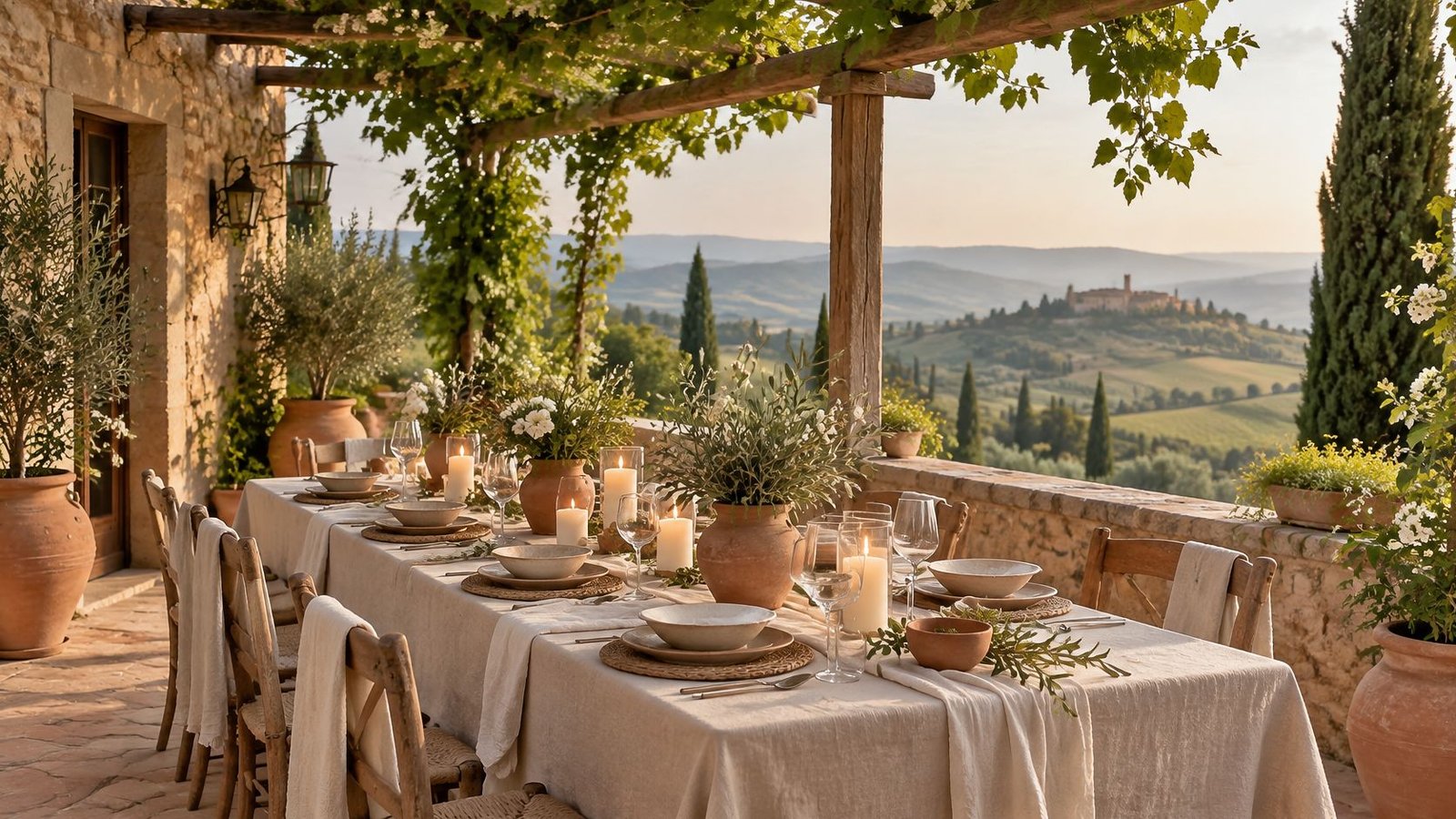
Villa La Foce belongs on a visual-reference shortlist, with current wedding availability confirmed directly rather than assumed. Agriturismo and farmhouse properties in the Val d'Orcia and Crete Senesi offer another search direction, especially for couples seeking accommodation alongside the celebration.
Let the View Set the Priorities
A restrained floral brief works best: low arrangements, loosely composed seasonal stems and vessels that don't obstruct conversation. A garden-experienced florist should assess exposure and installation conditions, while the photographer should review the actual ceremony and dinner positions rather than rely on scenery photos.
Princess Apulia's guide to choosing a garden wedding location offers a useful starting point for assessing the setting beyond its appearance.
- Guest experience: Connect a relaxed welcome dinner, wedding reception and farewell lunch without repeatedly moving guests between distant properties.
- Menu character: Request a seasonal countryside menu, with dietary alternatives developed alongside the main dishes.
- Sample-budget framework: Allocate funds first to accommodation, catering, transfers and a usable indoor alternative. Add linen, ceramics and flowers after those costs are understood.
The practical limitation is exposure. Couples should inspect shade at the intended ceremony hour, trace the route to accessible restrooms and confirm where everyone will dine if outdoor conditions become uncomfortable.
2. Chianti Vineyard Harvest Wedding
A vineyard wedding should feel connected to wine production, not decorated with wine-related props. Begin with the estate's food and bottles, then use vine foliage, timber and muted colours sparingly.
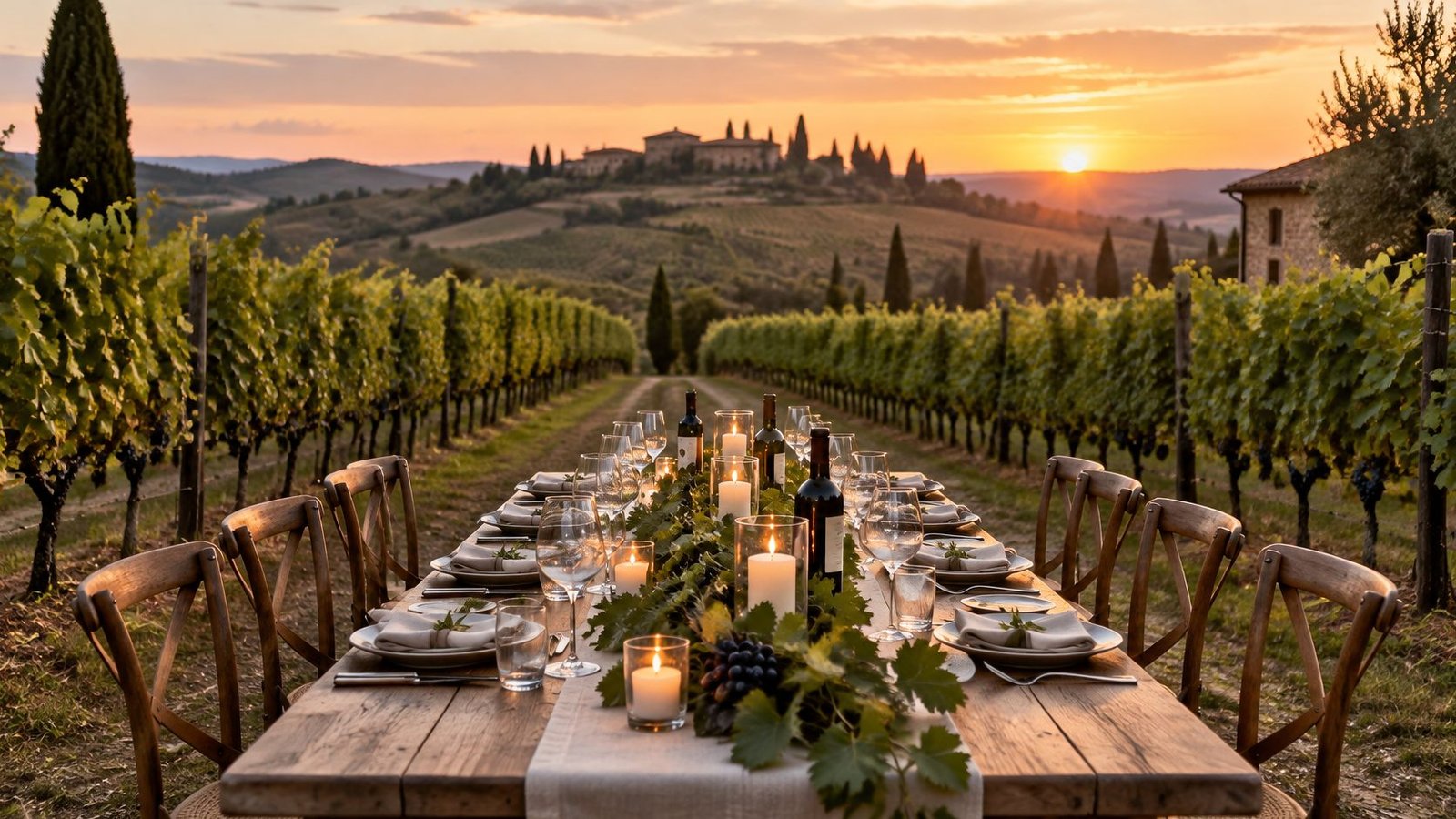
Castello di Verrazzano and Castello di Nipozzano are named estates to investigate directly, not guaranteed wedding venues. Couples should request written confirmation of private-event availability, permitted spaces and how celebrations fit around estate operations.
For the menu, Visit Tuscany's food-and-wine guidance connects Chianti DOCG with Sangiovese and identifies regional foods including Cinta Senese cold cuts and ribollita. Those references offer a more grounded starting point than a generic Italian banquet.
Put Hospitality Ahead of Vineyard Theatre
A seated welcome tasting gives interested guests a structured introduction without making wine knowledge a condition of participation. Alcohol-free drinks and equally considered food pairings should receive the same attention.
Dinner between the vines belongs in the plan only when guests, caterers and service staff can reach it comfortably. An attractive photograph isn't a substitute for a workable dining location.
Choose a catering team that can explain service access, kitchen arrangements and clearing routes. The florist should keep arrangements below eye level, while the lighting supplier should prioritise paths and dining visibility over decorative illumination.
Sample-budget framework: Start with estate hire, catering, wine, service equipment and transport. Price vineyard dining separately from a courtyard or indoor reception so its additional requirements remain visible.
Princess Apulia's advice on organising a wedding in a vineyard supports that comparison. Early autumn can guide the moodboard, but the estate must confirm the date against its working calendar.
3. Florentine Renaissance Elegance
Florentine elegance doesn't require a historical re-enactment. Choose a palazzo, historic courtyard or hotel terrace, then work with proportion, restrained gilding, sculptural flowers and a considered evening atmosphere.
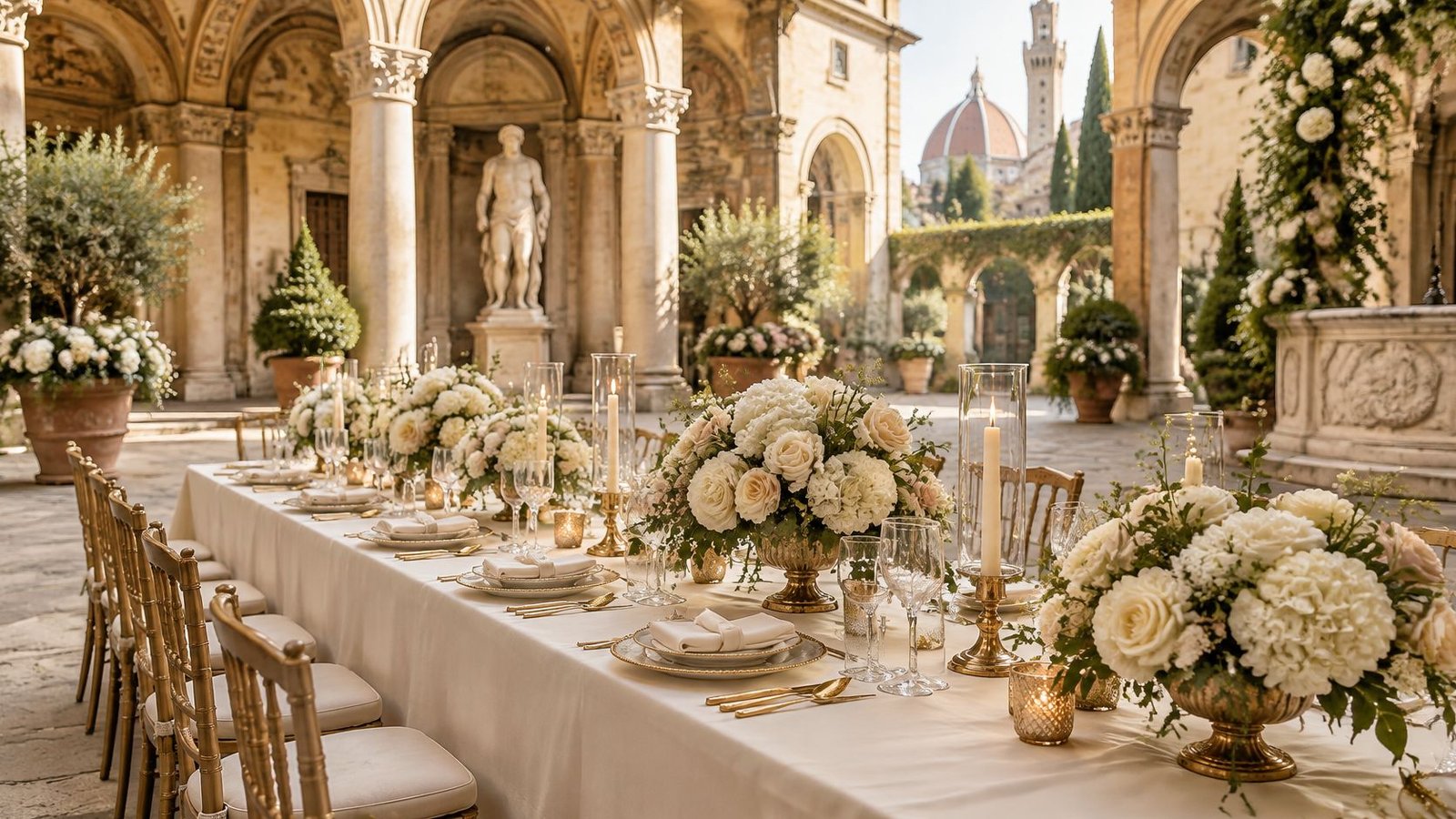
Florence's established wedding appeal has historical evidence: it accounted for 15% of foreign-couple ceremonies recorded in Tuscany in 2014, according to the regional destination-wedding report. That historical figure provides context, not a current venue-availability forecast.
Design Within the Building's Rules
The venue should approve candles, freestanding structures, installation methods and furniture movements before the florist develops a detailed proposal. A strong entrance arrangement and edited table flowers can provide sufficient emphasis without competing with decorated interiors.
- Venue direction: Compare central palazzi with hillside properties and historic hotels. Request the event policy for each proposed space, including the weather alternative.
- Vendor expertise: Prioritise a planner and production team comfortable coordinating deliveries, guest arrivals and venue permissions.
- Menu character: Choose polished, seasonal service that suits a formal reception, with wine and dietary requirements integrated into the tasting.
- Sample-budget framework: Protect venue hire, catering, accommodation and transport first. Keep floral installations and specialist rentals as adjustable additions.
For a welcome dinner followed by a formal reception elsewhere, guest instructions should distinguish walking routes from arranged transfers. Couples shouldn't assume that a venue's central address means every guest can reach its entrance easily.
The limitation is operational flexibility. A dramatic room isn't the right choice if its access arrangements, permitted entertainment or backup space conflict with the intended celebration.
4. Medieval Hilltop Borgo and Castle Wedding
For couples drawn to stone courtyards and arched entrances, the architecture should provide the drama. Avoid adding medieval props to a setting that already has a strong identity.
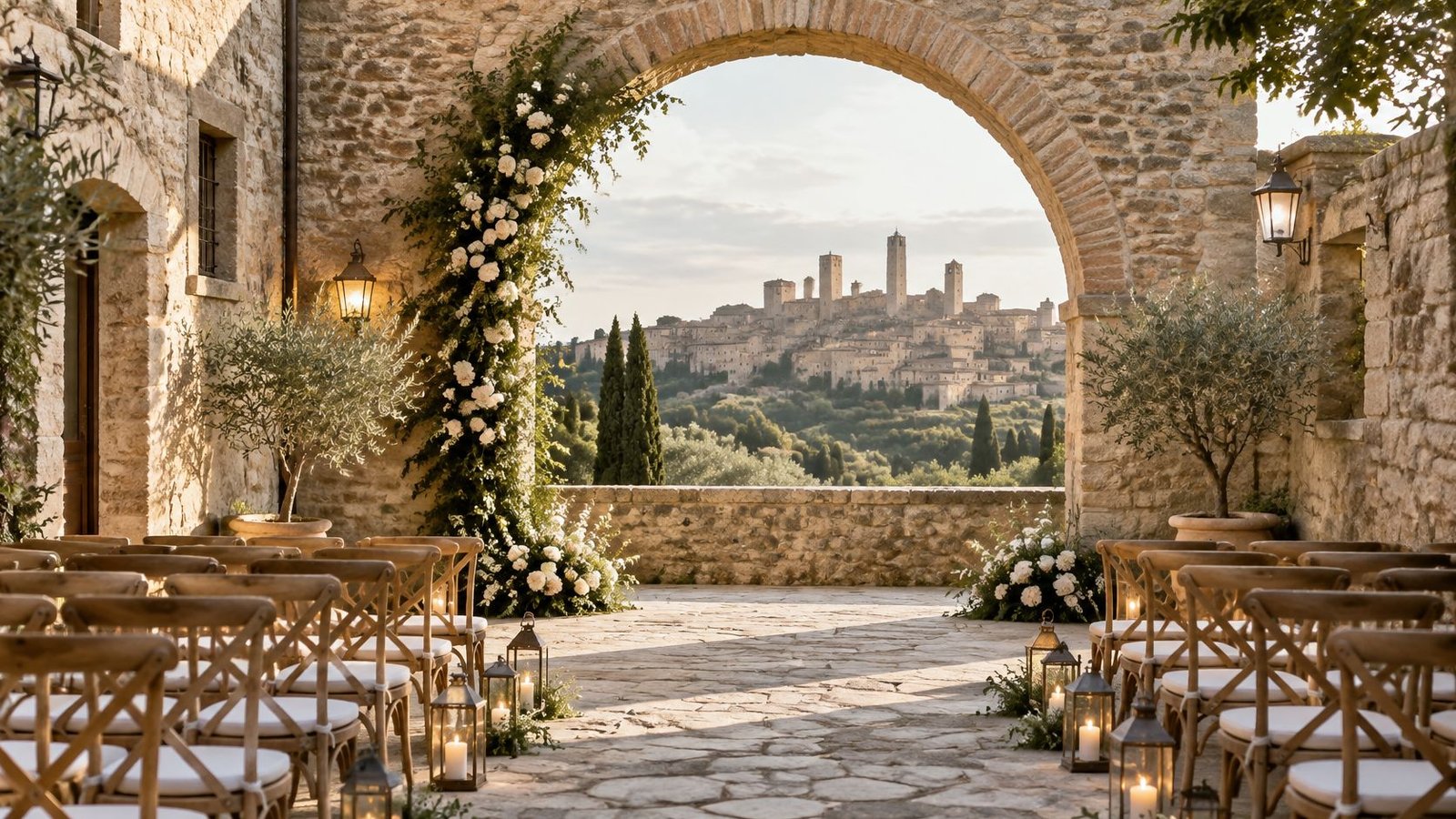
Use Siena, San Gimignano, Volterra and Montalcino as geographic starting points for the venue search. Historic residences, borgo accommodation and castle estates should be assessed individually for private-event permissions, guest capacity and the relationship between bedrooms and reception spaces.
Plan the Route Before the Reception
A ceremony courtyard, aperitivo terrace and dining room may look close on a plan while requiring guests to negotiate steps or uneven surfaces. The site inspection should follow the full guest route, including arrival, restrooms and departure after dark.
Access first: The strongest castle backdrop loses its appeal when a guest can't comfortably reach the ceremony or return to their room.
A lighting designer should use warm illumination to make circulation clear and soften the dining space. Musicians or the sound supplier should assess acoustics and permitted sound levels with the venue before the entertainment contract is finalised.
Sample-budget framework: Prioritise accommodation distribution, shuttle arrangements, accessible routes, catering and lighting. Allocate remaining design funds to restrained florals, linens and place settings rather than elaborate installations.
A welcome supper within the chosen property can keep the programme cohesive; a separate hill-town visit should remain optional. Princess Apulia's guide to castle weddings in Italy provides further context for comparing atmosphere with practical suitability.
For this concept, the decisive question isn't whether the building looks impressive. It's whether the property can host the intended gathering comfortably from arrival through departure.
5. Olive Grove and Cypress Mediterranean Minimalism
Minimalism is an editing decision, not a promise of a smaller bill. An olive-grove celebration can look effortless while still requiring carefully planned catering, lighting, furniture and guest facilities.
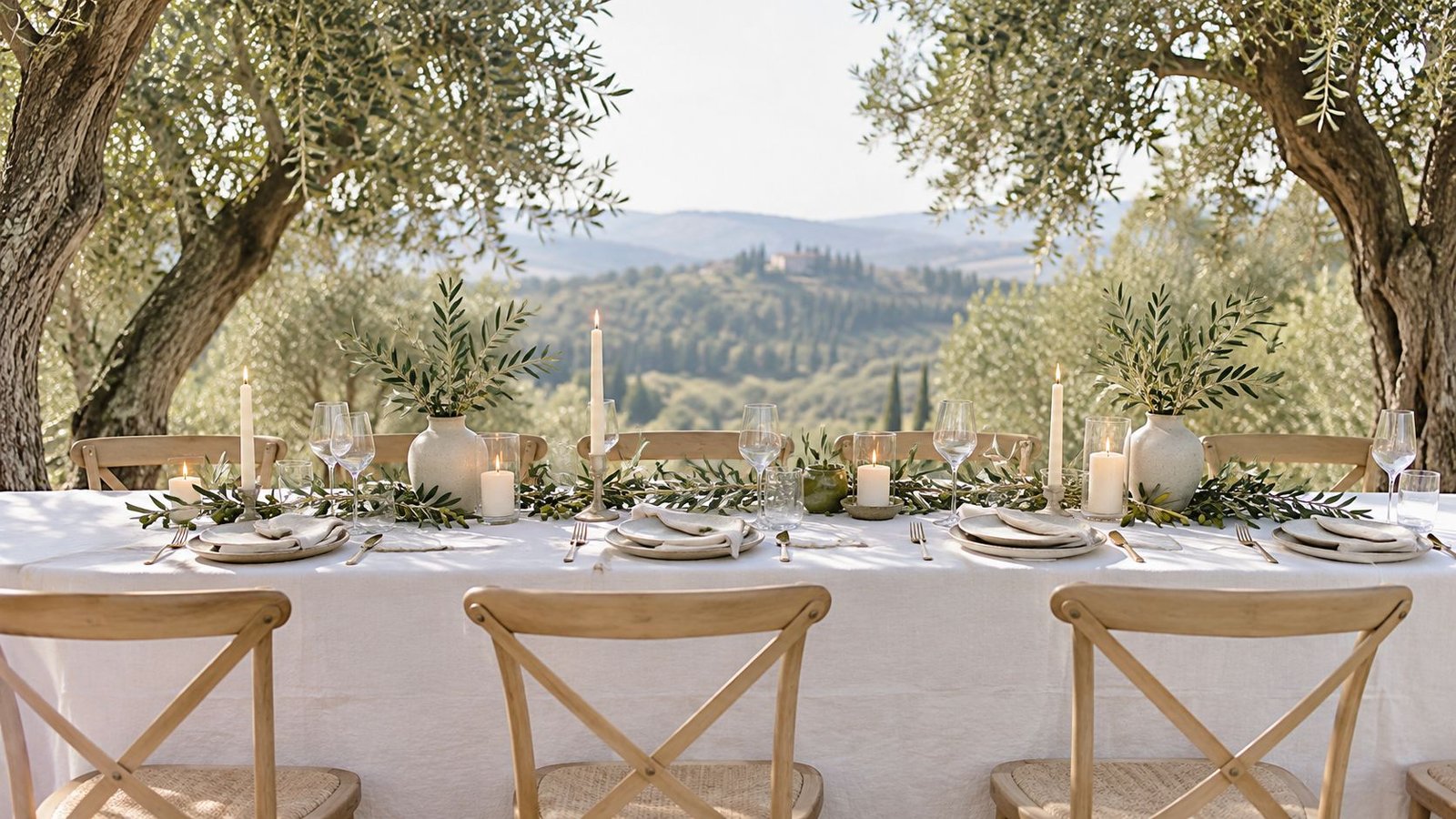
Choose white or natural linen, unglazed ceramics and restrained greenery, allowing the trees and avenues to define the composition. This moodboard also gives couples comparing Tuscany with Puglia a useful question: which specific estate delivers the desired hospitality, rather than merely the preferred photograph?
Keep the Look Quiet and the Planning Explicit
Search for olive estates or agriturismi that can confirm private dining and oil-tasting arrangements directly. Mature planting can provide the visual structure, but actual shade must be checked at the proposed dining time.
- Floral direction: Concentrate flowers around the ceremony or dining table instead of distributing small arrangements throughout the property.
- Menu character: Request an oil-led tasting or seasonal vegetable-focused welcome meal, with the producer and caterer explaining the ingredients.
- Vendor expertise: Choose suppliers who can demonstrate outdoor service arrangements and describe how they'll protect food, equipment and floral materials.
- Sample-budget framework: Cost furniture, catering infrastructure, lighting, transport and the indoor alternative before decorative refinements.
A long lunch suits the visual idea only when temperature, shade and guest comfort support it. Otherwise, move the meal indoors or later rather than preserving the moodboard at guests' expense.
The same principle applies to attire and beauty planning. Guests need clear guidance on surfaces and exposure, while hair and makeup suppliers should work from the actual schedule, not an assumed sunset ceremony.
6. Tuscan Artisan Craft and Ceramics Wedding
A hand-painted plate can contribute more character than a large decorative installation when its maker and purpose are clear. Build this concept around selected objects, not an accumulation of things labelled artisanal.
Montelupo Fiorentino ceramics and Impruneta terracotta provide specific directions for supplier enquiries. Couples should confirm workshop access, group arrangements and production possibilities directly, rather than assuming that a studio welcomes wedding groups or accepts bespoke orders.
Commission Less, Use It Well
Choose a coherent focal point: ceramic place settings, terracotta floral vessels or woven table textiles. Leatherwork and wrought iron can enter the design where they serve a genuine function, but every craft reference needn't appear in the same reception.
For contrasting ceramic forms and finishes, the Christine Cummings studio shop can sit within the wider design research. It shouldn't be presented as evidence of Tuscan provenance; locally commissioned pieces need their own maker information.
- Production: Request a sample or clear approval image before authorising a custom order.
- Guest experience: Offer an optional artisan visit within a broader cultural programme, with accessible alternatives for guests who prefer to remain at the hotel.
- Transport: Establish responsibility for packing, breakages, delivery and any international shipping before purchasing keepsakes.
Sample-budget framework: Separate commissions, rentals, delivery, packaging and flowers. If costs rise, reduce the number of bespoke pieces instead of compromising catering or guest transport.
A caterer should also review decorative vessels before they're used for food service. The florist and artisan should coordinate dimensions and intended use directly, leaving couples to approve the finished composition rather than troubleshoot incompatible objects.
7. Maremma and Bolgheri Coastal Tuscan Wedding
The coastal concept should feel more open and relaxed than its inland counterparts. Combine a sea-facing terrace or coastal garden with linen, restrained citrus accents and a menu that acknowledges both land and sea.
Use Bolgheri wine estates, coastal Maremma agriturismi and seaside hotels as search categories. Private tastings, dinners and ceremonies must be confirmed property by property; none should be treated as a standard inclusion.
Design for Exposure, Not Just the View
A florist should propose stable vessels and secured arrangements suited to the chosen terrace. Paper goods, table linens, microphones and lighting also need an exposure plan, with the venue identifying when an outdoor setup must move inside.
A seafood-led welcome dinner followed by a more countryside-focused wedding meal offers a clear distinction between events. Dietary alternatives should be equally developed, and the caterer should explain how outdoor service will be managed.
A coastal view is an advantage only when guests can enjoy it comfortably. The indoor alternative should feel like a complete reception, not an emergency holding space.
Sample-budget framework: Prioritise accommodation, reliable transfers, catering and a credible indoor option. Keep floral quantities and decorative rentals adjustable until wind arrangements and service requirements are settled.
A coastal-town visit, nature outing or wine tasting can give the weekend variety without making every activity compulsory. The transport supplier should review the actual itinerary and date before the couple commits to repeated journeys.
For summer dates, use cooler parts of the day for outdoor ceremonies and provide shaded waiting areas. Older guests, children and guests with limited mobility need short, clearly explained routes rather than a programme built around prolonged outdoor exposure.
Tuscan Wedding Themes: 7-Style Comparison Guide
Use this table to shortlist two or three compatible concepts, not to make the final call. It adds the details the individual entries leave out: what to confirm first with a venue, where spending concentrates, which months suit each setting and the group size each hosts most comfortably.
| Wedding Theme | Planning Complexity | What to Confirm First | Where the Budget Concentrates | Strongest Months | Guest-Count Fit |
|---|---|---|---|---|---|
| Val d'Orcia Pastoral Garden | Moderate; weather and transport planning are important | Indoor fallback space and shuttle provision | Venue hire and guest transport | Late spring and early autumn | Suits mid-size gatherings best |
| Chianti Vineyard Harvest | Moderate; seasonal timing and accessibility need coordination | Availability during harvest weeks and road access for coaches | Catering and estate wines | Early autumn; harvest dates book early | Works well for intimate to mid-size groups |
| Florentine Renaissance Elegance | High; venue rules and city logistics require careful planning | Permitted music, lighting and décor in the chosen palazzo | Venue hire and city transport | Cooler shoulder months | Flexible; formal smaller parties work well |
| Medieval Hilltop Borgo and Castle | High; access, mobility, and acoustics require planning | Step-free routes for less mobile guests | Accommodation buyout and shuttles | Late spring through early autumn | Built for full-weekend guest lists |
| Olive Grove and Cypress Mediterranean Minimalism | Low to moderate; depends on the venue's grounds and shade | Shade coverage and seating layout among the trees | Farm-to-table catering | Spring and autumn | Ideal for smaller gatherings |
| Tuscan Artisan Craft and Ceramics | Moderate to high; custom orders and handling need coordination | Artisan lead times and delivery to the venue | Custom commissions and tableware | Year-round; depends on studio schedules | Adaptable to any size |
| Maremma and Bolgheri Coastal Tuscan | Moderate; wind, heat, and seasonal traffic require planning | Transfer timings and a credible indoor reception | Accommodation and transfers | Early summer and early autumn | Suits weekend-long coastal gatherings |
The deciding factor is rarely the moodboard. A couple weighing Val d'Orcia against Chianti, for example, is really choosing between transport spend and catering spend, and between open countryside and a working estate with set rhythms. Match the strongest months and the group-size fit to your actual guest list first, then compare costs.
Build the Wedding Around the Place
The best starting point for Tuscan themed weddings is the setting that supports the couple's preferred way of hosting. A pastoral garden, working wine estate, Florentine courtyard and coastal terrace call for different decisions about formality, service, transport and accommodation.
Shortlist a small group of compatible concepts, then build a sample budget around venue and accommodation, catering, entertainment, décor and transport. Obtain property-specific proposals rather than borrowing a regional average as a spending target, and distinguish essential infrastructure from optional styling.
Test the Moodboard Against the Guest Experience
Seasonality belongs in that comparison from the beginning. The Destination Florence report on Tuscany's wedding market describes a slight decline in June–September attendance alongside increased celebrations in the first and last quarters, supporting a broader conversation about dates beyond peak summer.
- Comfort: Confirm shaded routes, drinking water, indoor cooling and an accessible place to rest.
- Hospitality: Check accommodation distribution, dietary provision, multilingual information and the demands of optional activities.
- Contingency: Assess the indoor reception as carefully as the outdoor setting, including seating, dining atmosphere and access.
Ceremony arrangements require a separate decision. For an internationally hosted civil wedding, documentation commonly includes passports, birth certificates, evidence that previous marriages have ended and a Nulla Osta or equivalent; translation and legalisation requirements depend on the issuing country, as outlined in this guide to marriage documentation in Italy. The relevant municipality should confirm the requirements before bookings depend on a particular ceremony.
Authenticity doesn't require every detail to look traditional. It requires clear choices about provenance, season, setting and hospitality, with room for the couple's religious practices, family customs and personal taste.
Couples comparing Tuscany with Puglia can contact Princess Apulia with their preferred setting, guest requirements, date range and working budget. A focused destination-wedding planning conversation should establish which locations are practical before refining the visual concept, keeping the celebration tied to the place and comfortable for the people attending.