
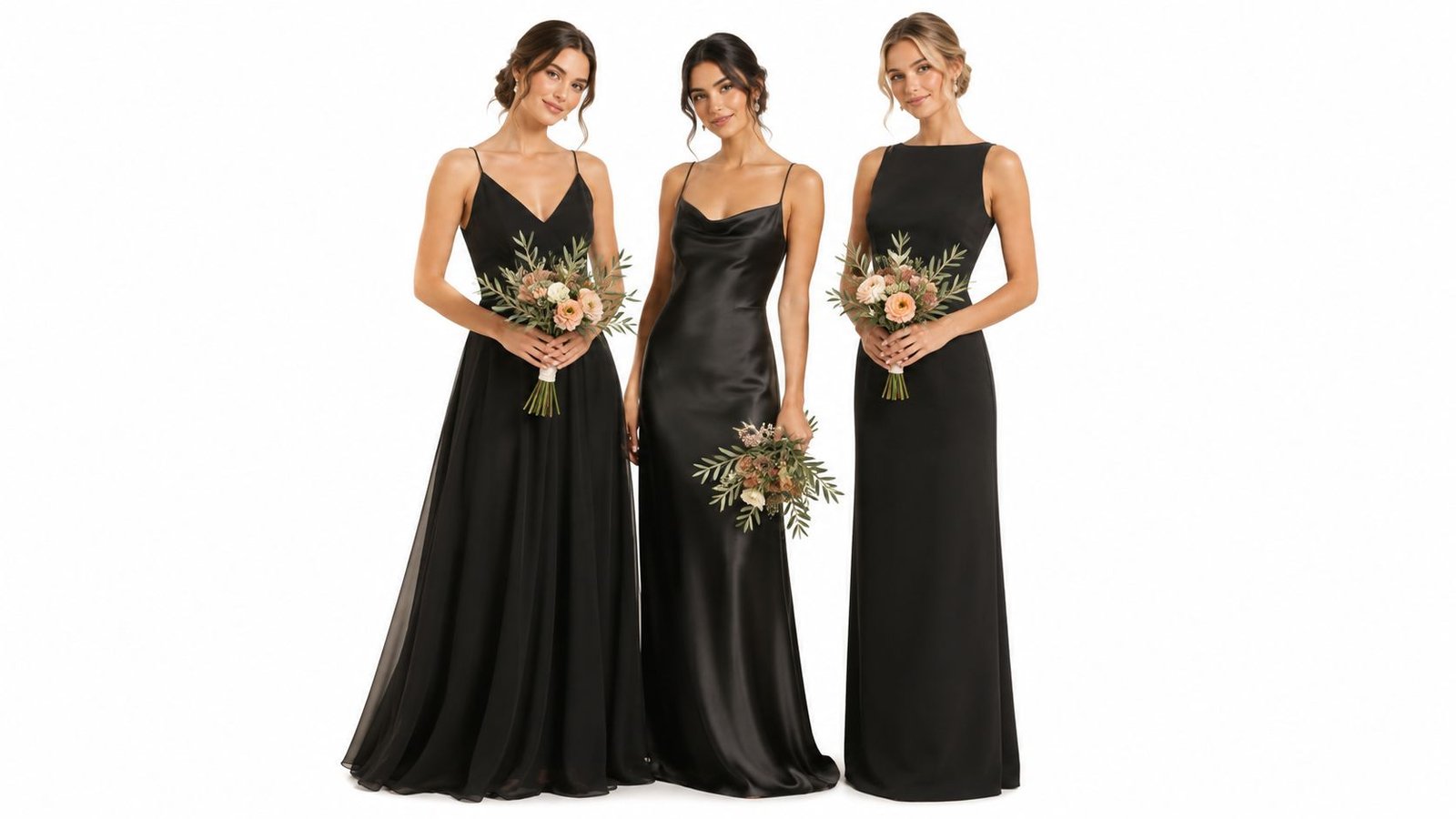
The old rule says black is too sombre for a wedding in Italy. That advice is less useful than it sounds.
For many couples, especially those planning from abroad, the question isn't whether black is forbidden. It's whether black will feel elegant in the specific light, and dress code of the wedding itself. A candlelit villa dinner in the evening asks different things of bridesmaid style than a midday ceremony in a whitewashed Puglian courtyard.
Black can work beautifully in Italy when it is handled with intention. It doesn't need to read gothic, severe, or overly dramatic. In the right fabric, with the right flowers and the right setting, it can look restrained, modern, and formal. It can also spare a bridal party from the strain of wearing a colour that flatters no one and suits nothing beyond the wedding day.
That said, black isn't a universal answer. It works best when the couple considers season, time of day, venue materials, and how the dresses will sit within the wider design. A masseria in summer requires a different approach from a city palazzo reception or a coastal celebration with sharp Mediterranean sun.
Introduction Why Black Bridesmaid Dresses Deserve a Second Look in Italy
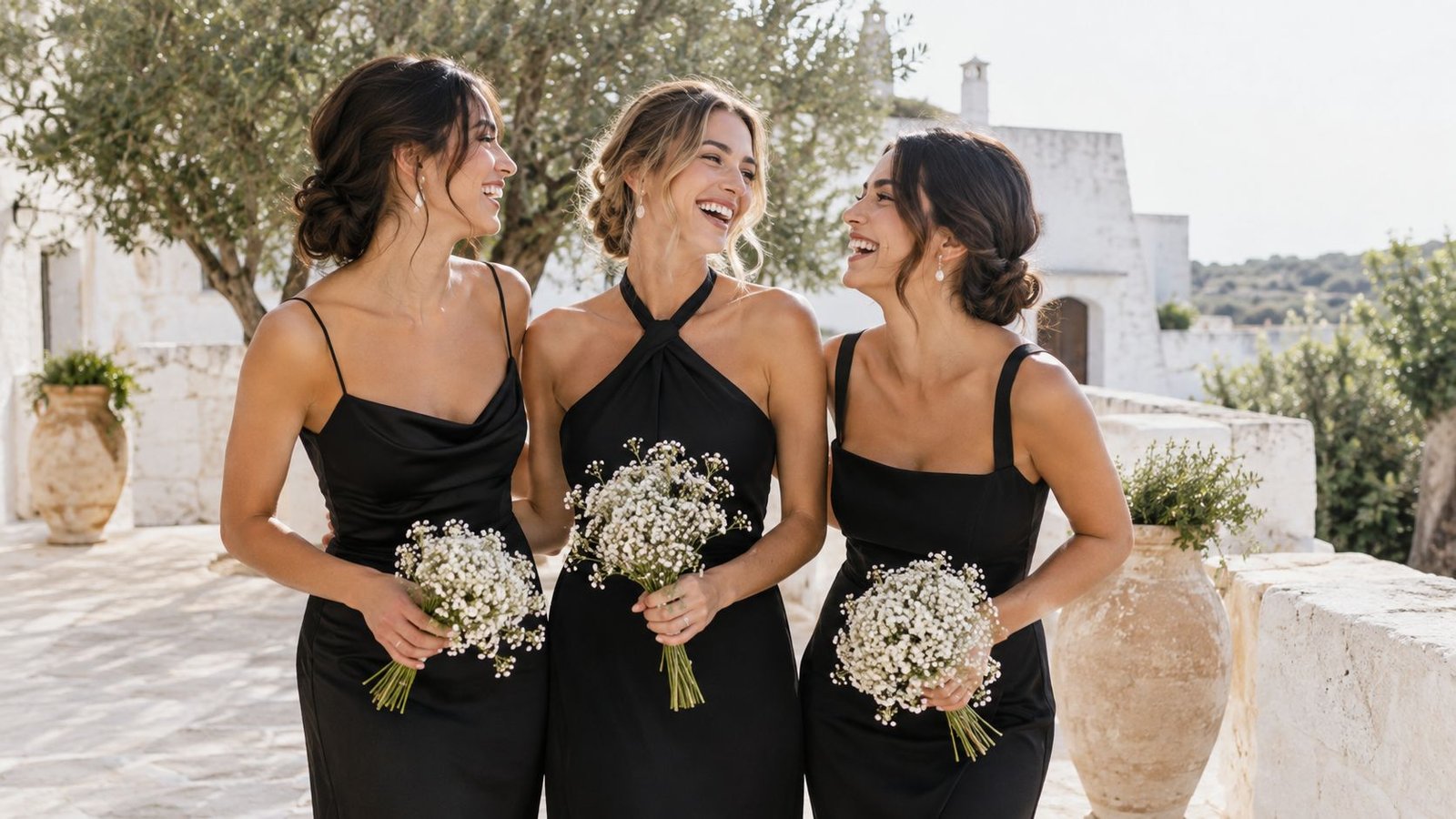
Black bridesmaid dresses are often treated as a question of taste or trend. In Italy, especially in Puglia, they are more usefully treated as a question of light, fabric, and setting.
A black dress in a candlelit villa works differently from a black dress in a noon ceremony at a whitewashed masseria. The colour stays the same. The effect changes because the surroundings do most of the talking. Pale stone can make black look crisp and formal. Harsh summer sun can make the same dress feel visually dense unless the cloth has movement and breathability.
This is why black deserves a second look from couples planning an Italian wedding. It offers clarity. It can make a bridal party look composed without pushing everyone into a colour that suits only the photographs and never their real wardrobes. Yet it also asks for more care than softer shades. Black absorbs heat more readily, shows fabric quality immediately, and can look heavy if the cut is too stiff for the venue.
The easiest way to judge it is to use the venue as your reference point. A masseria in July usually calls for airy fabrics, open necklines, and lengths that still feel formal without trapping heat. A coastal celebration needs dresses that move in the wind and do not look severe against bright sea light. A historic villa or formal evening reception gives black much more room to feel natural, because shadow, candlelight, and darker interiors soften its edges.
Black works like tailoring in menswear. In the right material, it looks precise and effortless. In the wrong one, every stiffness shows.
Couples usually hesitate for practical reasons, not superstitious ones:
- Heat: In Puglia, fabric choice matters as much as colour. Heavy satin or thick lining can become uncomfortable long before dinner.
- Balance: Black beside an ivory gown, pale stone courtyards, or delicate flowers needs texture and shape so the contrast feels intentional.
- Tone: The same shade can read relaxed, architectural, or very formal depending on the cut, the hour, and the venue materials.
Those concerns are sensible. They need an Italian answer rather than a generic one.
Is Black Appropriate for Bridesmaids at Italian Weddings
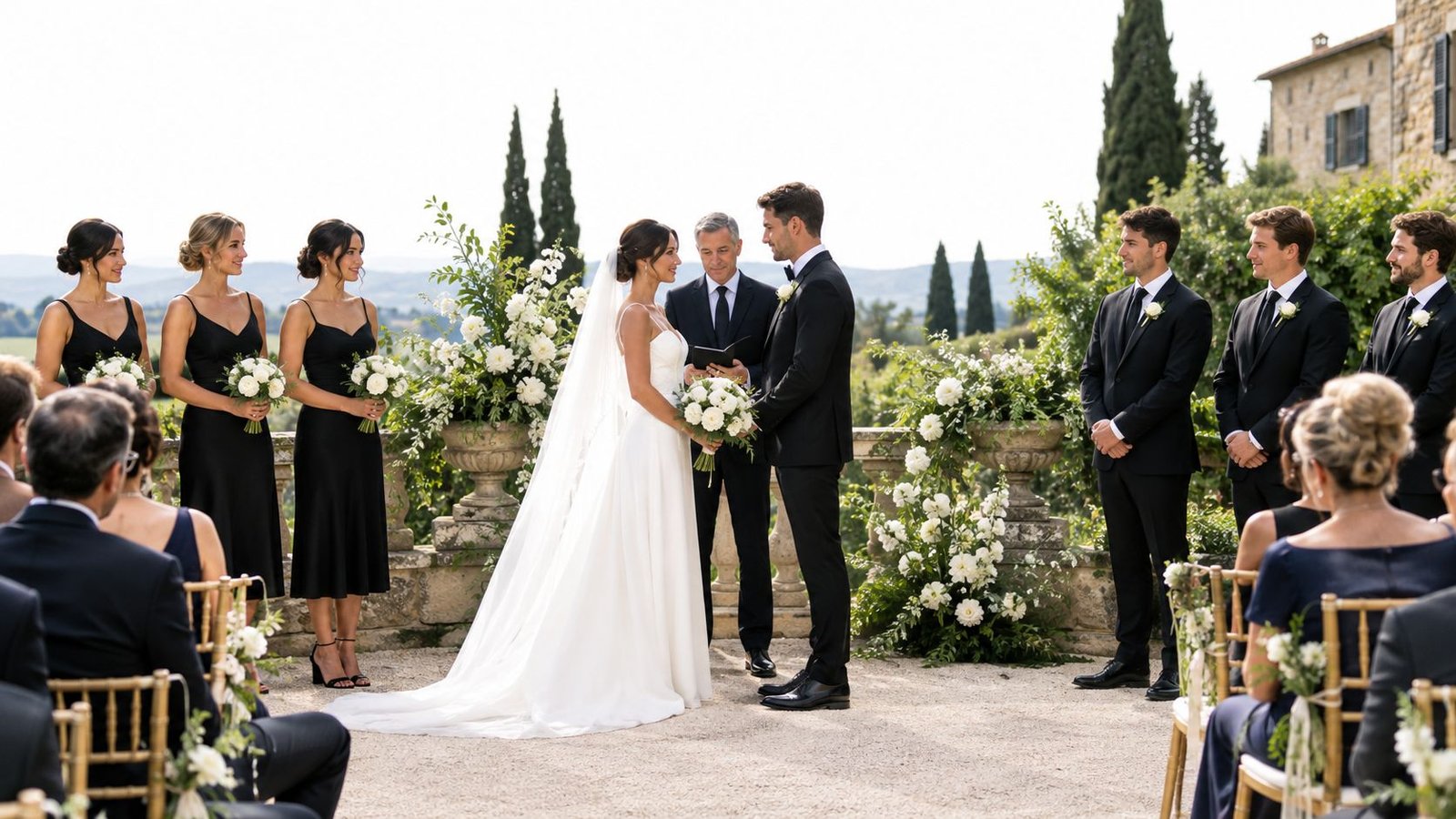
Yes, if it suits the setting.
That answer often surprises international couples because black still carries very different meanings from one country to another. At an Italian wedding, though, appropriateness usually comes down to place, hour, and formality. A candlelit villa dinner asks different things of a bridesmaid dress than a seaside ceremony at noon. Black can work beautifully in both, but it has to be interpreted differently.
The easiest way to judge it is to start with the venue rather than the colour chart. Italy is highly visual. Old stone, bright sea light, olive groves, formal courtyards, and baroque interiors all change how black reads in photographs and in person.
Where black usually feels natural
Black tends to sit comfortably in Italian weddings with a more architectural or evening mood.
- Historic villas and palazzi: Against aged stone, frescoed rooms, and evening candlelight, black looks composed and intentional.
- Formal receptions: If dinner begins late and the event carries a black-tie tone, black already belongs to the language of the occasion.
- City weddings: Urban settings often suit sharper lines, cleaner styling, and a more restrained palette.
In these settings, black reads as elegant rather than severe.
Where it needs a lighter hand
Daytime celebrations in Puglia need more judgment. The light is strong, the temperatures can stay high well into the evening, and open areas make dense fabrics look heavier than they would indoors.
A masseria wedding in summer is a good example. Black is still possible, but the dresses need softness in movement and restraint in finish. Matte fabrics, lighter linings, simpler silhouettes, and less visual weight usually work better than glossy, structured styles that belong to a ballroom. On the coast, the same principle applies. Sea light is unforgiving, and wind gives every dress more motion, so black looks best when it can move rather than stand rigidly.
Black works a little like formal tailoring. In the right environment it looks precise and refined. In the wrong one, every heavy detail becomes more obvious.
The etiquette question couples usually mean
Most couples are not really asking whether black is "allowed." They are asking whether it will feel respectful to Italian family members and coherent within the celebration.
For most contemporary destination weddings in Italy, the answer is yes. Older relatives may still associate black with mourning, especially in more traditional families or smaller communities, but that association is no longer a universal rule for wedding clothing. What matters more is whether the bridal party looks considered, comfortable, and in step with the tone of the day. Couples who want a clearer sense of custom versus assumption often find it helpful to read more about Italian wedding traditions and family expectations.
If there is any hesitation, the simplest solution is practical. Check the venue, the ceremony time, the likely heat, and the formality of dinner. In Italy, those details answer the question better than old etiquette formulas do.
How Black Became a Modern Bridesmaid Classic
Black became a bridesmaid classic for a simple reason. It solves more problems than it creates.
Long before modern bridal styling turned black into a fashion choice, dark dresses already had a place in wedding clothing across Europe. They were practical, respectable, and made sense in households where garments were expected to be worn again. That older history matters because it changes how the colour reads today. Black does not arrive at a wedding with one fixed meaning. Its meaning depends on setting, fabric, light, and formality.
In Italy, that context matters even more. A black dress at a candlelit villa dinner feels entirely different from a black dress under hard midday sun in rural Puglia. The colour itself is stable. The environment changes its character.
Why the colour returned so strongly
Modern bridal parties adopted black for reasons that are both aesthetic and practical. It photographs with clarity, sits comfortably within eveningwear, and usually feels more useful after the wedding than a very specific pastel or print. Bridesmaids often feel more at ease in it as well, which changes posture, movement, and confidence in ways that are visible.
There is also a cultural reason for its staying power. Black has long signalled restraint rather than excess, which is one reason it keeps returning in formal dress. Couples who want that broader fashion context may find this piece on exploring black's classic color status helpful.
Why black feels modern again in Italy
Italian destination weddings have helped recast black in a more nuanced way. At a masseria in Puglia, black can give structure to a setting that is otherwise soft, sun-bleached, and textural. At a coastal venue, it can look graphic and refined against stone, sea, and pale skies. In a historic villa, it often brings calm to richly decorated surroundings.
The key is that Italian venues are rarely neutral boxes. They already have colour, temperature, and atmosphere. Black works well because it can anchor all three, provided the dress is chosen for the place rather than for trend alone.
How the same colour changes by cut, cloth, and time of day
Black works a little like architecture. The outline matters first, then the surface.
| Choice | How it reads | Best fit |
|---|---|---|
| Slip silhouette | Fluid and understated | Coastal dinners, modern villas, summer evenings |
| A-line gown | Soft and composed | Mixed-age bridal parties, classic ceremonies |
| Column dress | Formal and defined | Black-tie receptions, grand evening settings |
| Wrap style | Easy and flattering | Outdoor weddings, varied body shapes |
Fabric changes the message just as much as silhouette. Matte crepe or georgette usually feels lighter and more relaxed in southern Italy. Satin can be beautiful for evening, but in strong daytime light it reflects heat and reads more formal. Linen blends and softly textured fabrics often suit Puglian venues better because they echo the setting instead of fighting it.
Timing matters too.
- Midi lengths usually feel more natural for daytime celebrations, especially in warm months.
- Floor-length dresses make more sense once the wedding moves toward evening formality.
- Mixed lengths can work well if the fabric and overall mood stay consistent.
Black also reads differently in photographs than lighter tones. It tends to define the line of the body clearly, which is helpful in group images, but it can look flat if every surface is equally dark. That is why florals, jewellery, and small points of contrast matter more with black than many couples expect.
Choosing Silhouettes Fabrics and Lengths That Flatter Every Bridal Party
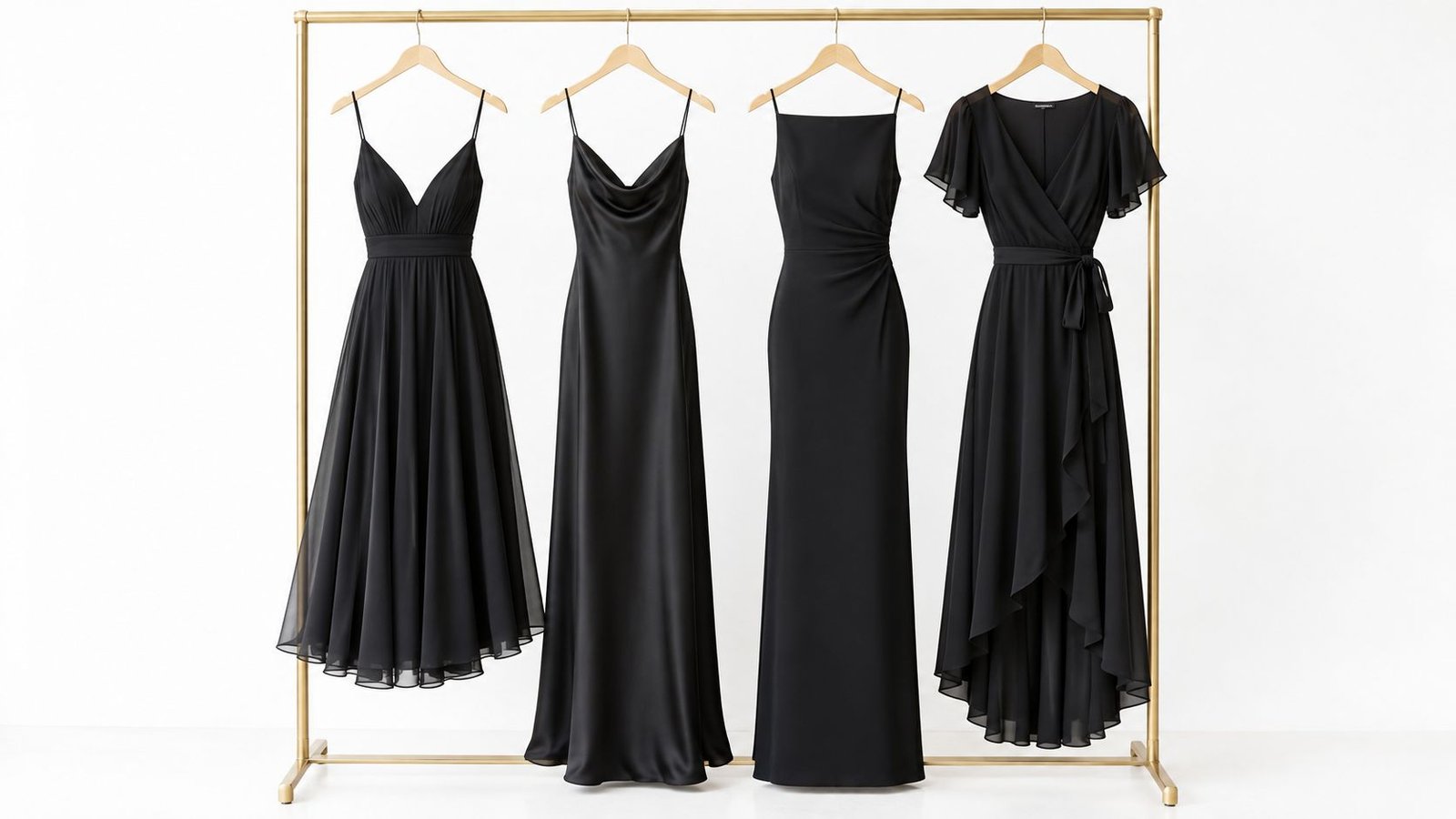
A flattering bridal party usually starts with proportion, not uniformity. In Italy, and especially in Puglia, the right black dress has to suit real conditions. Heat, glare, uneven stone, sea breeze, and the shift from afternoon ceremony to late dinner all affect what feels graceful and what feels heavy.
The simplest approach is to choose one visual language, then allow variation inside it. If every bridesmaid wears a different neckline but the dresses share the same fabric weight, hem intention, and level of formality, the group still looks considered. That matters more than forcing identical shapes onto different bodies.
Silhouettes that keep black graceful
Black defines lines clearly, so cut matters more than couples often expect. A severe silhouette in a dense fabric can feel too sharp in strong southern light. A softer line usually gives black more ease.
- A-line dresses: Reliable for mixed bridal parties because they create shape through the waist and release through the skirt. On a hot day in Puglia, that extra space also allows more air and easier movement.
- Wrap dresses: Helpful when comfort and flexibility matter. They adjust through the day, sit well on many body types, and often feel at home at a masseria or garden celebration.
- Slip dresses: Best for bridal parties that want a lighter, more contemporary line. They work particularly well for coastal dinners and warm evening weddings. For readers considering that option, these styling tips for black slip dress offer a useful visual reference.
- Column shapes: Beautiful for formal settings, especially at villas or evening receptions, but they need precise fit. In black, a column dress shows every line, so tailoring and fabric quality do much of the work.
Fabric should answer climate first
Fabric decides whether black feels polished or punishing.
For a Puglian summer wedding, light georgette, chiffon, matte crepe, silk blends, or softly draped viscose usually behave well. They move in the breeze, photograph with some dimension, and feel less dense under direct sun. Dense polyester linings, thick satin, and anything that traps heat can become uncomfortable long before dinner begins.
For spring and early autumn, crepe-backed satin, heavier silk blends, or structured matte fabrics can make sense, especially if the celebration runs into the evening. Winter is the one moment when richer fabrics such as velvet or substantial crepe can feel appropriate rather than overpowering, particularly in a formal interior or candlelit setting.
Fabric works like architecture cladding. The same structure can feel cool and restrained in one finish, then heavy and out of place in another.
Length should match both venue and hour
In Puglia, hem length is not just a style choice. It is a practical one.
- Midi lengths: Often the easiest option for daytime weddings, courtyard ceremonies, and aperitivo hours on stone or gravel. They feel lighter and are simpler to manage in heat.
- Floor-length dresses: Usually make more sense for evening formality, black-tie dinners, or villa receptions that begin after sunset.
- Different lengths within one bridal party: Entirely possible if there is a clear rule behind them. Keep the same fabric, similar necklines, or a shared silhouette family so the variation feels intentional.
A useful test is to picture the bridesmaids walking from ceremony to drinks to dinner. If the dress only works while standing still, it is the wrong choice for an Italian wedding day.
A practical framework for Puglia settings
| Wedding setting | Strongest fabric direction | Length to consider |
|---|---|---|
| Summer masseria ceremony | Airy, matte, breathable fabrics with movement | Midi or softly skimming full length |
| Coastal terrace reception | Light drape, bias cut, fluid texture that handles wind well | Midi or light full length |
| Villa dinner | Crepe, chiffon, silk blends, or refined satin for later light | Elegant midi or full length |
| Autumn or winter formal event | Richer fabrics with more body and structure | Full length |
Styling Black Dresses for Puglia Venues and Seasons
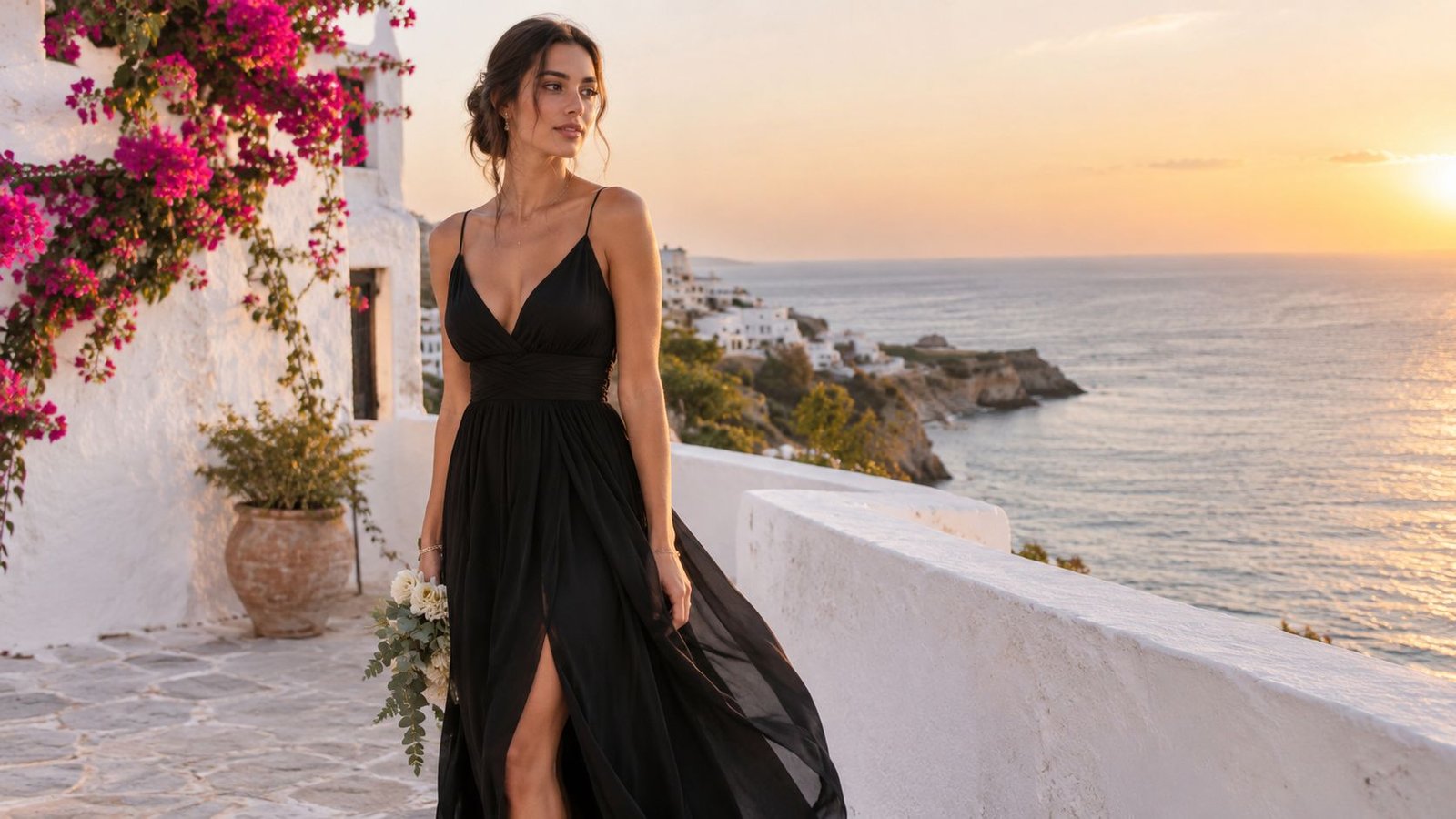
Puglia asks for venue-led styling. The same black dress can look spare and refined in one place, then overly dense in another. White stone, sea glare, olive groves, and the shift from hot afternoons to softer evening light all change the balance.
Masseria weddings
A masseria usually combines pale walls, natural textures, dry garden planting, and relaxed formality. Black works well here when it feels softened by movement.
Chiffon, washed silk textures, and gentle wraps often sit comfortably in these spaces. Bouquets in ivory, soft green, or warm neutrals stop the dresses from feeling too stark against limestone courtyards. Shoes also matter. Refined sandals or low heels often make more sense than very formal satin footwear on rural ground.
Coastal weddings
At the coast, daylight is sharper. Wind and salt air also change how fabric behaves. Black can look especially chic against the sea, but it benefits from simplicity.
Bias-cut dresses, slim straps, open backs, and lighter finishes usually feel more natural than heavily structured gowns. For couples shaping a seaside celebration, this guide to a Puglia beach wedding and Italian beach wedding style helps place fashion choices within the realities of a coastal event.
At the sea, black should feel fluid. If the dress fights the wind, the look starts to feel formal in the wrong way.
Villa weddings and formal evenings
Historic villas can carry more visual weight. Black often looks strongest here, especially once the light begins to soften and the event moves toward dinner. Longer silhouettes, cleaner necklines, and restrained jewellery usually suit these settings.
For evening receptions, metallic details can sharpen the line of the dress. Gold tends to warm black. Silver can make it feel cooler and more graphic. Neither is better. The venue materials usually decide.
Summer outdoor weddings
Summer in southern Italy requires discipline. Couples don't need to avoid black altogether, but they should avoid treating all black dresses as interchangeable.
The safest approach for daytime is usually:
- Choose breathable fabrics: Movement matters more than ornament.
- Keep necklines open: A halter, soft V, or restrained scoop often feels lighter than a high closed bodice.
- Limit visual heaviness: Minimal sleeves, lighter linings, and cleaner skirts often work better outdoors.
- Use flowers strategically: Pale bouquets create separation and stop the bridal party from disappearing into the darker value of the dresses.
Creating a Luxurious Cohesive Look With Colour Palettes Bouquets and Accessories
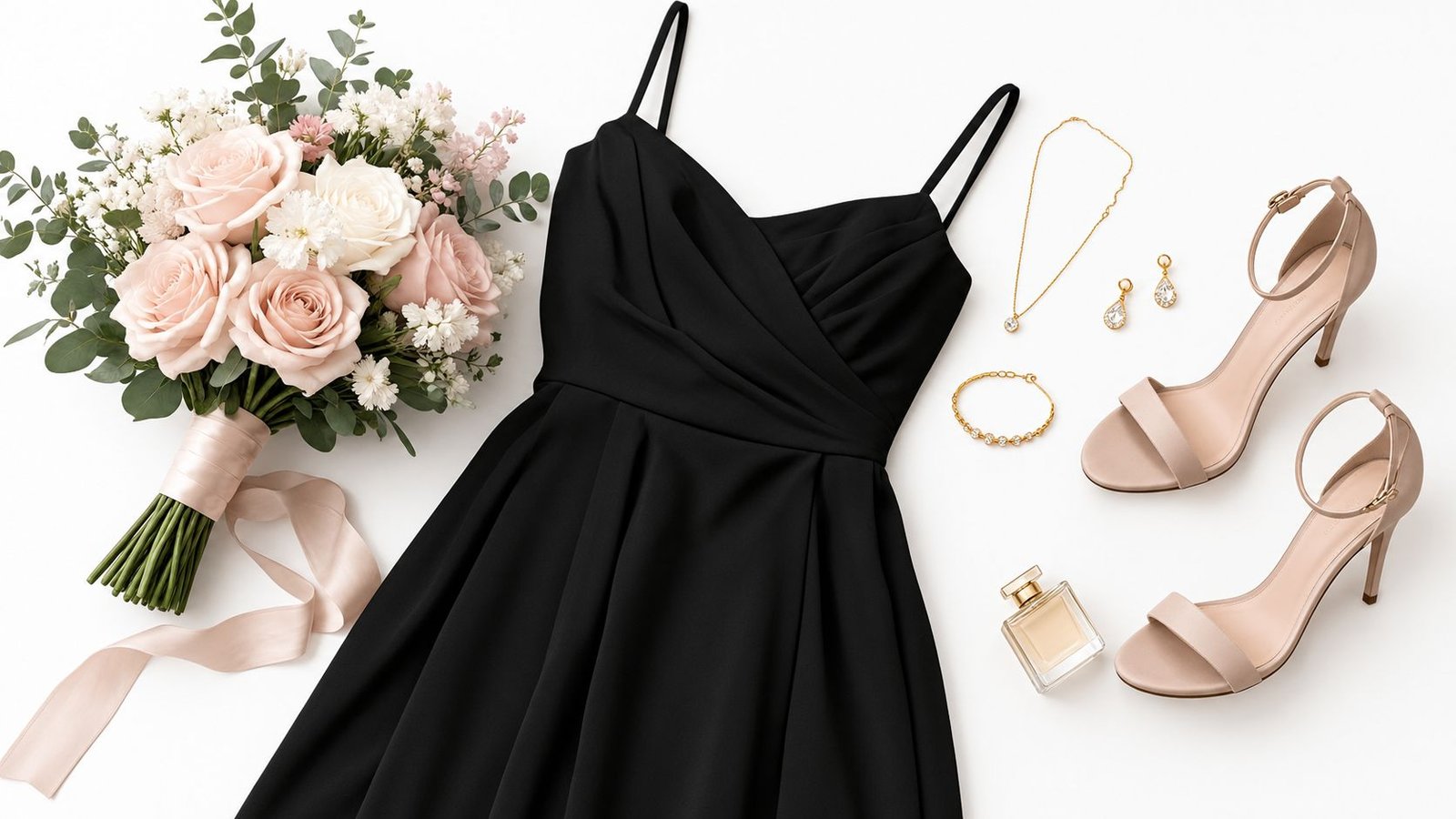
Black works best in Italy when it gives structure to the bridal party and lets the setting supply the warmth. In Puglia, that setting may be pale stone, olive trees, dry grasses, sea light, or candlelit tables. The palette around the dresses decides whether black feels too dense for the venue or perfectly placed within it.
A useful way to judge the styling is to look at the venue first, then dress the black against it. At a masseria, black often needs earth and texture beside it. At a villa, it can hold cleaner contrasts. For an evening reception, it can take a little more shine without losing restraint.
Colour pairings that work well in Italy
The strongest pairings usually echo what is already present in the space.
- Olive, sage, and soft green: Ideal for gardens, courtyards, and rural settings. These shades soften black and connect it to the surroundings.
- Terracotta, clay, and warm neutrals: Especially convincing at masserie, where limestone, dust, and sun-warmed walls already shape the colour story.
- Blush, muted rose, and apricot: Useful if the couple wants some romance without making the bridal party feel overly sweet.
- Ivory, cream, and parchment tones: Clean and formal. These often suit villas and black-tie evening tablescapes particularly well.
Metallics should follow the venue materials rather than trend forecasts. Gold usually sits naturally with warm stone and candlelight. Silver suits settings that feel sharper, cooler, or more architectural.
Bouquets do more than decorate
With black dresses, flowers create separation. They help define the line of the body in photographs and stop the bridal party from looking visually flat, especially in late afternoon shade or evening light.
For that reason, bouquet scale and colour matter more than couples sometimes expect.
- Ivory or white flowers: The clearest contrast. They give black a crisp edge.
- Green-led bouquets: Better for a softer rural look, especially in Puglia where foliage already belongs to the setting.
- Textural neutrals: Dried elements, soft creams, and layered petals often suit masserie better than bright, glossy colour.
- Tighter formal bouquets: Often stronger than very large arrangements when the dresses already carry enough visual weight.
A bride considering a floral accessory can create a beautiful contrast against bridesmaids in black, especially in countryside venues. This guide on how to choose a flower crown for a bride at wedding farm venues is useful for couples who want that softer rural balance.
Black needs contrast and softness around it. Otherwise, the bridal party can feel detached from the place.
Accessories should share a logic
Cohesion rarely comes from making every bridesmaid identical. It comes from setting a clear visual rule and keeping to it.
Jewellery is the easiest place to do this. Choose one direction. Warm metal, cool metal, or very minimal pieces. Mixing all three usually weakens the line of the group.
Shoes should also relate to the venue. At a masseria, satin stilettos can look disconnected against rough stone and gravel. At a formal villa dinner, they may feel completely right. The finish matters more than forcing everyone into the same heel height.
Hair and beauty should follow the same principle. A shared mood is enough. Softly polished styles usually sit better in Italian settings than rigid matching hair, because they still feel in conversation with the climate, the architecture, and the movement of the day.
Care matters because black shows everything
Black only looks rich when the fabric stays clean, saturated, and free from visible dust or fading. If dresses are bought early and refreshed before travel, wash them in cold water on a gentle cycle, turn them inside out, use a small amount of detergent, and let them dry in the shade. Those small steps help the colour hold its depth and keep the bridal party looking consistent on the day.
Practical Tips for Comfort Care and a Polished Finish on the Day
The final decision often comes down to comfort rather than style. A black dress can look immaculate in fittings and then fail completely if the fabric traps heat or the lining feels dense during a daytime ceremony.
What to prioritise for Italian heat
A few details make an immediate difference:
- Breathable construction: Light fabrics matter, but so does the lining. A heavy underlayer can undo the benefit of an airy outer fabric.
- Freedom through the torso: Bridesmaids need to sit, stand, walk on stone, and often remain outside for longer than expected.
- Thoughtful timing: If black is central to the look, it often performs better when the most formal visual moments happen later in the day.
Couples sometimes assume that comfort will ruin polish. It usually does the opposite. Dresses that move easily and don't overwhelm the wearer almost always look more elegant.
A short decision test
Black is usually a strong choice when most of the following are true:
| Question | If the answer is yes |
|---|---|
| Is the wedding formal or evening-leaning? | Black often feels natural |
| Does the venue have architectural or neutral surroundings? | Black can look especially refined |
| Can the dresses be made light enough for the season? | The colour becomes easier to carry |
| Will flowers and accessories add contrast? | The look stays dimensional |
If several answers are no, another shade may be easier.
Bride approval comes first. After that, the bridal party should coordinate styling so the choice feels deliberate, not accidental.
Black dresses for bridesmaids can look elegant in Italy when they suit the venue, the hour, and the climate. They don't need apology, and they don't need drama. They need editing.
Couples planning a destination wedding in Puglia or elsewhere in Italy often need help translating a strong fashion idea into something that works on the ground, in the light, and across the full guest experience. For editorially led planning support, design guidance, and venue-aware styling, Princess Apulia offers destination wedding expertise rooted in Italy.